


Black Bamboo Flowered for the First Time in 120 Years — an Old Omen Turns Hopeful

"Once every 120 years" — that's the phrase making headlines after black bamboo, known in Japan as kurochiku, flowered in Nagoya in May 2026.
The last time this happened on record was around 1908, in the late Meiji era.
It had been nearly 120 years since anyone had witnessed it — a genuinely rare event.
On April 27, 2026, at Nagoya University's outdoor observation garden in Chikusa Ward, Nagoya, staff confirmed countless tiny flowers, each about a centimeter across, blooming all over a 4-meter-tall stand of black bamboo.
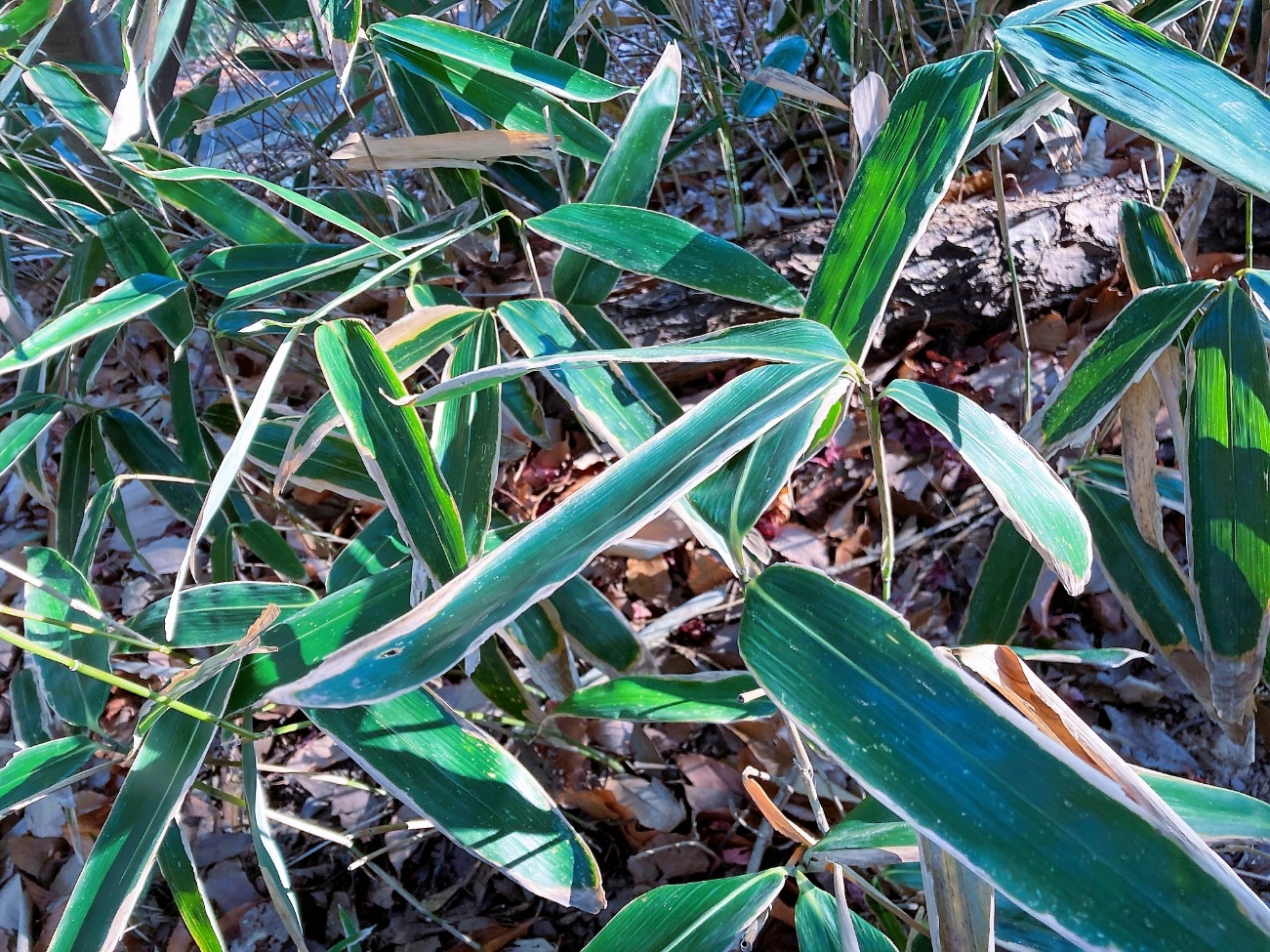
Black bamboo is a distinctive plant, instantly recognizable by its striking black stalks.
It's thought to be a variant of Phyllostachys nigra's relatives, henon bamboo (hachiku) and Kure bamboo (kuretake), and it's widely loved as an essential feature of traditional Japanese-style spaces — used as an accent in garden design, as a symbol tree, in hedges, in flower vessels, and in bamboo craftwork.
You may have come across the old saying that bamboo flowering is a bad omen.
Part of where that comes from is the sheer rarity of the timing — once in 120 years feels almost supernatural — and part of it is that the bamboo grove dies off entirely once it flowers, which understandably reads as an ominous sign.
Bamboo doesn't grow as a collection of separate, independent plants.
A whole grove is connected underground through a shared rhizome system.
That's exactly why, once flowering happens, the entire connected grove dies back all at once, rather than just a single stalk.
But that's not where the story ends.
After the grove dies, it drops seed, and new life regenerates from it.
Because of this cycle — die back completely, then sprout again — more people have recently come to see bamboo flowering as a symbol of renewal and rebirth rather than misfortune.
Flowering events have also been reported in Kyoto in 2022 and 2023, and in Chiba in 2025, with news of blooming bamboo continuing to surface region by region across Japan.
Many people are describing it as "a rare moment you might only witness once in a lifetime" or "the arrival of a new era," and the overall perception seems to keep shifting in a more positive direction.
Bamboo flowering has been increasing nationwide since around 2010, and researchers expect it to peak around 2028.
It may be that the world of bamboo is going through its own large-scale generational handover right now.
Bamboo's flower language in Japan is "moderation," a reference to the segmented nodes along its stalk, and it captures the composed, dignified beauty that people in Japan have long felt when looking at bamboo.
Bamboo as a whole is considered an auspicious plant, and the color black in particular is said to carry power for good fortune in wealth and for warding off bad energy.
Ominous on one hand, auspicious on the other — that's black bamboo, holding both faces at once.
If you ever find yourself present for this rare bloom, it's likely to become a memory you carry for a long time.
A quick fact sheet.
Black bamboo (kurochiku) belongs to the genus Phyllostachys in the grass family, native to China (with populations also established in Japan and the Korean Peninsula), and is also known by the alternate name nitagurochiku.
It's considered a variant of hachiku and kuretake bamboo, prized for its uniquely glossy black color, and is widely used in gardens, as a symbol tree, and in hedging.
We work with bamboo and satoyama across Mie Prefecture, Japan, and we'd love to talk it through if a bamboo grove on your property needs a look. get in touch.


