


Not Wilderness, But Satoyama: Why We Joined Japan's National Network for Human-Shaped Nature

We opened the brushwood terrace on a bamboo slope, and the packed leaves inside were full of animals. Woodlice, earthworms, small white springtails. Two metres away, in the bamboo soil, almost none.
The question was what to do with a finding like that. Who do you hand it to?
In July 2026, Sentei-ya Sora joined the SATOYAMA Initiative Promotion Network, and the secretariat confirmed our participation and circulated our introduction to the existing members.
For readers outside Japan, the word satoyama needs unpacking.
At COP10, the tenth Conference of the Parties to the Convention on Biological Diversity in October 2010, the SATOYAMA Initiative was proposed alongside the Aichi Targets and adopted for global promotion. Its subject is secondary nature: landscapes maintained not by being left alone, but by continuous human use. (Ministry of the Environment, Japan https://www.env.go.jp/nature/satoyama/initiative.html )
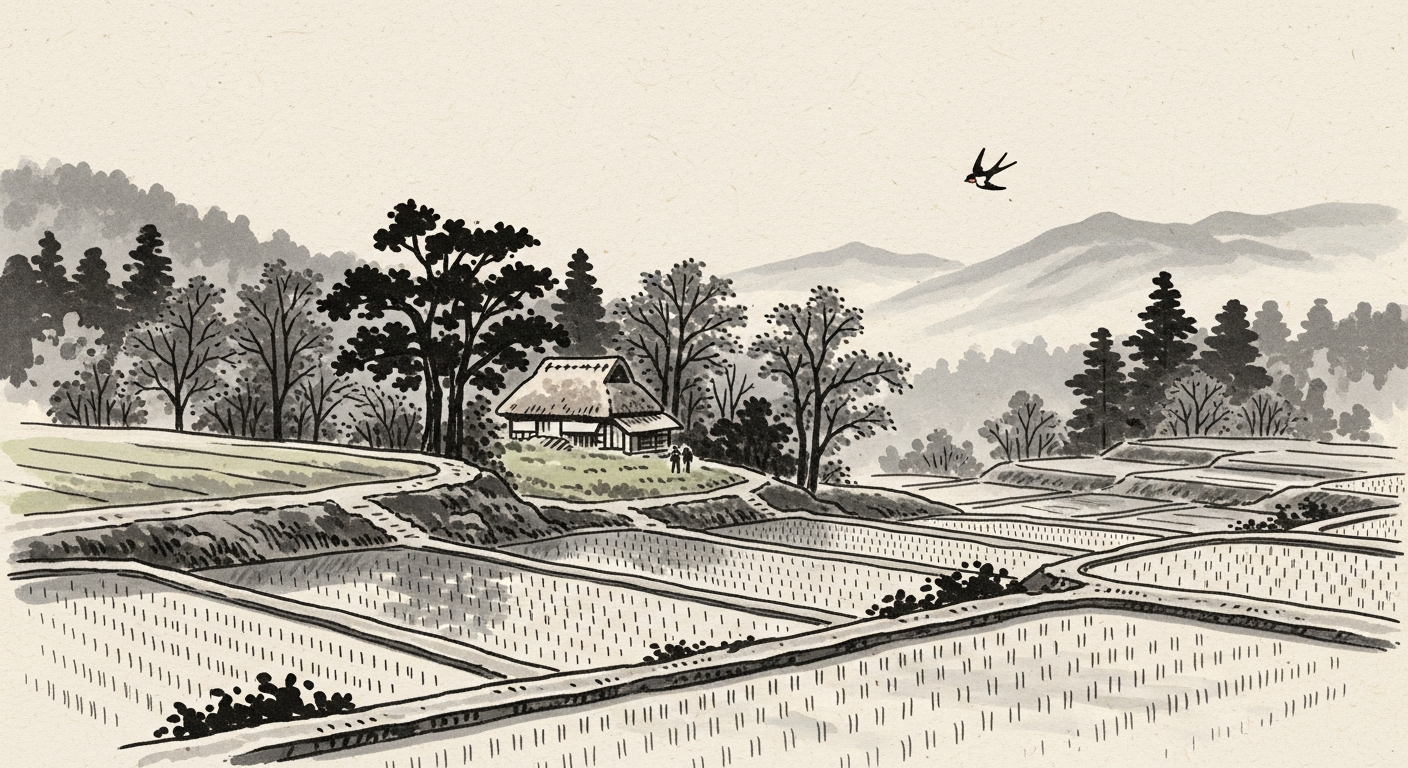
Not wilderness. Rice paddies, coppice woodland, bamboo groves, and gardens. They look the way they look because people kept working them.
The national network for this concept in Japan was founded on 13 September 2013, in Fukui City, timed to the fourth IPSI global conference. 101 organisations attended the founding assembly: companies, private bodies, research institutions, government. The governors of Ishikawa and Fukui Prefectures serve as joint representatives, and the two prefectures run the secretariat together. (SATOYAMA Initiative Promotion Network https://www.pref.ishikawa.jp/satoyama/j-net/satoyama.html )
The network uses SATOYAMA in a wider sense than the English reader might expect. Not only satochi-satoyama, the village woodland, but also satoumi the coastal sea, satonuma the marsh, satoko the lake, satogawa the river. Any secondary natural environment formed and maintained through human involvement.
Our own reason for joining sits on one slope.
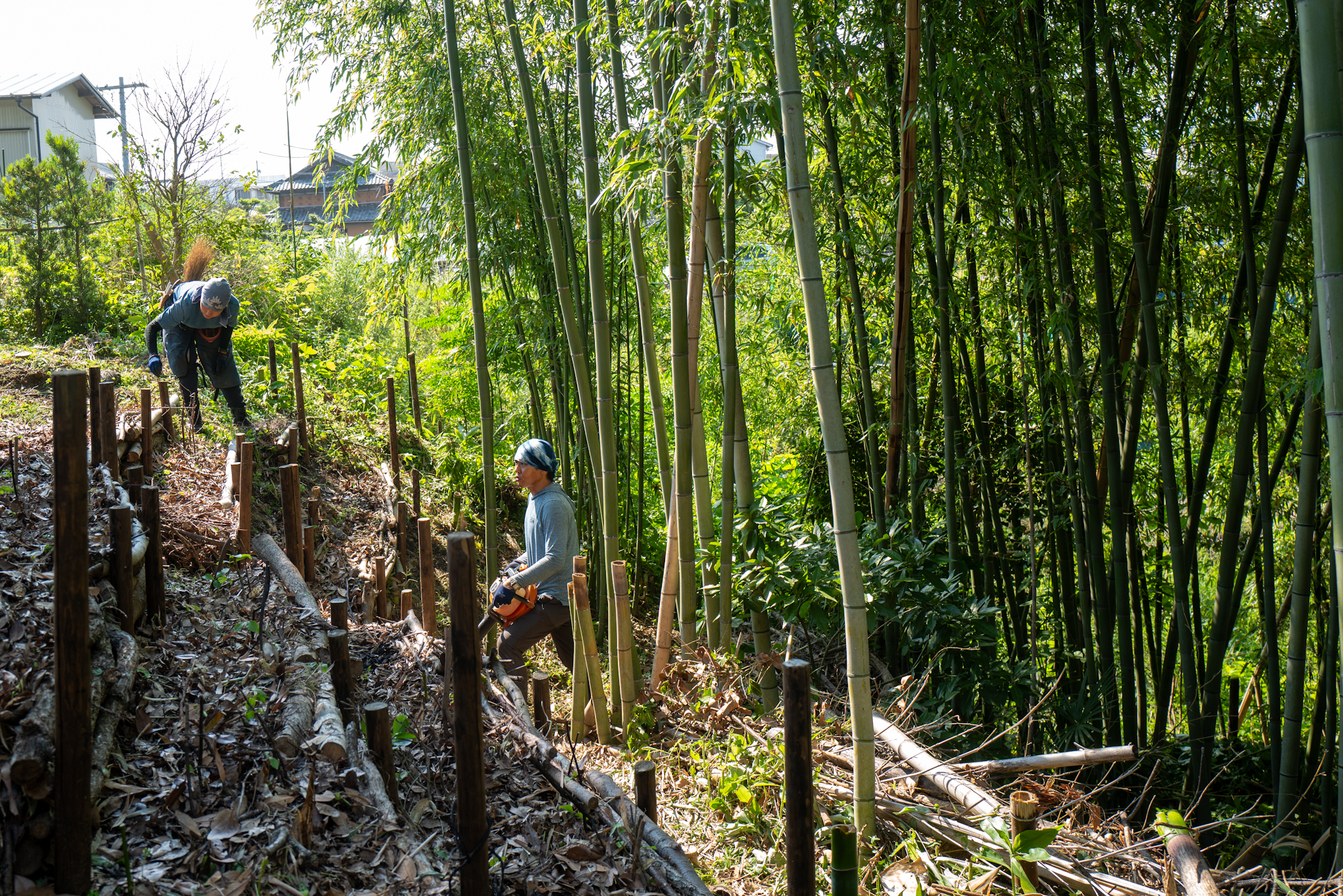
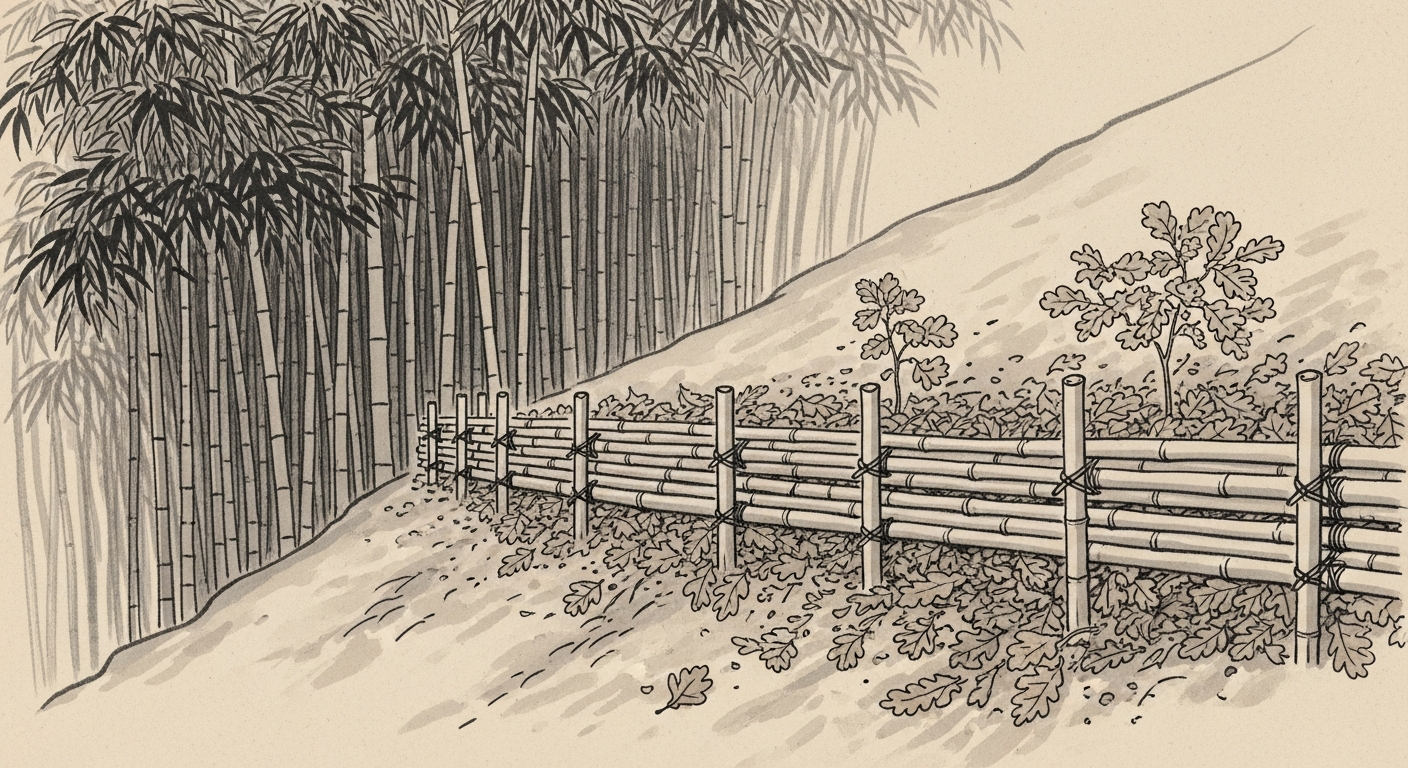
At a temple woodland in Kameyama City, Mie Prefecture, we manage a stand of madake bamboo through the year. On a slope where bamboo had taken over and the topsoil was washing away, we built shigara: bamboo stakes and horizontal poles set along the contour line, packed behind with konara oak leaves.
The materials return to the soil in ten to twenty years. By then the plants that have rooted take over the job of holding the slope. It is an Edo period technique with modern ecology added, and the process of human work dissolving back into nature is built into the design.
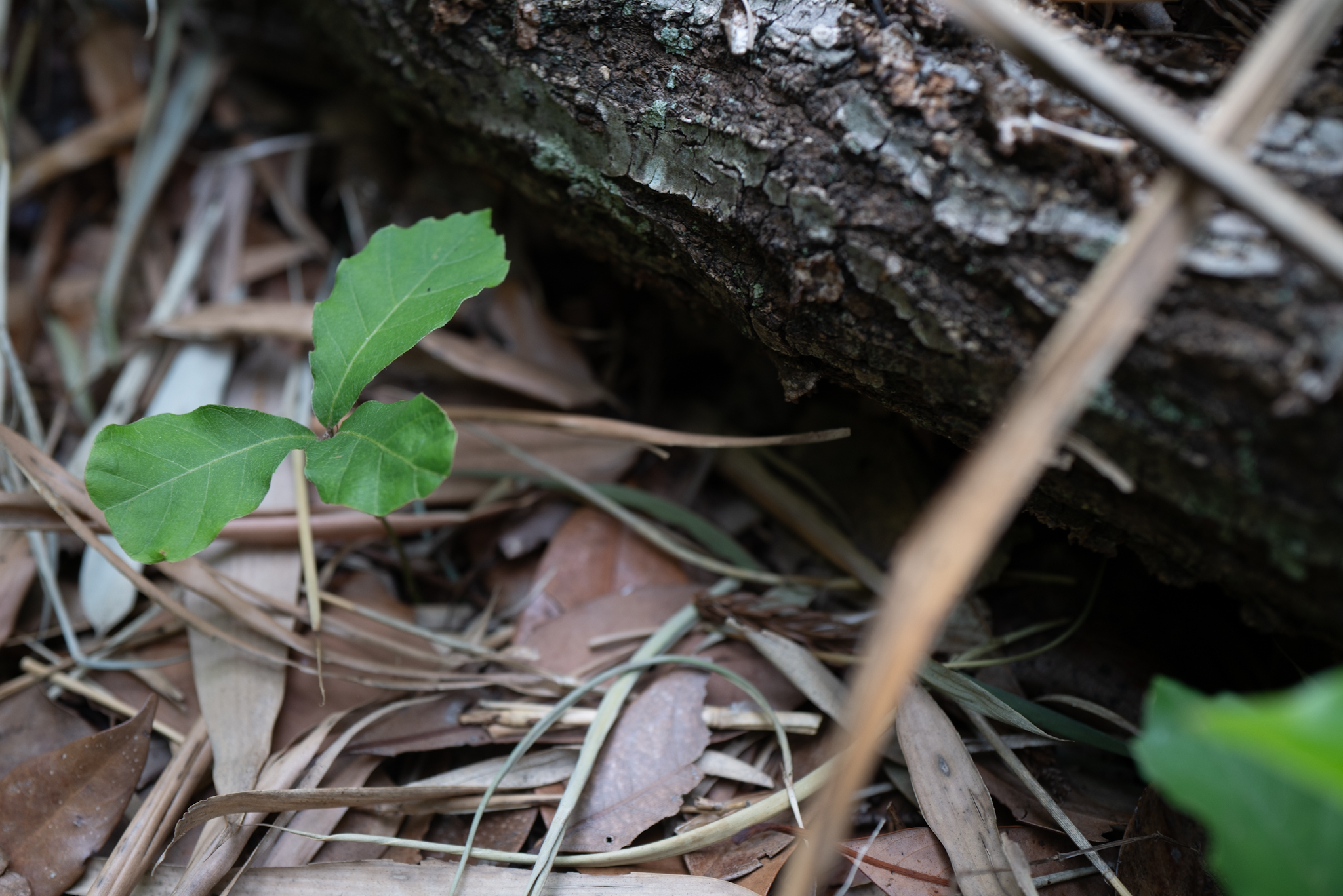
Two and a half months after construction, on 13 June 2026, we surveyed the slope and confirmed 31 young trees established. 22 of them were konara oak. The tallest stood about 20 centimetres.
That number matters because a cleared bamboo stand is a place where oak does not regenerate easily. It happened here because the packed oak litter carried seed, held moisture, drew in decomposers, and built soil.
For this bamboo grove, we prepared the full application ourselves, and on 7 October 2025 it received certification as a Kameyama Biodiversity Coexistence Area under the city's programme.
Which brings me back to the question at the top.
Our work tends to end where the site ends. The slope holds, the trees grow, the client is glad. That is enough, in one sense.
But to understand why oak germinated on a cleared bamboo slope, to record it, and to carry it to the next slope, one pair of eyes is not enough. Across Japan there are people who have kept their hands in satoyama for decades, and each of them holds an answer.
Through this network we intend to share what we find with other organisations, and to bring what they know back to our own ground.
And what we have seen here, the life inside the brushwood, the count of the oak saplings, we will hand over gladly to anyone who needs it.
The materials of a shigara terrace eventually become soil. What people assembled decays, and plants take over. That is what finished looks like.
We think our own work is the same. The traces of our hands should dissolve into the landscape in the end.
Gardens, bamboo groves, satoyama. They have all continued that way.


