The Invasive Plant Called One of the Worst on Earth — Alligator Weed's Spread Through Japan

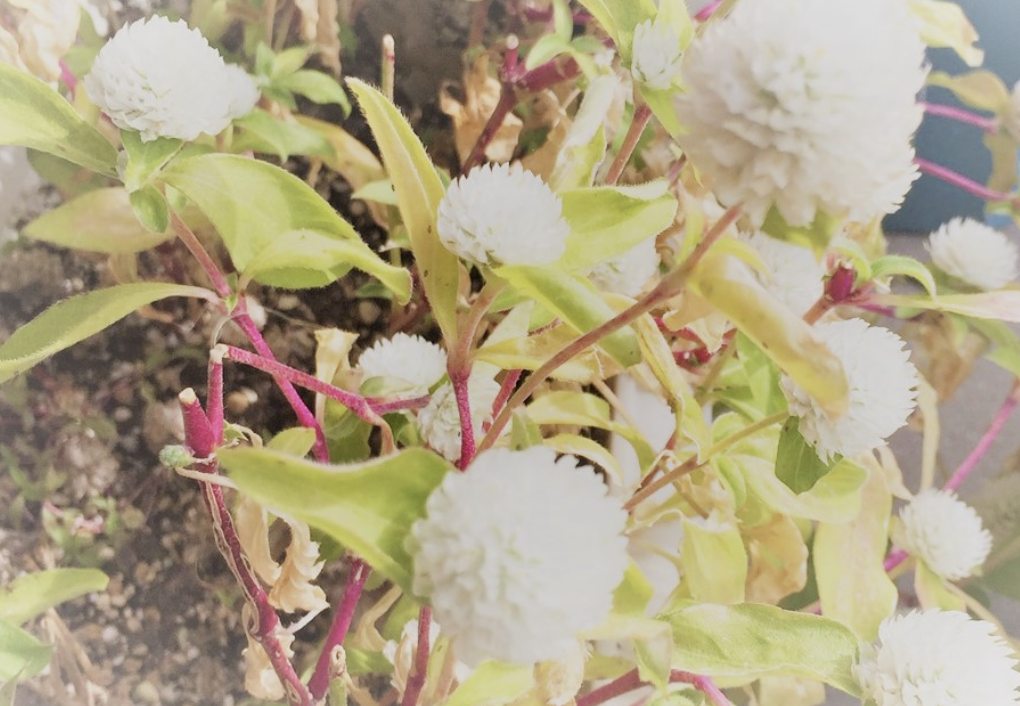
The plant pictured here is gomphrena, sometimes called globe amaranth — a member of the Amaranthaceae family that keeps blooming right through the peak of summer without a break.
In early August 2025, a news story broke about a different plant in that same family: alligator weed, a species some researchers call one of the worst invasive plants on Earth, and it was spreading fast.
The location was a rice paddy in Yakage, Okayama Prefecture, Japan.
A suspected colony of the perennial had already been spotted there in late May.
Staff from the prefecture's pest control office went out to confirm it in person, then sent photographs to Japan's Ministry of the Environment, which verified the identification.
Alligator weed had first been confirmed in Okayama Prefecture back in February 2025, in a river in Kurashiki City, but this was the first time it had turned up in farmland there.
Alligator weed is a perennial in the Amaranthaceae family that mainly lives in and around water.
It takes hold in rivers, irrigation channels, and rice paddies, and once it gets established, it can cause rice stalks to lodge (fall over), cut into yield, and make it harder to run farm machinery through the field.
What makes it especially hard to deal with is its sheer regenerative power.
Try to pull it out, and even a small torn fragment left behind can re-root and start spreading all over again.
It's the kind of plant you really don't want to handle carelessly.
Once it forms a large, dense colony, getting rid of it becomes extremely difficult — which is exactly why early detection and early removal matter so much.
The first confirmed established population of alligator weed in Japan was recorded in 1989, in Amagasaki, Hyogo Prefecture.
Since then its range has expanded year over year, and it's now found widely across Ibaraki, Chiba, and areas throughout western Japan.
This year's growth has been particularly vigorous, and in several regions there's real concern about what that could mean for this season's new rice crop.
A few other plants in the same Amaranthaceae family, like cockscomb and kochia, are common in Japan too.
But when alligator weed is in white bloom, its appearance closely resembles the gomphrena pictured above — which is part of what makes it easy to mistake for something harmless.
The takeaway is simple: don't dismiss it as "just a weed."
If you spot something that looks like this, the right move is to coordinate with your local agricultural authority rather than trying to deal with it alone.
A quick fact sheet.
Alligator weed (Alternanthera philoxeroides) is officially designated as an Invasive Alien Species in Japan, in the genus Alternanthera within the Amaranthaceae family, and it's native to South America.
We manage rice paddies, waterways, and gardens across Mie Prefecture, Japan, and keep watch for invasive species like this one. If you're not sure what's growing in a wet corner of your property, get in touch.