Three Years In — What Continuous Care Revealed at a 120-Year-Old Japanese Garden in Yokkaichi

The first time I walked into this garden, I felt like something important was quietly slipping away.
Onoebessou has stood since 1900, a 1,500-square-meter Japanese garden beside Yokkaichi Harbor.
Its trees have lived through more than 120 years. But when I first arrived, three years ago, the garden was losing ground — not dramatically, just slowly, the way most neglect happens.
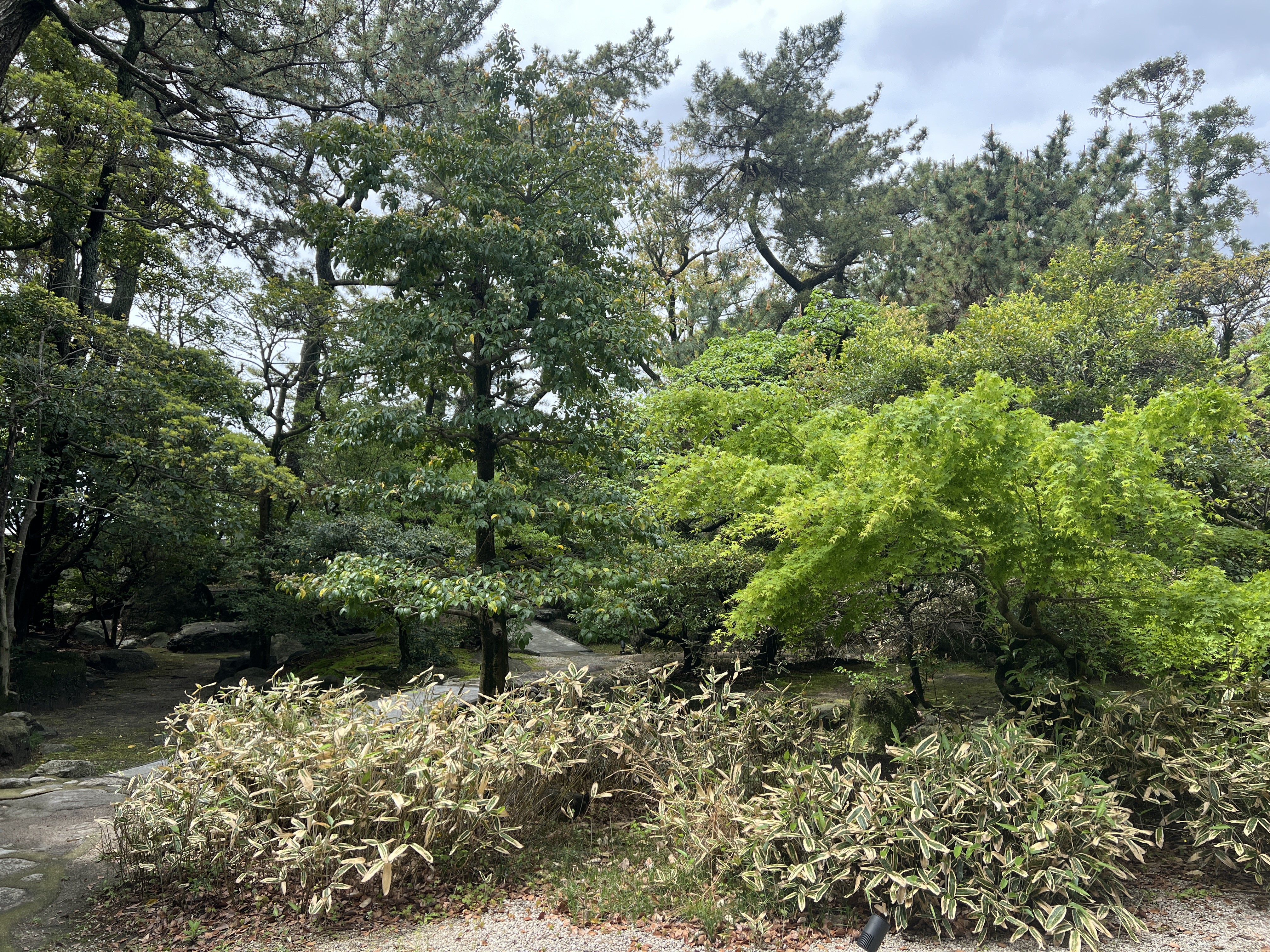
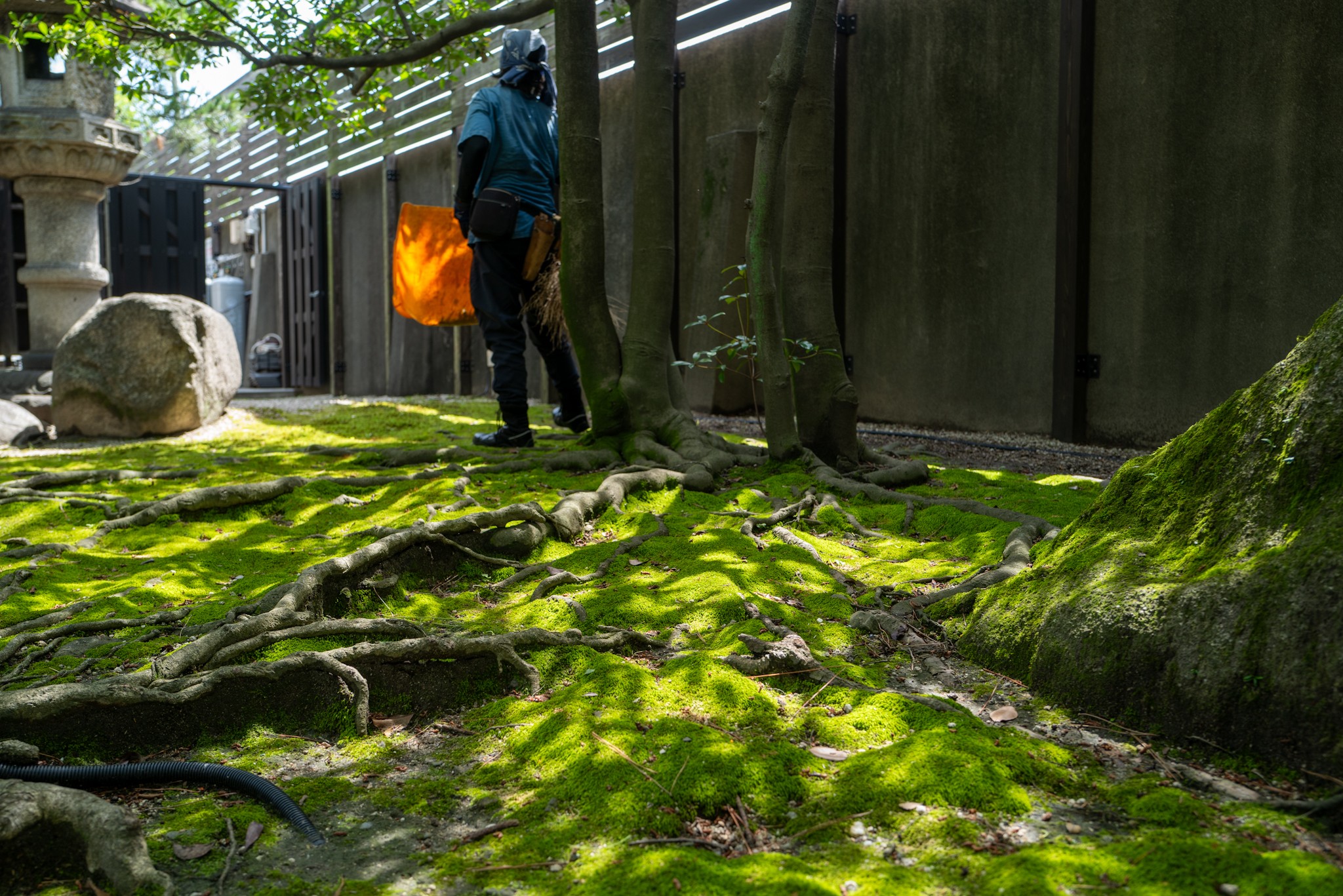
Fallen leaves had piled up around the stone lanterns. There was almost no moss left. The shrubs had yellowing leaves, and weeds pushed up freely between the gravel.
The trees were alive, but the whole garden felt dim, tired. Underneath the surface, the problem was worse than it
looked: weeds had rooted into the gravel joints, the soil had been compacted hard as stone, and roots couldn't spread.
Water couldn't drain. The mycorrhizal fungi that trees depend on weren't functioning. That was the reality no one could see just by walking through.
Let me explain what regular garden management actually means here — because it's different from a single visit or a seasonal clean-up.
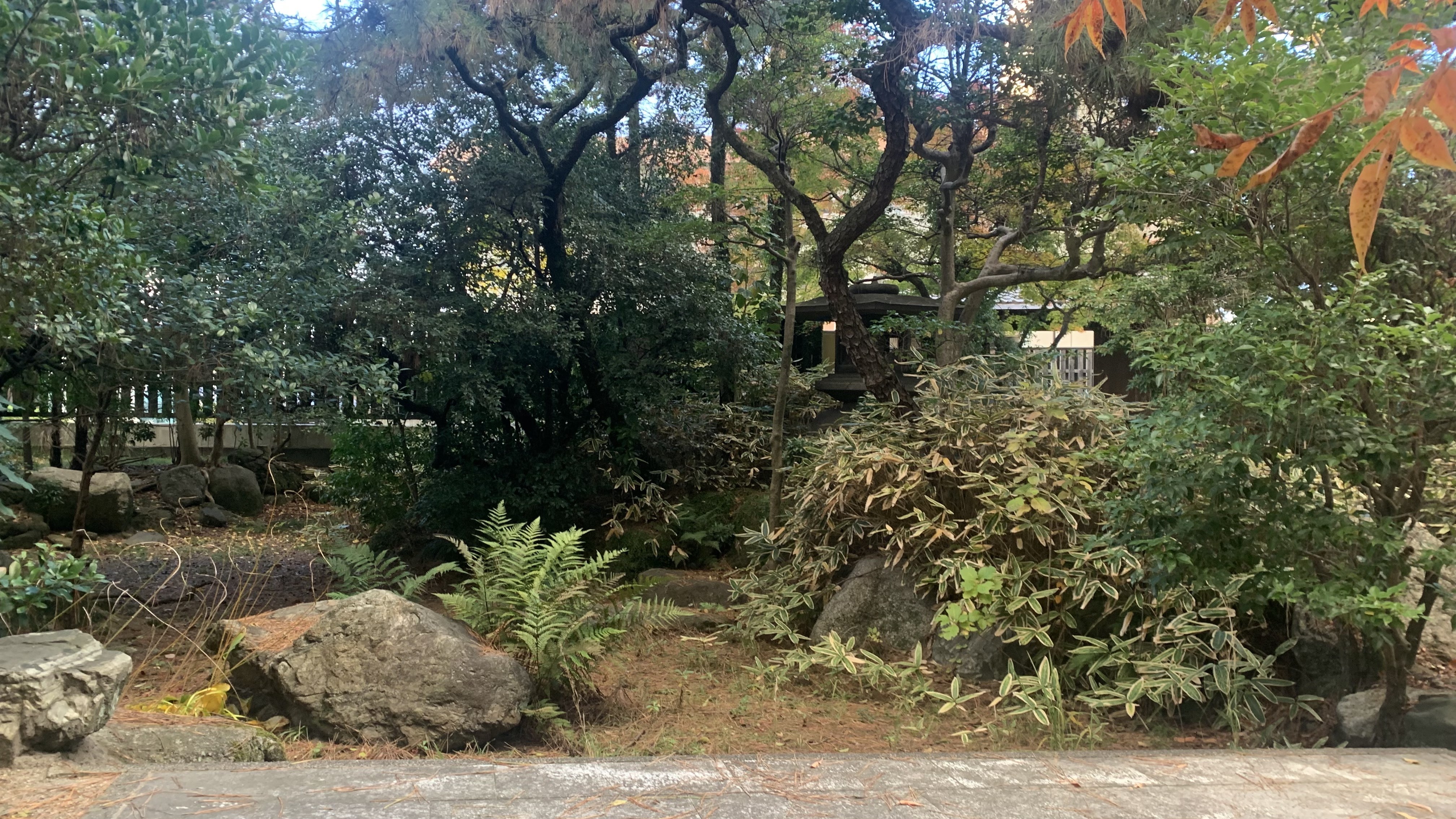
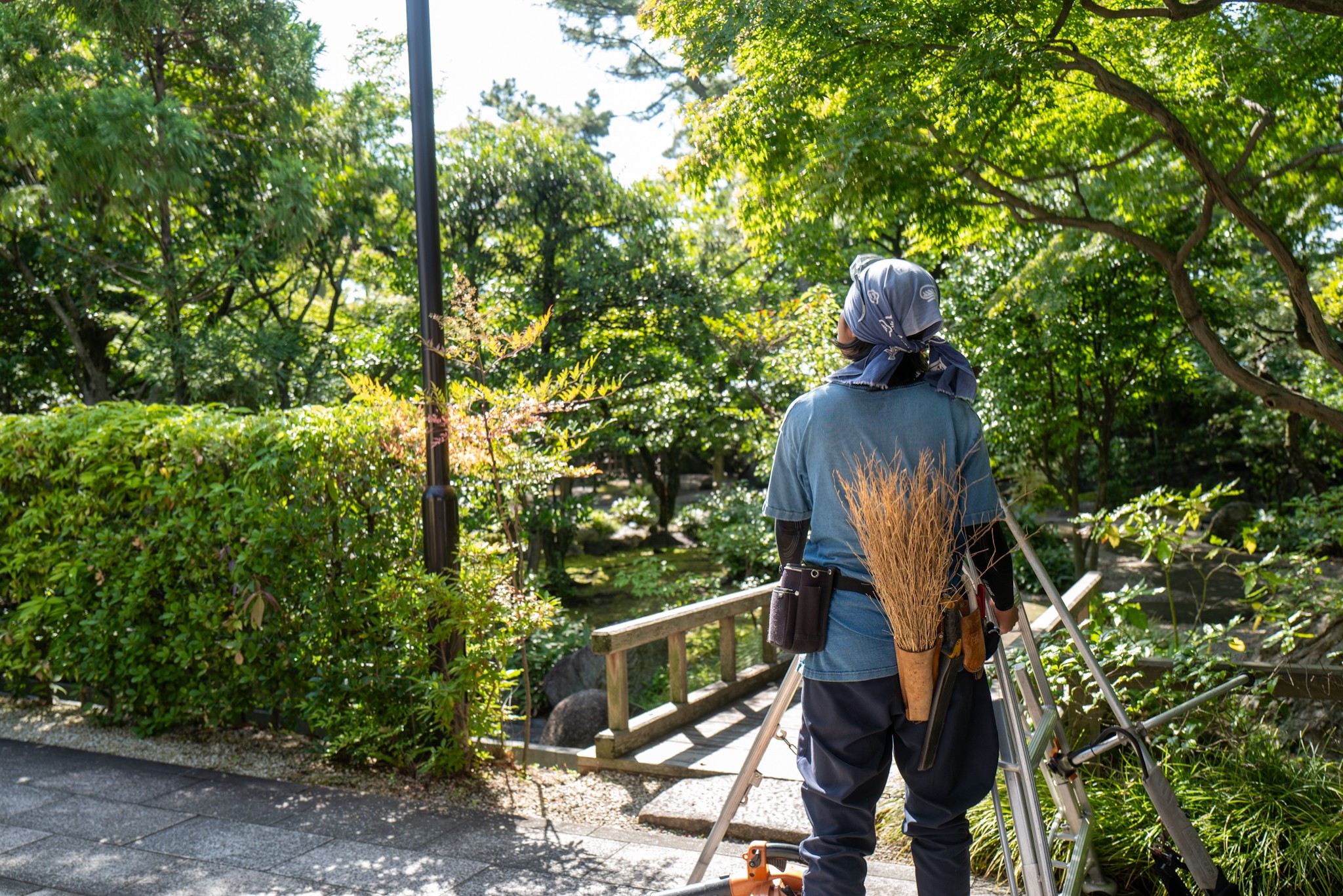
We've been coming to Onoebessou year-round for three years now. Spring means refreshing the moss garden and weeding. Early summer brings a full team clean and disinfection pass.
Summer is for shaping the raked sand patterns and managing the tall trees.
Winter is komo-maki (wrapping pine trunks in straw mats to catch
overwintering insects), laying pine needles
as mulch, and applying winter fertilizer. Underneath all of it, hand-weeding and leaf-clearing never stop.
Watching the same garden across an entire year teaches you something a single visit never can. How a tree's expression changes from last month to this one.
How the moss spread differently this autumn compared to last. I've come to think that regular management is really about one thing: recording. Paying attention long enough to notice change.
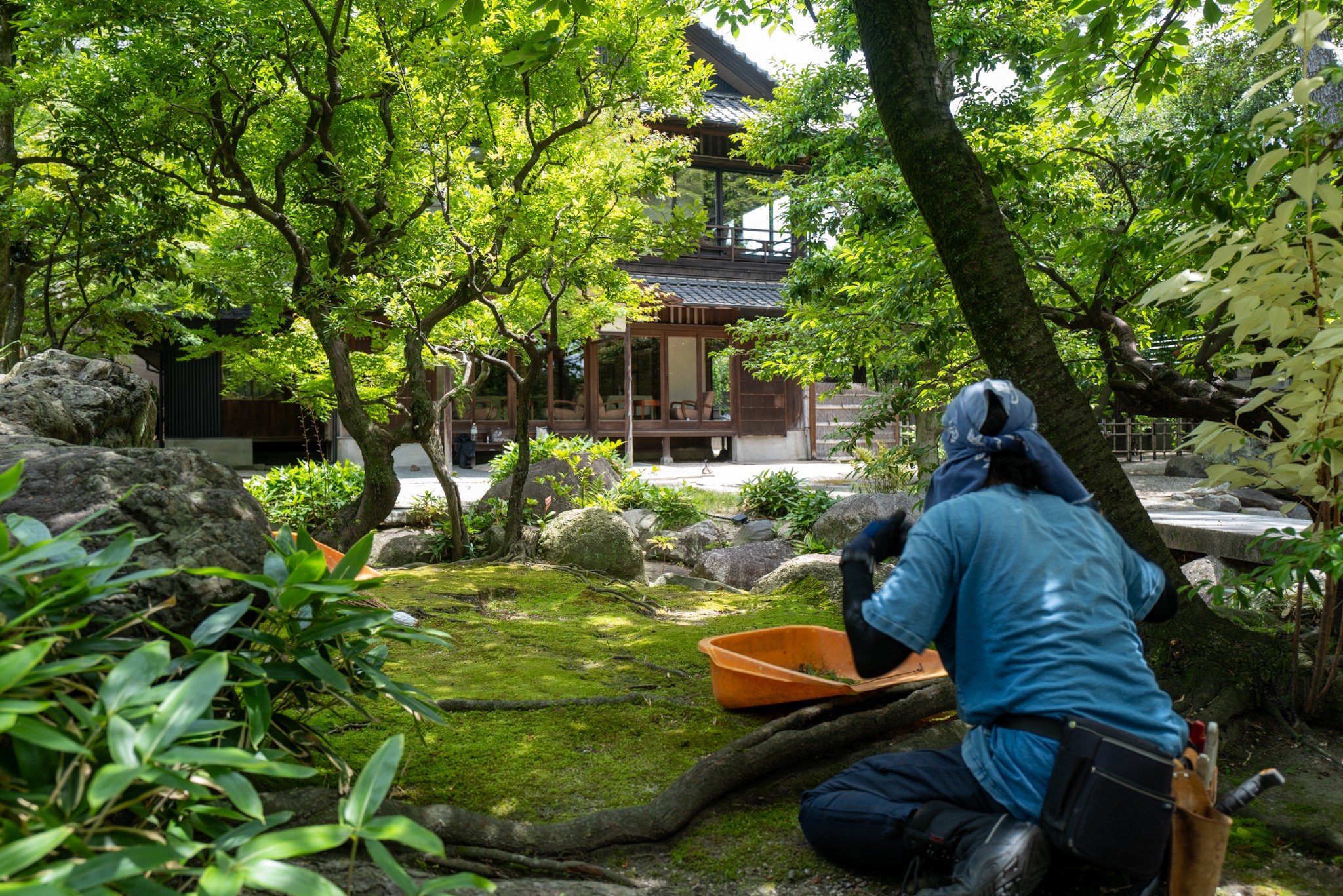
Here's a small example of what that looks like in practice. Gravel that falls onto the moss can't be cleared with a machine — the moss dies the moment a tool touches it. So it's removed by hand, one piece at a time, low to the ground. One square meter can take thirty minutes. It isn't inefficient. It's the only method that fits this particular garden.
The numbers told a story too. On April 7, 2026, we brought in a soil specialist to run a full diagnosis and inject 600 liters of soil treatment around the garden.
The results explained a lot. Bulk density measured 1.78 — a healthy garden soil runs 0.90 to 1.10, so this was close to stone. Available phosphate sat at 6% of the standard reference value, lime at 27%. Arbuscular mycorrhizal fungi, which most healthy trees rely on for water and nutrient uptake, were only symbiotic at a rate of 43.4%, well under the healthy range of 60–80%. Worse, spore counts came back at 0.9 per gram of soil, against a healthy range of 5–15. The fungi's ability to
reproduce itself was close to zero.
After the injection — a mix of fulvic acid, Menedael, and charcoal powder — the deep soil hardness near the pine by the stone lantern improved by 83%, from 18mm down to 3mm. A number like that is easy to write down. It's a different thing to watch it happen in the ground you've been kneeling on for three years.
By this spring, in year three of regular care, the garden had a different feel. Moss had spread further. The green of the leaves had deepened.
More growth was filling in around the stone lanterns. I noticed the color change before I could explain it — later, I understood it as evidence of the soil recovering. As the mycorrhizal fungi regained function, roots spread deeper and pulled up more water and nutrients. What you see above ground follows what happens below it, usually with a delay.
One discovery this spring only happened because we kept coming back. A sucker growing from the base of an Oshima cherry tree had white leaves — a genetic mutation affecting chlorophyll production. On its own, a shoot like that shouldn't be able to photosynthesize. But it was still alive, drawing sugar and florigen (the hormone that triggers flowering) through the parent tree's root system. In April 2026, for the first time, it bloomed — white, fading to pale pink. If we hadn't been visiting this garden continuously, we would never have caught it.
At Senteiya Sora, most of our work in Mie Prefecture is exactly this: not a single pruning job, but staying. Coming back to the same garden, recording what changes, and waiting alongside the soil while it recovers.
I still don't have a full answer to this: how many years does it take before a garden like this can hold its own again? I've seen soil recover faster than expected, and I've seen it take longer than I'd hoped. The difference isn't always visible in year one, or even year two. That's part of why I keep coming back to Onoebessou — to find out.