A Nest Box Hollowed from an Oak Log — Custom Cavity for a Cockatiel, Made by Hand in Mie, Japan

Updated: May 30
A customer who keeps cockatiels commissioned a custom nest box — not a plywood box from a pet shop, but a real hollow log, made by hand from a single piece of oak.
This was the first pet-bird commission for Kotorino Shop. The process, from log to finished nest box, is recorded here.
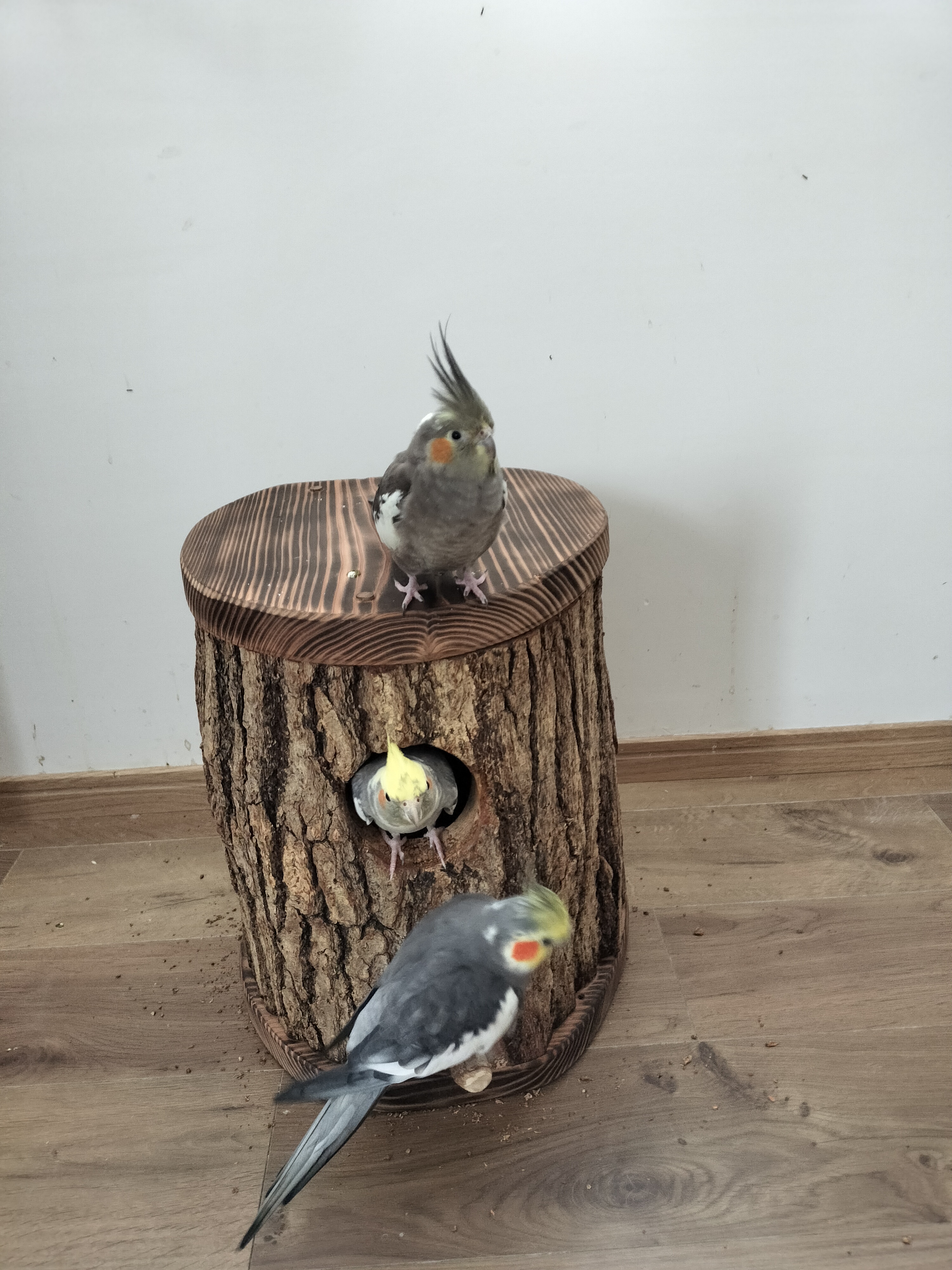
Why Cockatiels Prefer Hollow Logs
Cockatiels (Nymphicus hollandicus) are native to Australia, where they live in open woodland along rivers and lakes — primarily eucalyptus forest. In the wild, they nest exclusively in existing tree cavities: hollow sections of dead or living eucalyptus.
Cockatiels do not excavate their own cavities. They search for a hollow that already exists, assess the entrance size, and move in. This is the same nesting behavior as owls, titmice, and other cavity-nesting species.
A plywood box approximates the shape. A hollowed log carries the smell, texture, and acoustic properties of actual wood — the things a cockatiel recognizes as a cavity worth entering.
The Material: Konara Oak from a Felling Job
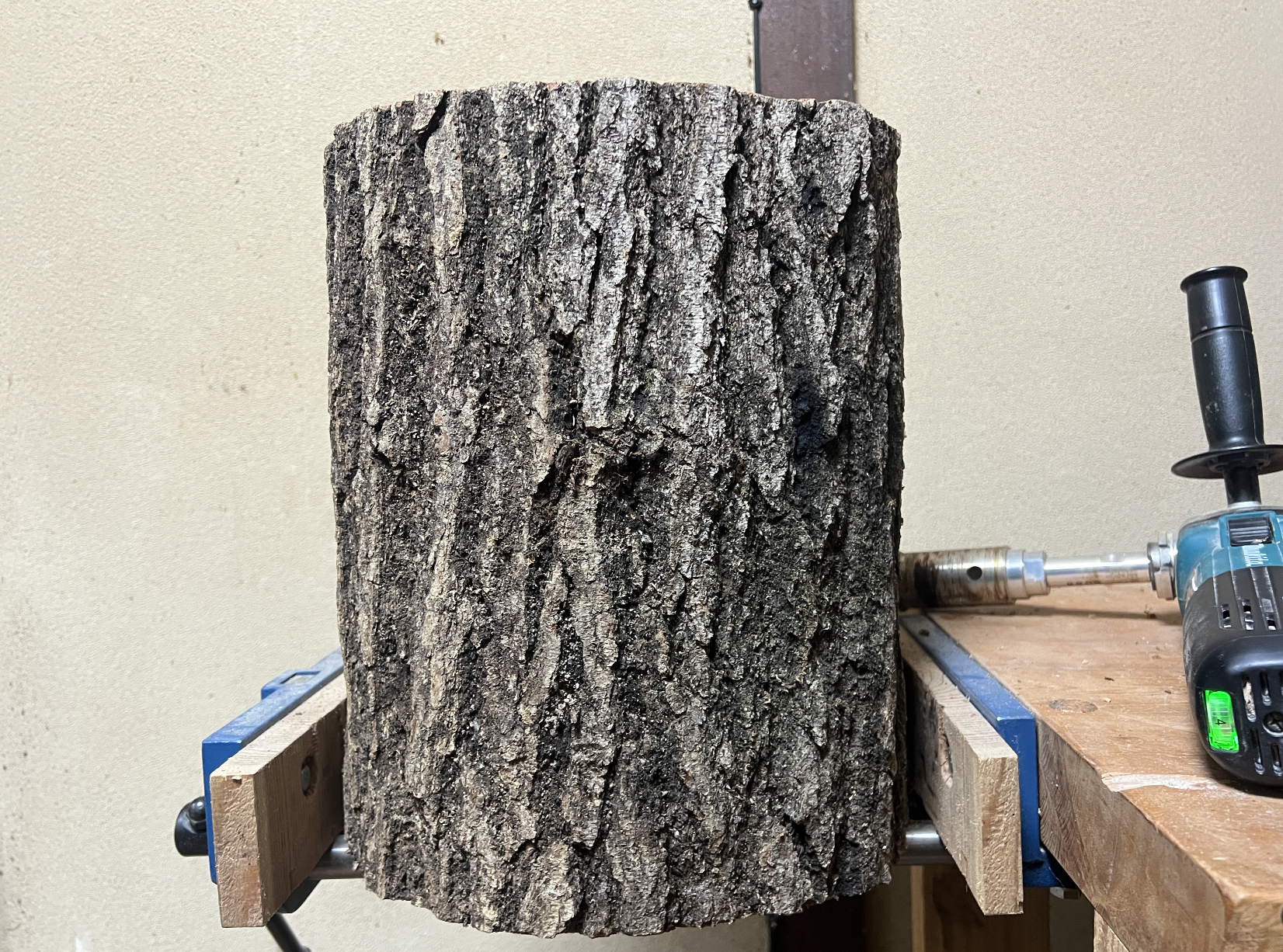
The log used was konara oak (Quercus serrata), kept in natural air-drying storage after being cut during a pruning and felling job. The same material used to make nest boxes for wild birds — owls and titmice — in the Kotorino Shop line.
Every piece of wood used in Kotorino Shop products comes from trees removed during Senteiya Sora's landscaping and felling work. The timber would otherwise be disposed of; turning it into a nest box extends its useful life and keeps the material within a local ecological cycle.
Hollowing the Log
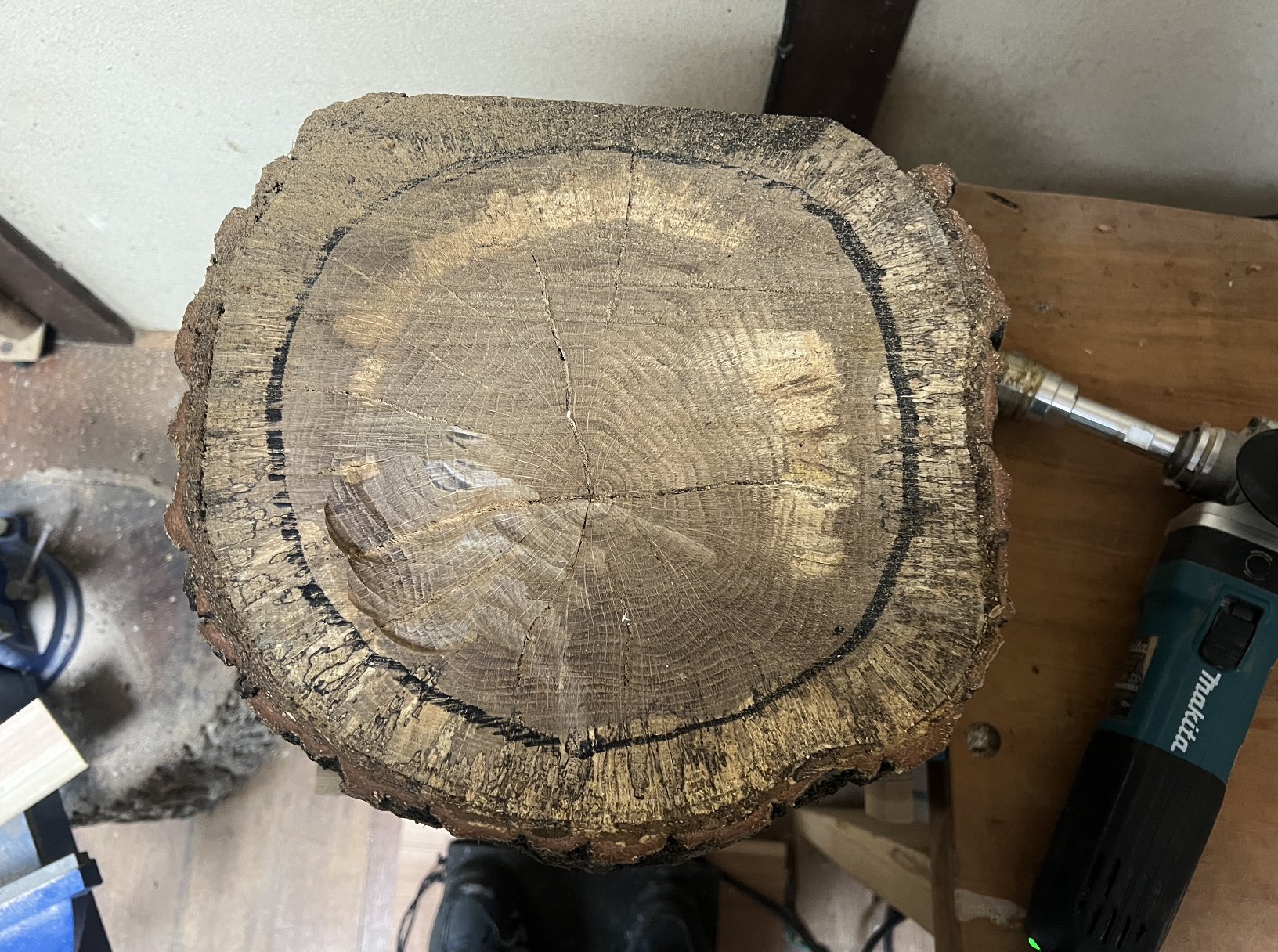
The first step is marking the cavity on the top face of the log — setting the wall thickness so it remains uniform around the entire interior. The line guides the cutting; the wall thickness affects both structural integrity and the insulation properties of the finished cavity.
The interior is removed gradually. Wood chips from the hollowing process are kept for use in other projects. The interior surface is left rough rather than sanded smooth — cockatiels use their claws to climb in and out, and a rough surface gives them grip.
Water Submersion Drying
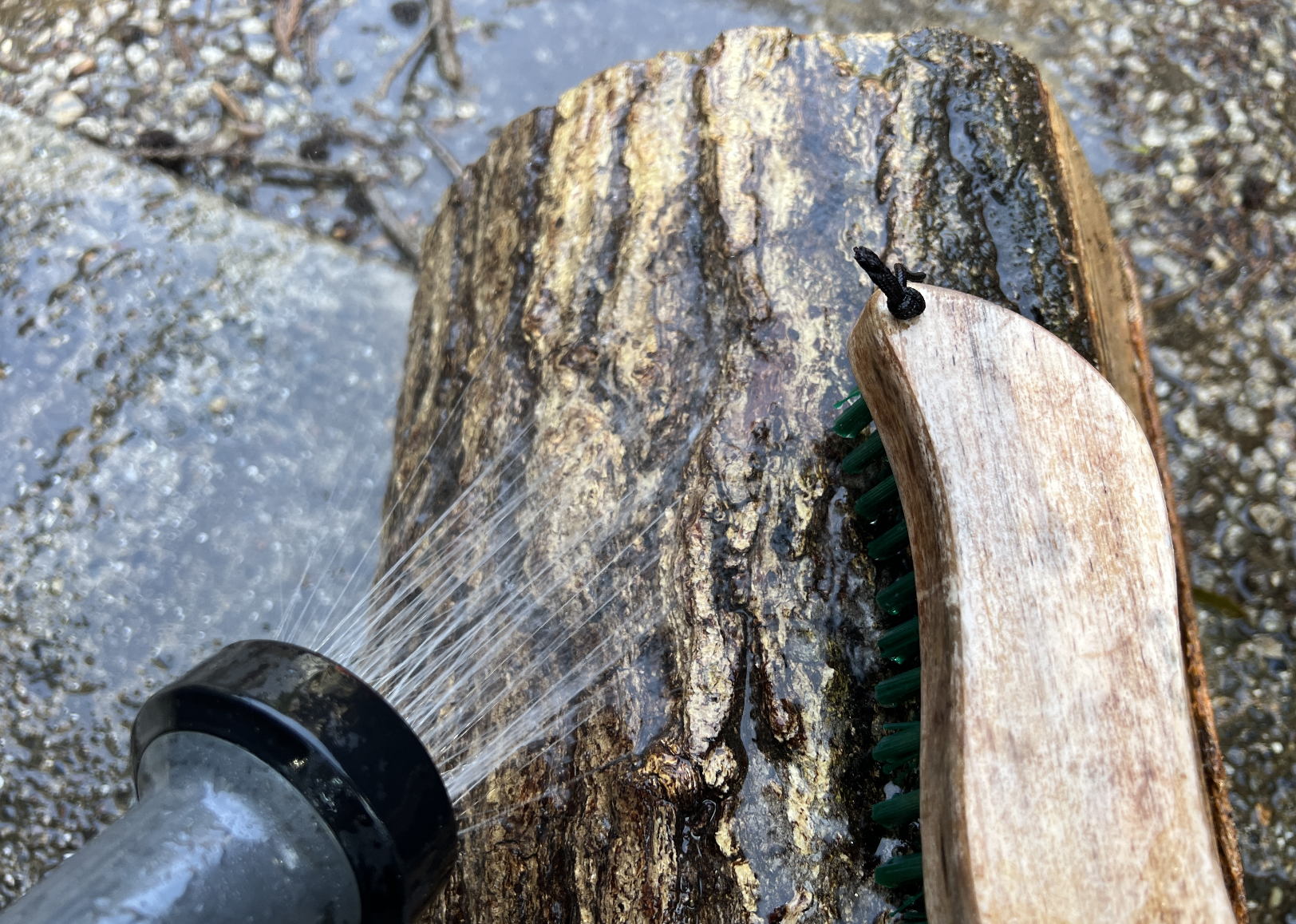
After hollowing, the log is submerged in water and left to dry — a traditional woodworking technique that reduces the risk of cracking and kills any insects remaining in the wood.
When wood dries too quickly after being cut, surface moisture evaporates faster than interior moisture can migrate outward. The resulting stress cracks the wood along the grain.
Submerging the log first equalizes the moisture gradient, allowing slower, more uniform drying.
After water drying, the bark is scrubbed thoroughly with a brush before the log moves to the next stage.
Entrance Hole and Lid
The entrance hole diameter is sized to the cockatiel's body — large enough to pass through comfortably, small enough that larger birds cannot enter. The edge of the hole is finished with a file to remove any points or splinters.
The lid is made from cedar (sugi) and scorched with a torch to match the color tone of the konara bark. It is designed to be removed — for cleaning the interior and checking the condition of the nest — and attached without adhesive so it can be lifted off without tools.
The Result
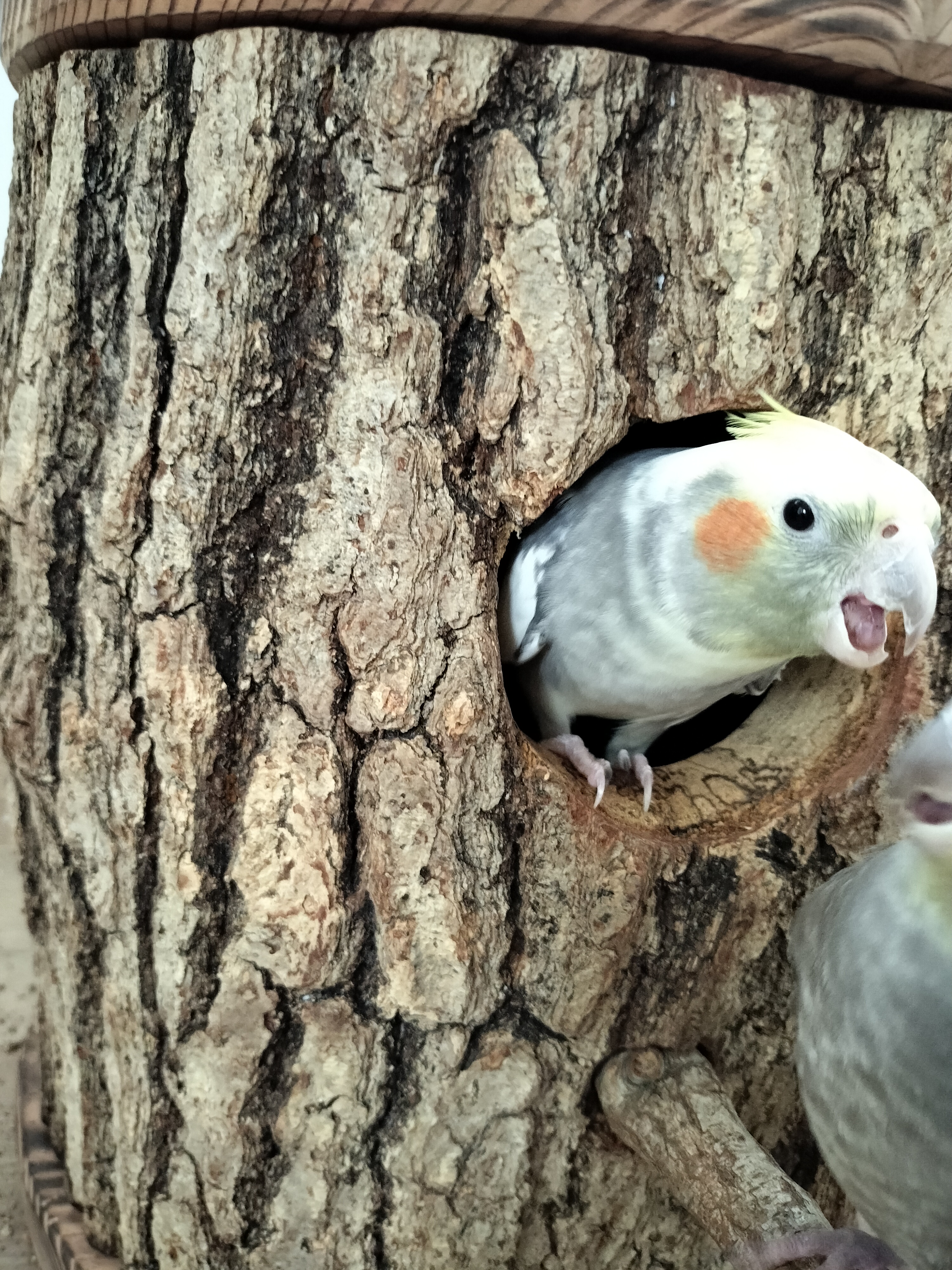
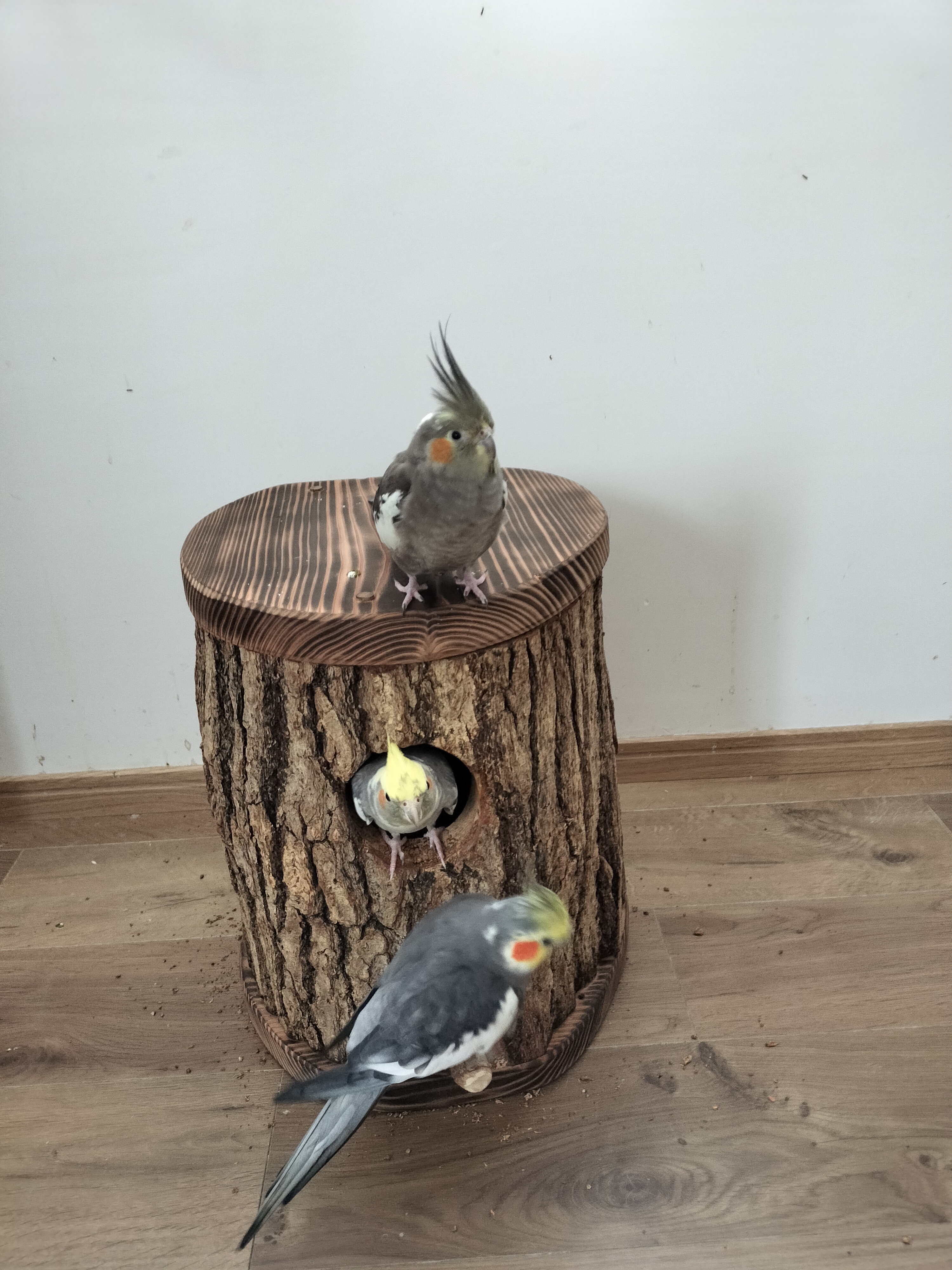
The nest box was delivered to the customer. We heard back almost immediately: the cockatiels had climbed in before the day was out.
The smell of the wood, the texture of the bark, the scale of the cavity — these are not things that can be written into a design specification. The cockatiels recognized something in the object that matched what they were looking for.
Kotorino Shop
Kotorino Shop (木鳥商店, "kotorinotheshop") is an online shop run by Senteiya Sora, producing handmade nest boxes and wood products from timber generated at pruning and felling sites. Products include owl nest boxes, titmouse nest boxes, and custom orders.
Custom orders for pet birds are available by inquiry. Entrance diameter and interior dimensions are adjusted to the species and individual bird. Contact via the Kotorino Shop page.
Frequently Asked Questions
Q. Are cockatiel nest boxes only available as custom orders?
A. Yes, at present. The dimensions — entrance hole diameter, interior volume, mounting configuration — depend on the number of birds, the cage setup, and how the box will be positioned. An inquiry with those details is the starting point.
Q. Can nest boxes be made for other pet bird species?
A. Yes, by inquiry. Kotorino Shop has produced nest boxes for owls and titmice as well as cockatiels. Providing the species and approximate body size allows us to propose appropriate entrance and interior dimensions.
Q. What is water submersion drying, and why is it used?
A. When freshly cut wood dries too quickly, the outer surface loses moisture faster than the interior, creating internal stress that splits the wood. Submerging the log in water first slows and equalizes the drying process. It also eliminates insects that may be living inside the log. The technique has been used in Japanese woodworking for centuries.
Q. What species of wood is used?
A. Primarily konara oak (Quercus serrata), the most common broadleaf deciduous tree in the woodlands of central Japan. Konara is hard, durable, and available from pruning and felling jobs in the region. The species varies depending on what is available from recent site work — each nest box is made from locally sourced timber.
Senteiya Sora is a certified tree care and landscaping company based in Komono-cho, Mie Prefecture, Japan.

Senteiya Sora is a Google News verified media source.