Shigara: Handwoven Slope Stabilization at a Bamboo Temple in Mie — Technique, Materials, and a 10-Year Recovery Plan

Updated: May 30
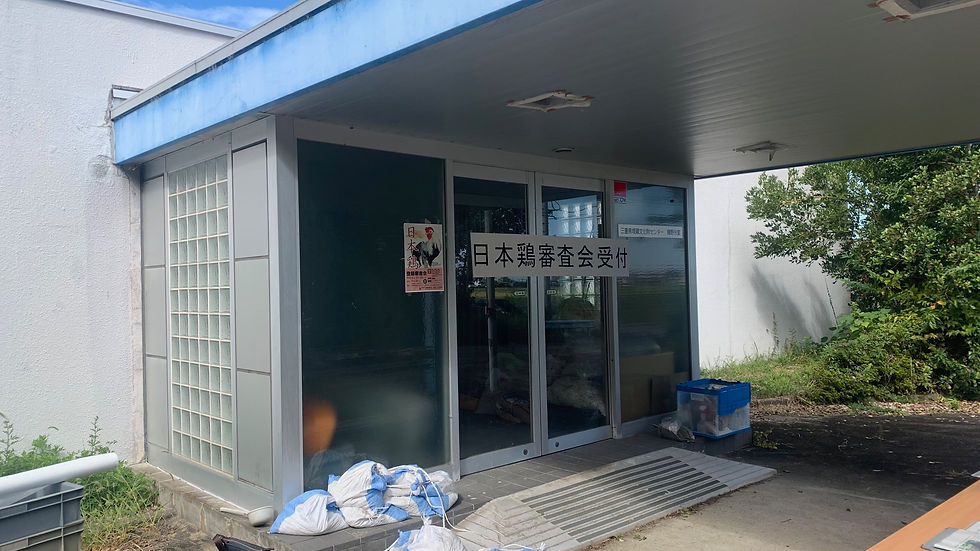
Slope stabilization work at Hoiji Temple in Kameyama City, Mie Prefecture — a bamboo grove where years of concentrated rainfall had stripped the surface soil away.
The method used was shigara: a traditional Japanese technique that slows water rather than stopping it, and builds a scaffold for plants to eventually replace.
The Problem: Exposed Bamboo Roots on an Eroding Slope
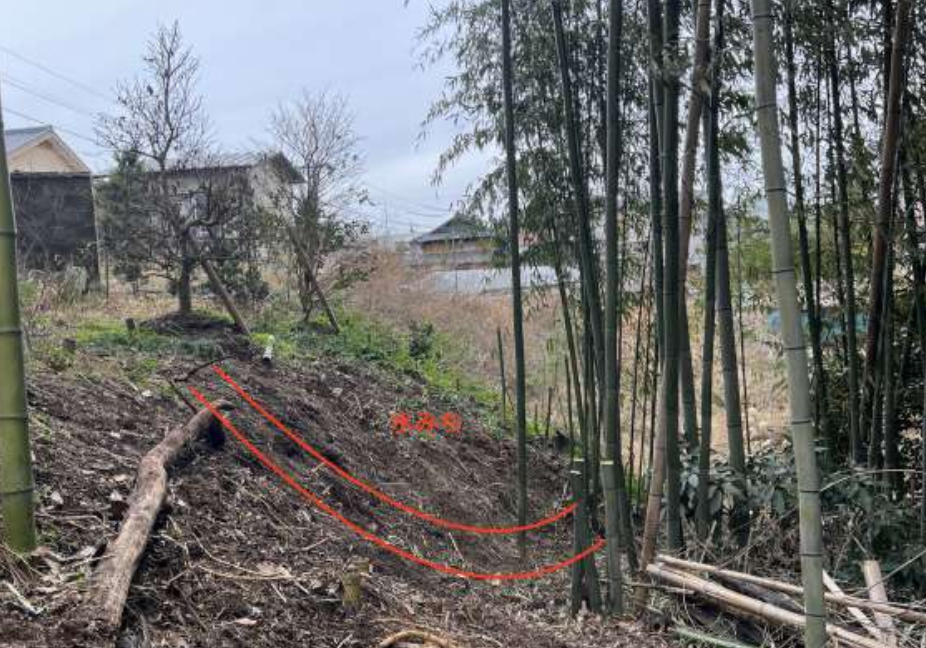
Moso bamboo (Phyllostachys edulis) and madake bamboo (Phyllostachys bambusoides) both produce dense, shallow root systems that hold soil well during the growing phase. When the canopy thickens and ground vegetation dies back from light deprivation, the surface becomes vulnerable.
At Hoiji Temple, the slope had lost enough soil that bamboo roots were exposed at the surface. Each rain event removed more material, deepening the erosion channel.
What Shigara Is
Shigara is classified in Japanese forestry as sakukou (柵工) — a type of hillside stabilization using permeable barriers. Stakes are driven into the slope along contour lines; natural branch material is woven between them; organic fill is packed behind the wall.
The defining feature is permeability. Shigara does not block water — it reduces the velocity of flow, disperses runoff across a wider surface, and allows water to infiltrate gradually rather
than rush downhill in concentrated channels.
Blocking water entirely creates pressure. When that pressure finds a weak point, the failure is sudden and total. Shigara works with the water's movement instead.
The structure is designed to become invisible. As organic material decomposes and plant roots develop, the shigara loses its function as a barrier and merges into the slope. The moment the structure disappears is when the slope is most stable.
Materials Used
All materials came from pruning and felling work conducted on the same site — branches, brushwood, and fallen leaves collected from the surrounding forest.
Stakes: 50 prepared, 29 used (diameter 5cm, length 150cm). Horizontal branch members (yokogi): 320 prepared, 80 used. Brushwood weave (soda): 100kg, all used. Fallen leaf fill: 120kg, all used.
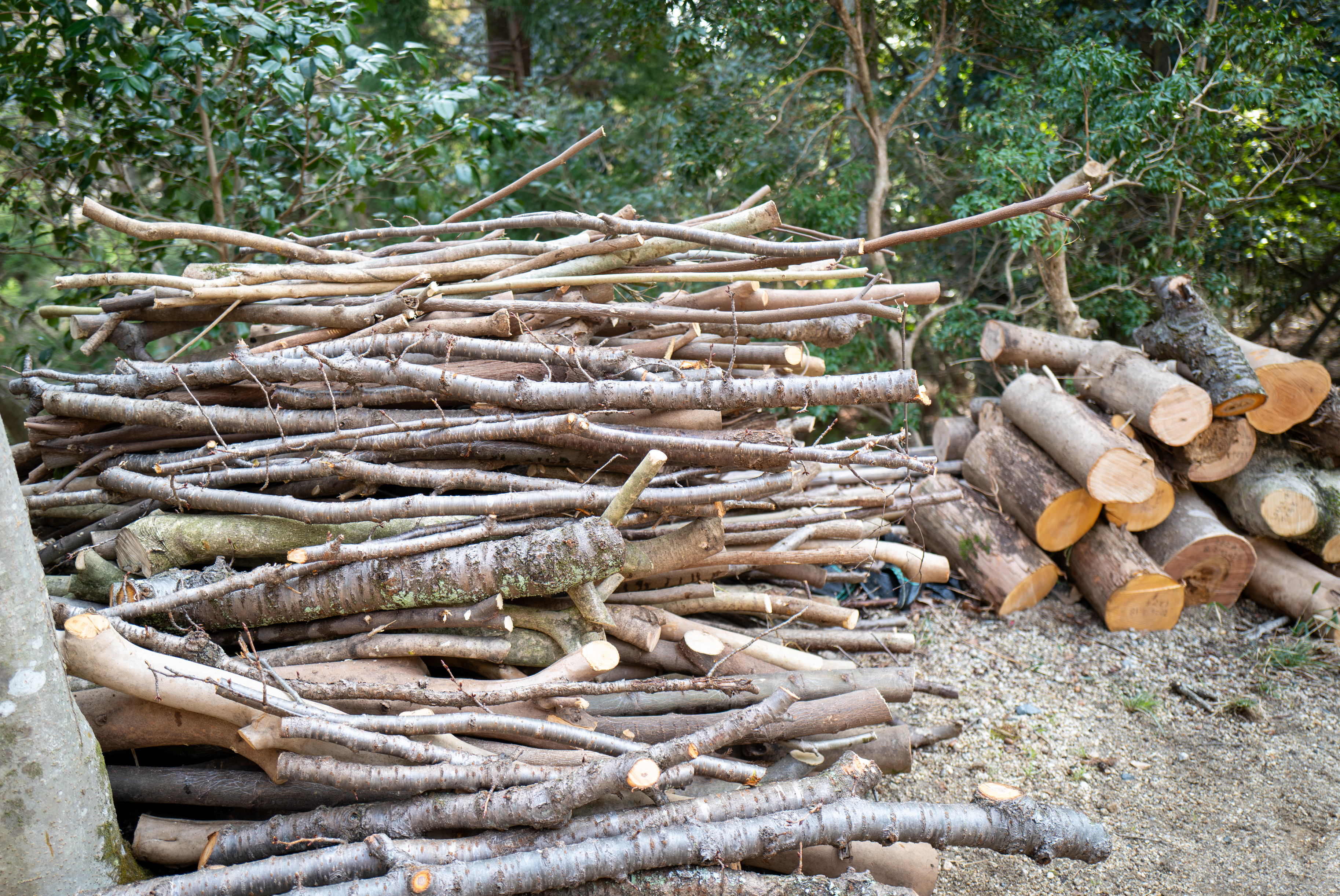
Using locally sourced material reduces the chemical and ecological distance between the structure and the site. The branches and leaves placed into the slope are already biologically familiar to the soil organisms present.
The fallen leaves were collected from the surrounding konara oak (Quercus serrata) forest and included acorns — seeds that may germinate in the fill material and contribute to the long-term revegetation.
The Weaving Process
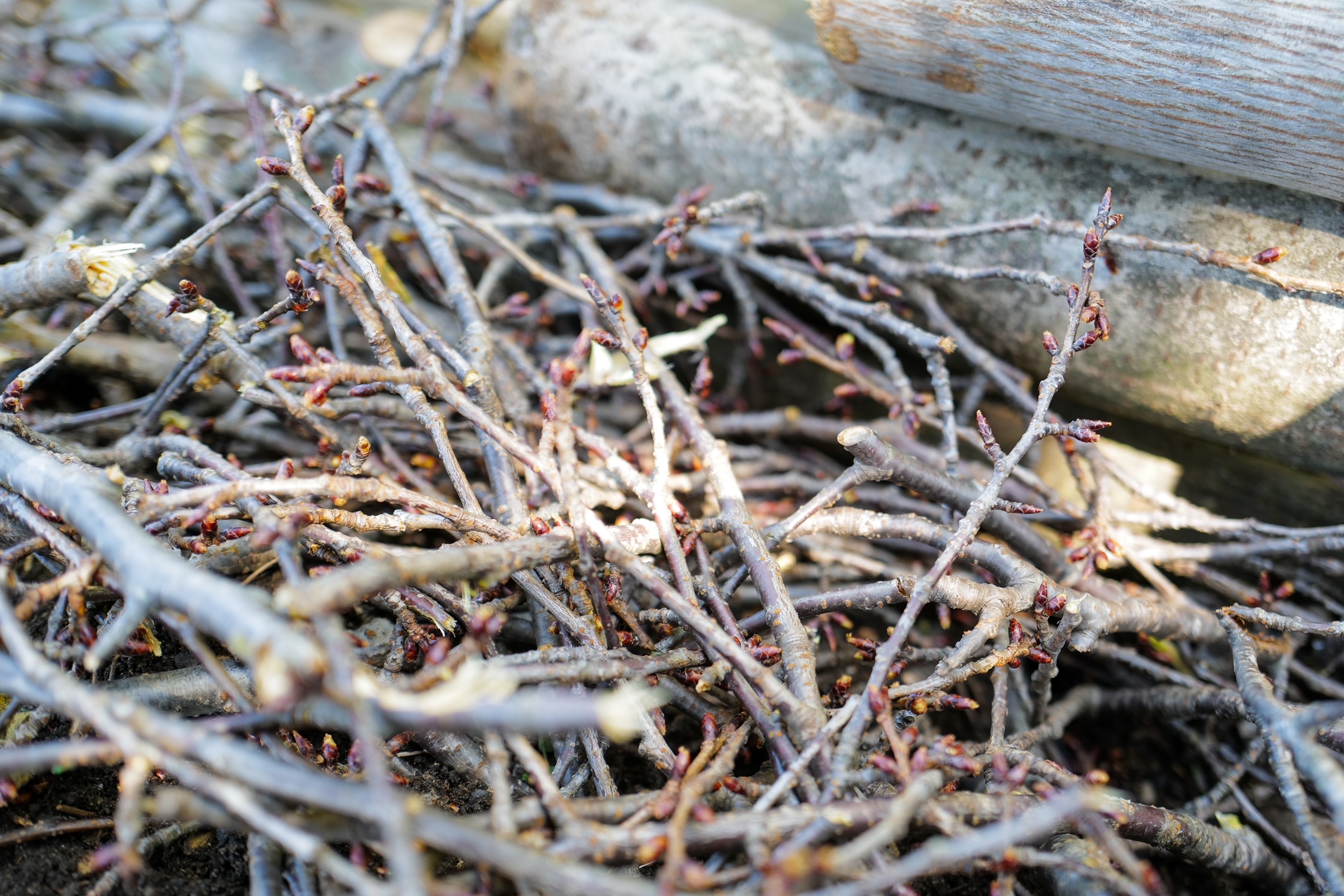
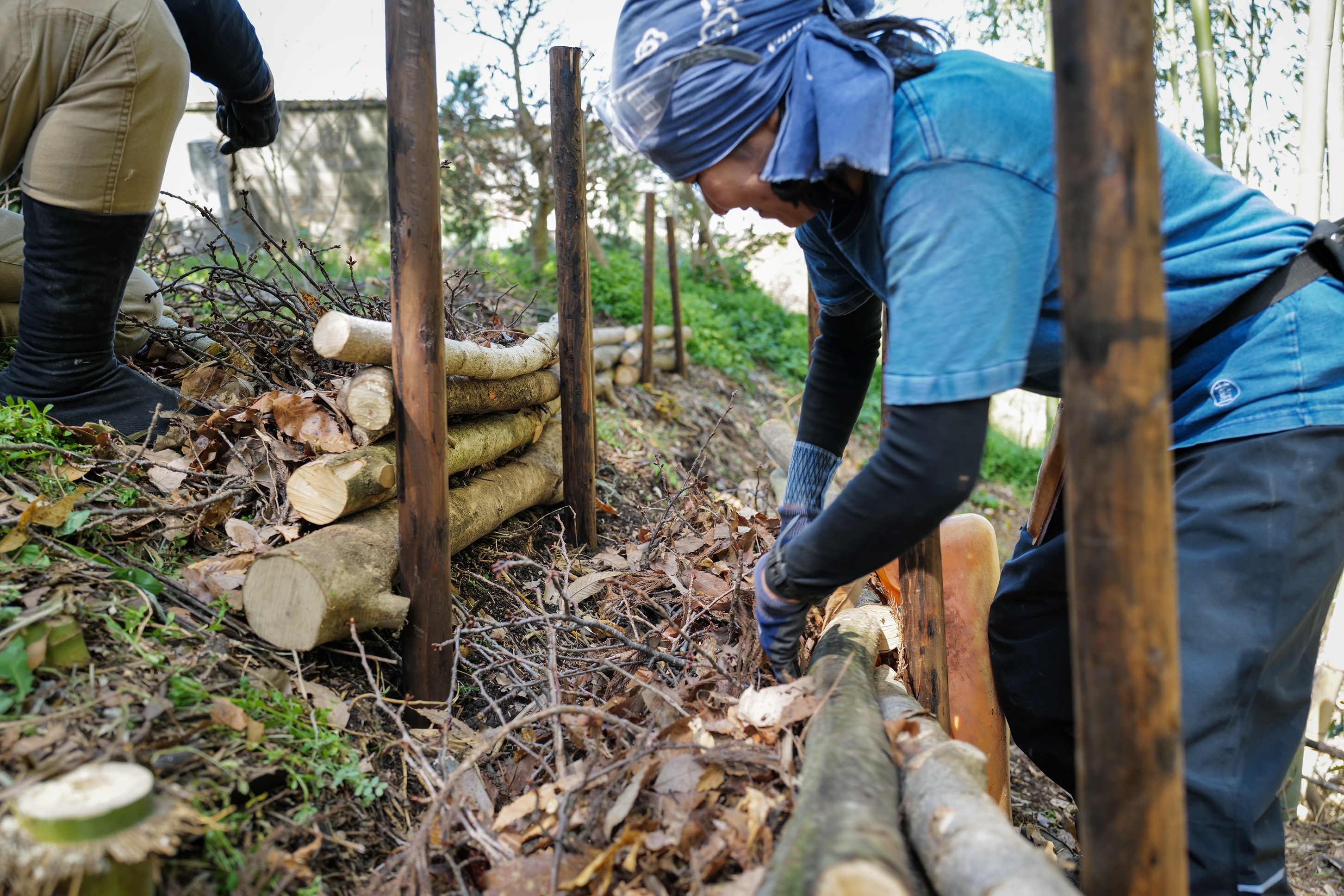
After stakes are set along the contour, brushwood branches are woven between them in a slalom pattern — alternating from one side of the stake to the other, row by row, working uphill.
The weave is not rigid. A slight flexibility is maintained so that the structure can absorb rain pressure, soil movement, and external force without fracturing. Cherry pruning branches were used for this work — their natural curve and branch angles help each piece lock against its neighbors.
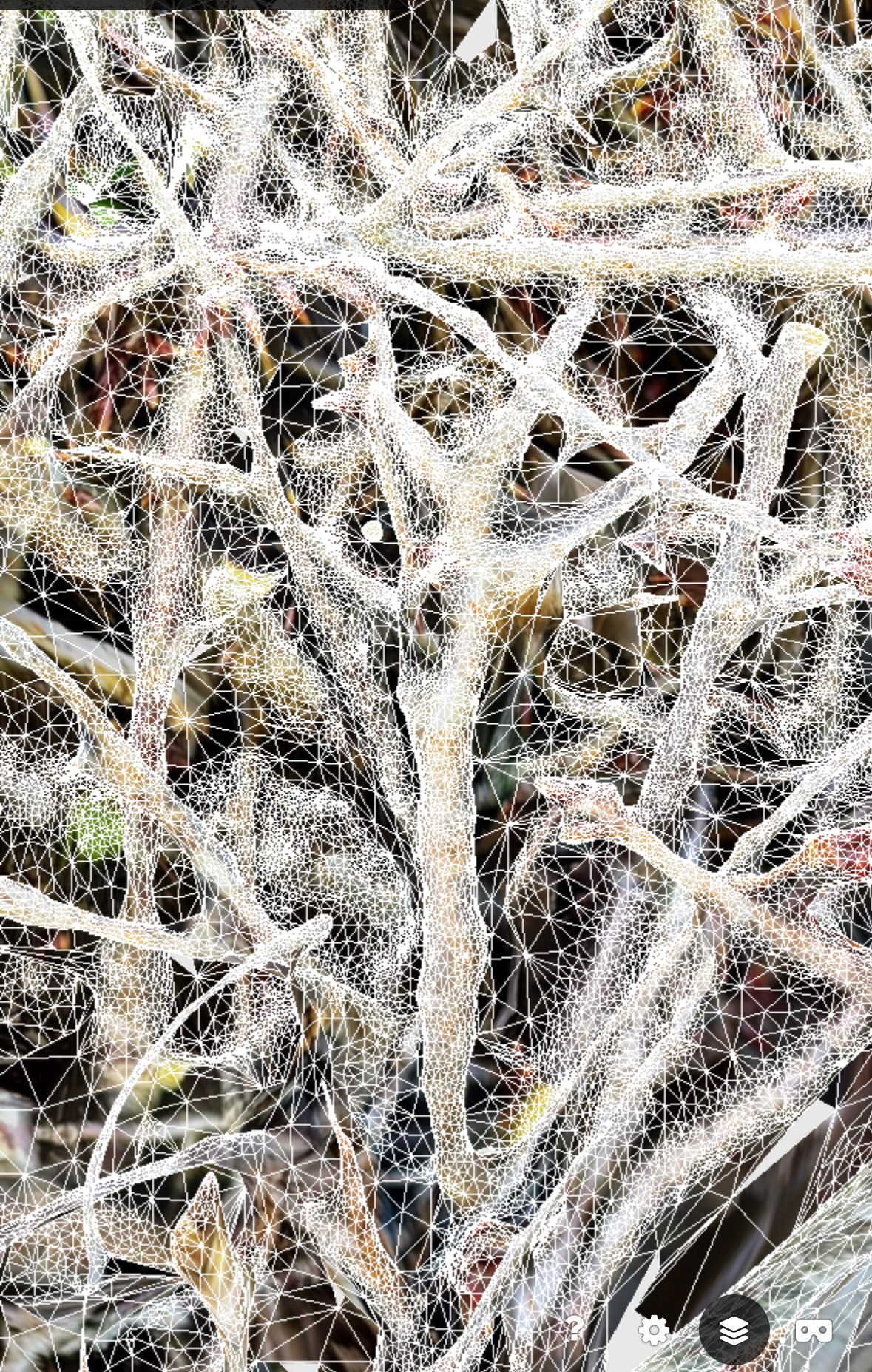
A 3D scan was conducted after completion to visualize the internal structure. The interlocking branch network distributes water contact across thousands of intersection points.
This dispersion is what reduces velocity. Heavy rain enters the structure with force; it exits as slow seepage through dozens of small gaps.
Filling Behind the Wall
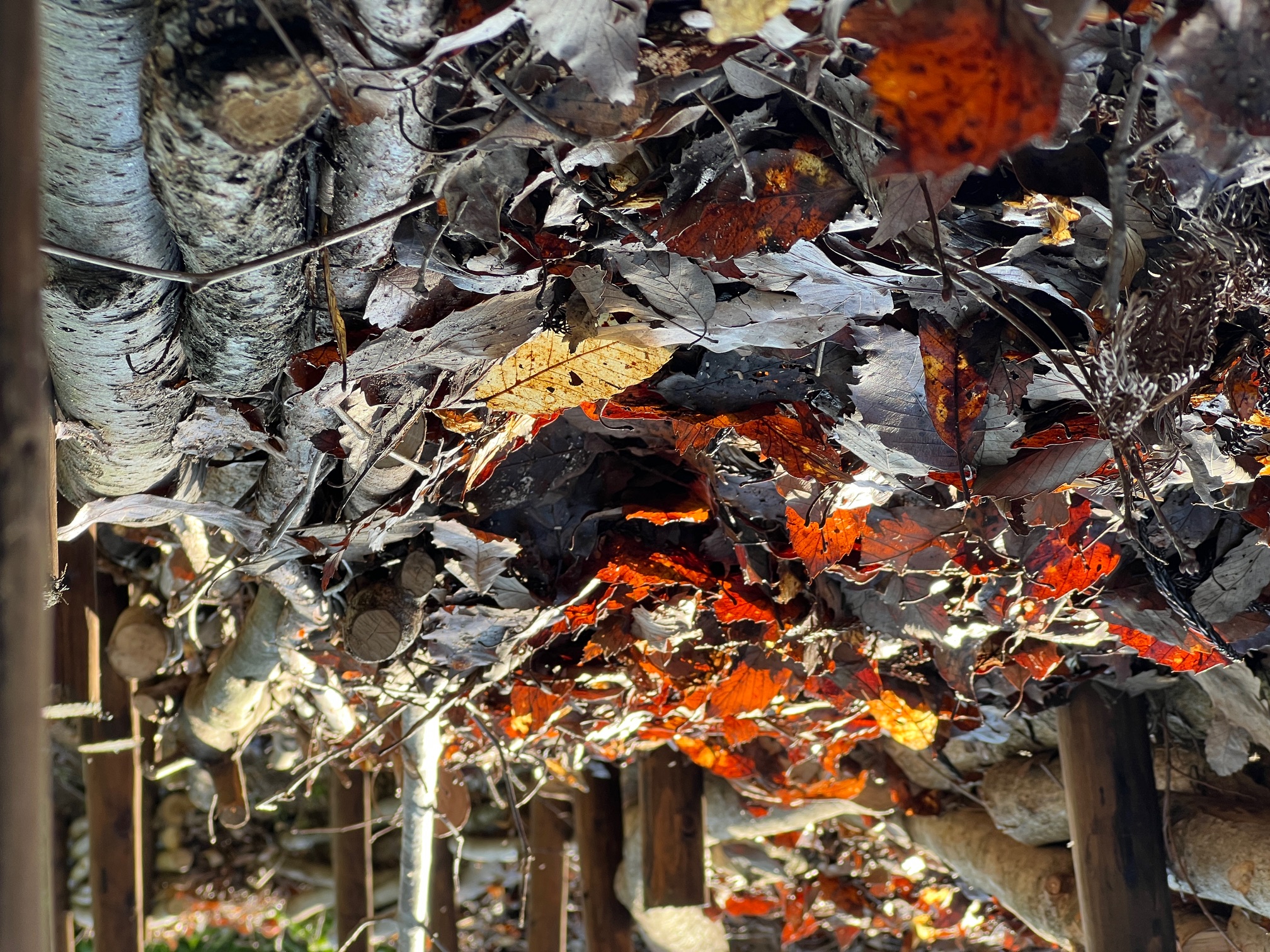
The back of the shigara wall is filled in layers — branches first, then fallen leaves packed against the branch weave to improve water retention and provide a substrate for microbial activity.
In this installation, rice bran was mixed into the leaf fill on an experimental basis. Rice bran accelerates fungal growth; the resulting mycelium physically bonds leaf fragments and small branch material together, reinforcing the fill layer's structural integrity.
Site Measurements
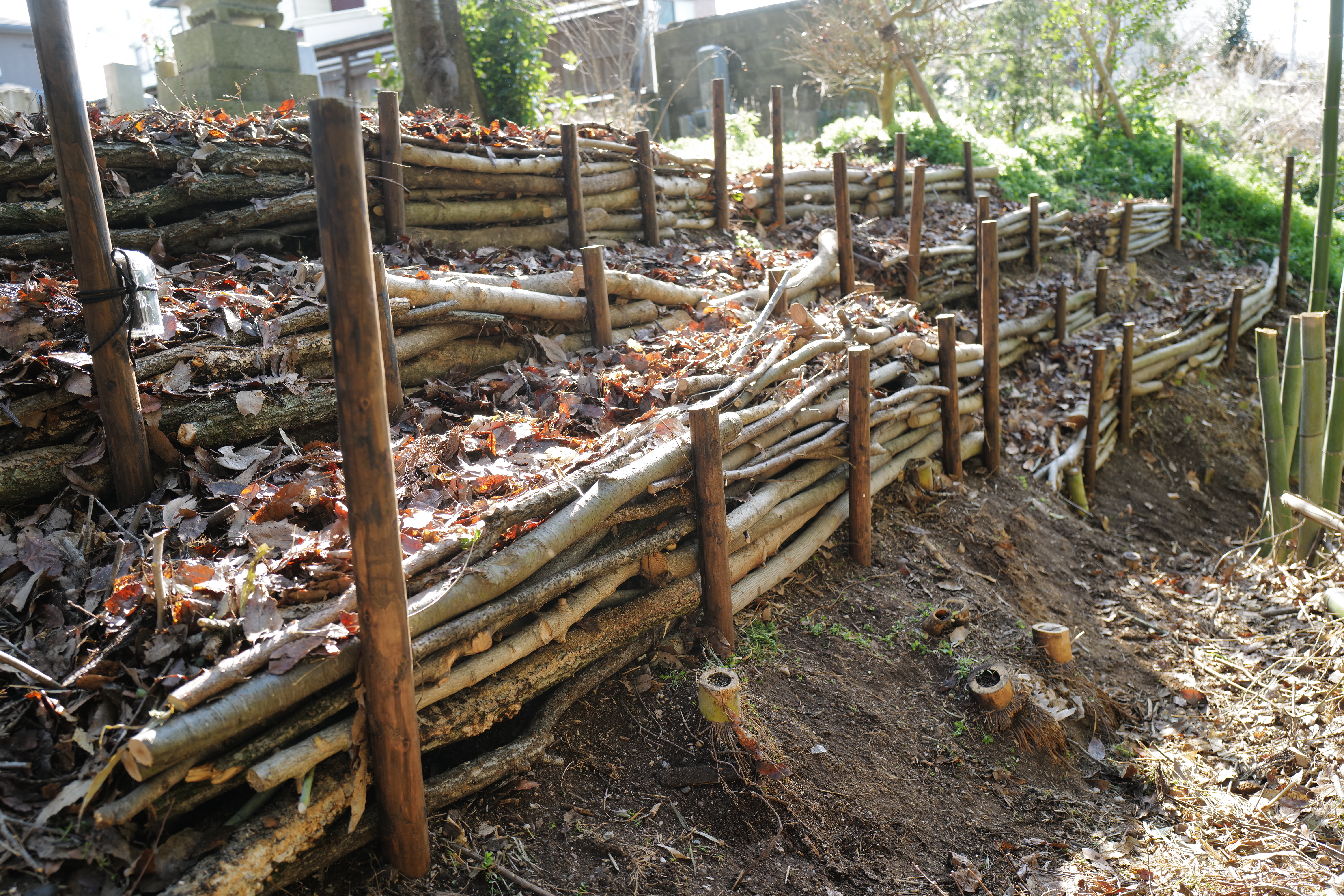
Installed area: 7.10m wide × 1.40m slope depth, with a height difference of approximately 1.10m from the upper to lower horizontal members.
A 70cm-wide overflow channel was left deliberately open at the point where water naturally concentrates during heavy rain.
Attempting to block the main water path creates pressure that the structure cannot absorb — the gap lets water escape safely while the shigara captures runoff from the surrounding slope.
Vegetation Recovery: A 10-Year Timeline
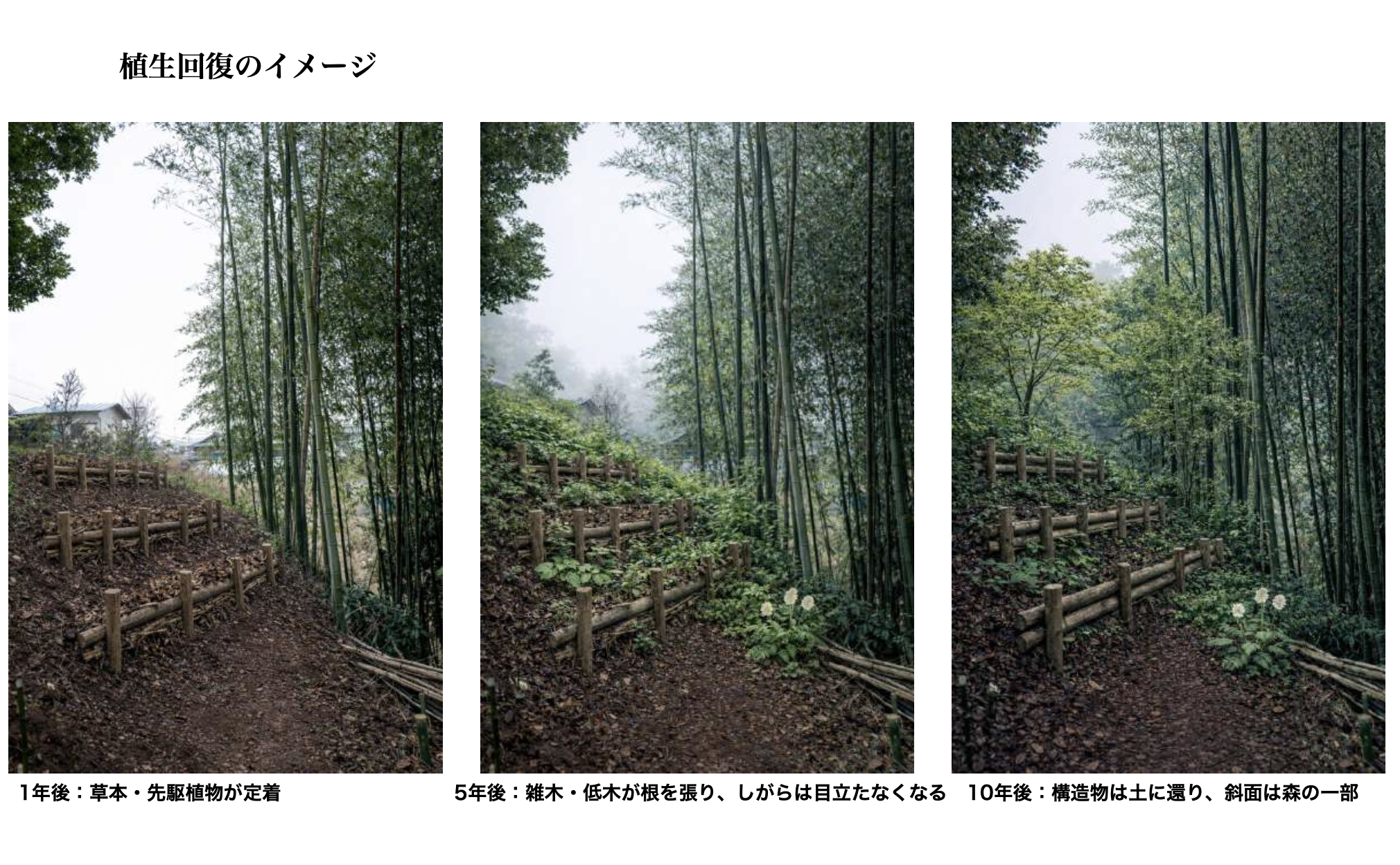
In the first six months, the shigara structure is fully visible as a constructed element. The leaf fill behind it begins to hold moisture; fungi and bacteria become active in the organic material.
Between one and five years, pioneer plants germinate — from seeds in the fill, from windborne seeds, from material carried by birds. As roots develop, water management shifts from the structure to the root network. Rain that once ran off begins to infiltrate.
After ten years, the wood has begun to decompose, but the plants' root systems have formed a living mesh across the slope. When the structure is no longer visible, the slope has achieved the stability the shigara was designed to create.
Ongoing Management
Shigara requires monitoring, not just installation. During subsequent bamboo management visits, the fill depth behind the wall is checked and replenished as the organic material decomposes and compresses.
A time-lapse camera was installed at the site to record water movement during rainfall events and document seasonal vegetation development. The data will inform adjustments in fill management and help refine the approach for future installations.
Frequently Asked Questions
Q. What distinguishes shigara from a retaining wall?
A. A retaining wall is impermeable and designed to hold soil in place by resisting water pressure. Shigara is permeable — it slows water without blocking it, allowing infiltration. The aim is not to stop the slope from moving, but to reduce the rate of movement enough for plant roots to establish and take over the structural role.
Q. How long does a shigara installation last?
A. The wooden elements typically remain structurally useful for five to ten years, depending on wood species and moisture conditions. The design accounts for this: by the time the wood has decayed, the vegetation layer it was supporting has usually developed enough to stabilize the slope independently.
Q. Can shigara be installed on any slope?
A. Shigara is suited to slopes where the primary issue is surface soil movement rather than deep mass failure. Slopes with unstable parent rock, high clay content prone to deep sliding, or very steep gradients require additional engineering assessment. A site survey to map where water collects and how it moves is the starting point for any installation.
Q. What materials are used for shigara construction?
A. Stakes (typically 5cm diameter, 100–150cm length), horizontal branch members (yokogi), small-diameter brushwood (soda) for weaving, and organic fill — fallen leaves, small branches, sometimes rice bran to accelerate microbial activity. Using materials sourced from the site itself is preferred: the local organic matter is already compatible with the site's soil ecosystem.
Senteiya Sora is a certified tree care and landscaping company based in Komono-cho, Mie Prefecture, Japan.

Senteiya Sora is a Google News verified media source.