After the Bloom — Azalea Post-Bloom Pruning at a Suzuka Clinic and the Trees That Flower Alongside

Updated: May 30
Regular maintenance at Okinaka Internal Medicine and Cardiology in Suzuka City, Mie Prefecture, in early summer. The main work: post-bloom pruning of the azalea beds at the clinic entrance.
The entrance is the first thing patients see when they arrive. A single weed, a single fallen leaf, shapes their impression of the facility.
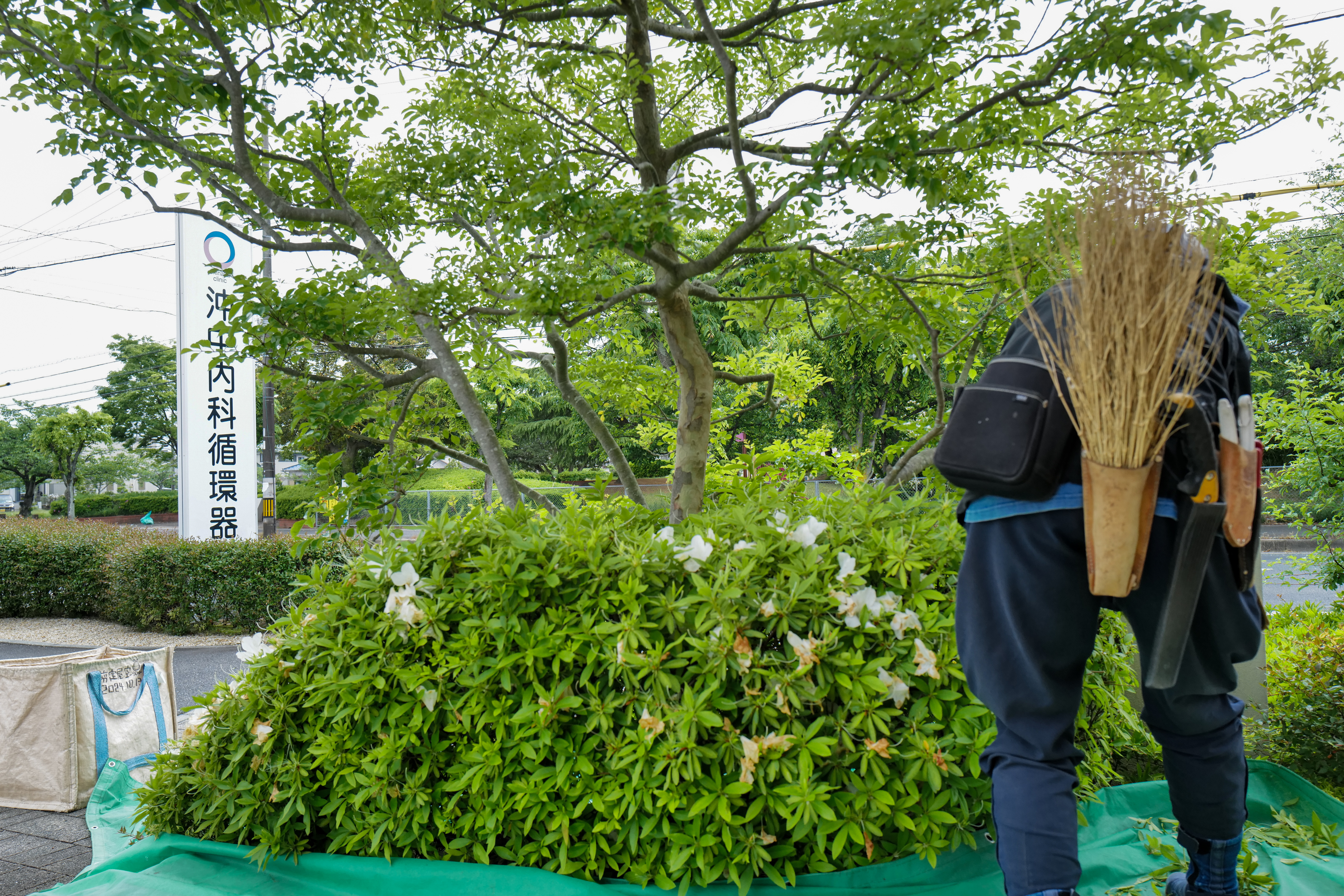
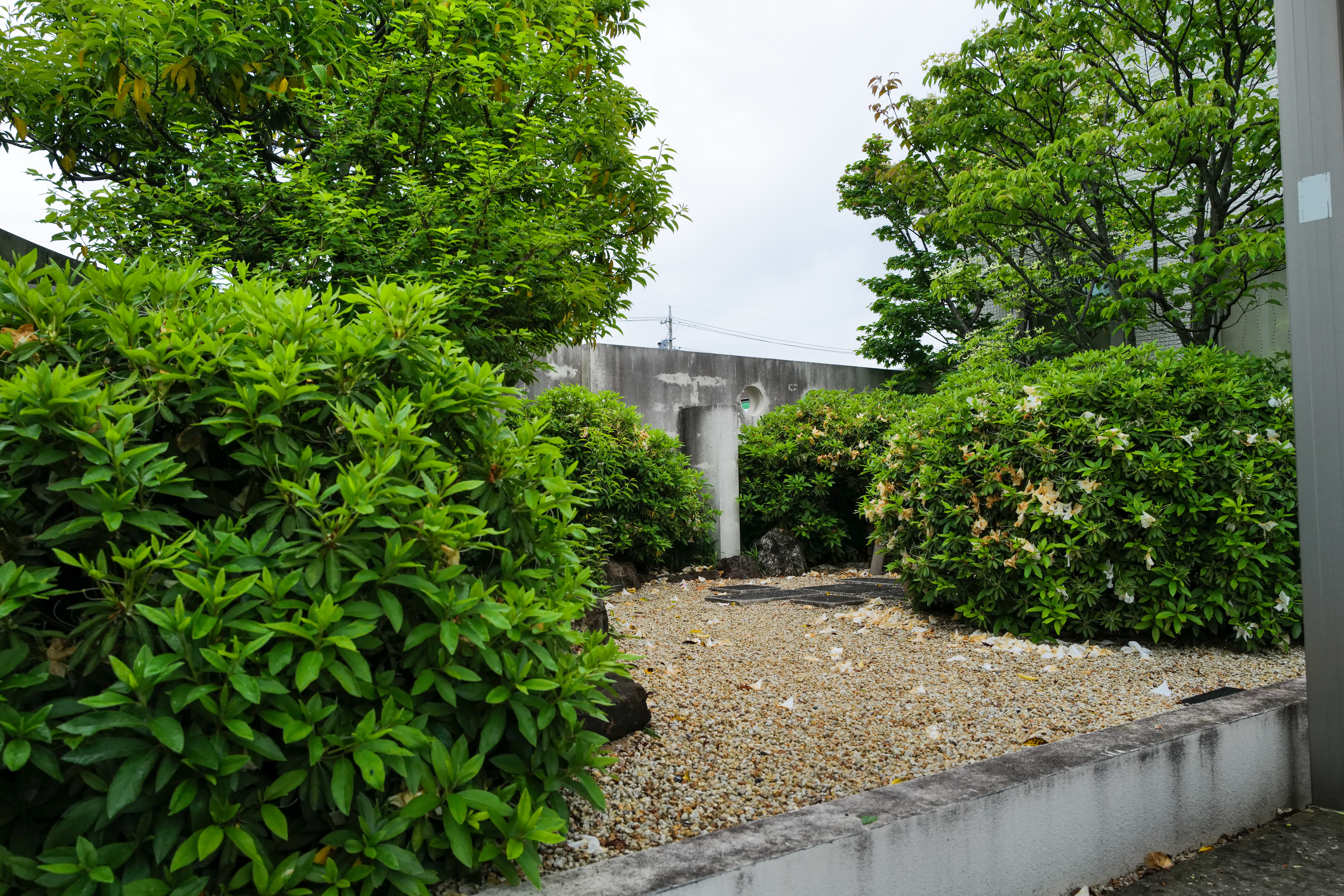
White azaleas still held some flowers when we arrived, the garden soft and green after recent rain. Stone and gravel run the depth of the planting area, with azalea dense on both sides.
As azaleas drop their flowers, the plant is already forming the buds that will bloom next year. The window for post-bloom pruning is narrow.
Post-Bloom Azalea Pruning — Why Timing Matters
If spent flowers are left on the plant, energy that would go toward forming next year's buds goes instead into seed production. The standard for the Tokai region is to complete post-bloom pruning by mid-May.
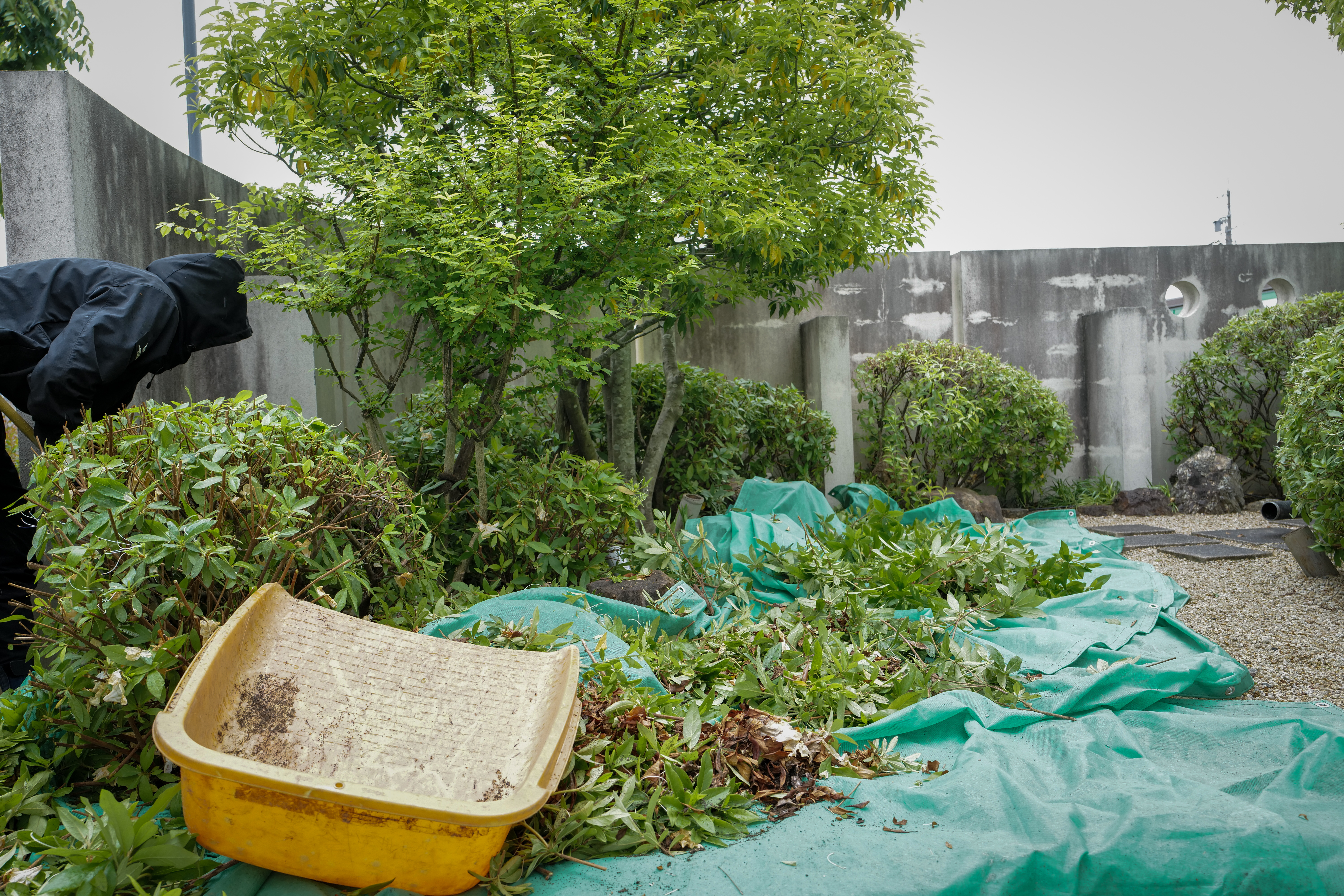
We lay sheeting and work through the planting bed, cutting back the flowered tips. The volume of material coming off — white petals mixed with branches, piled on the sheet — reflects how much the plant was carrying.
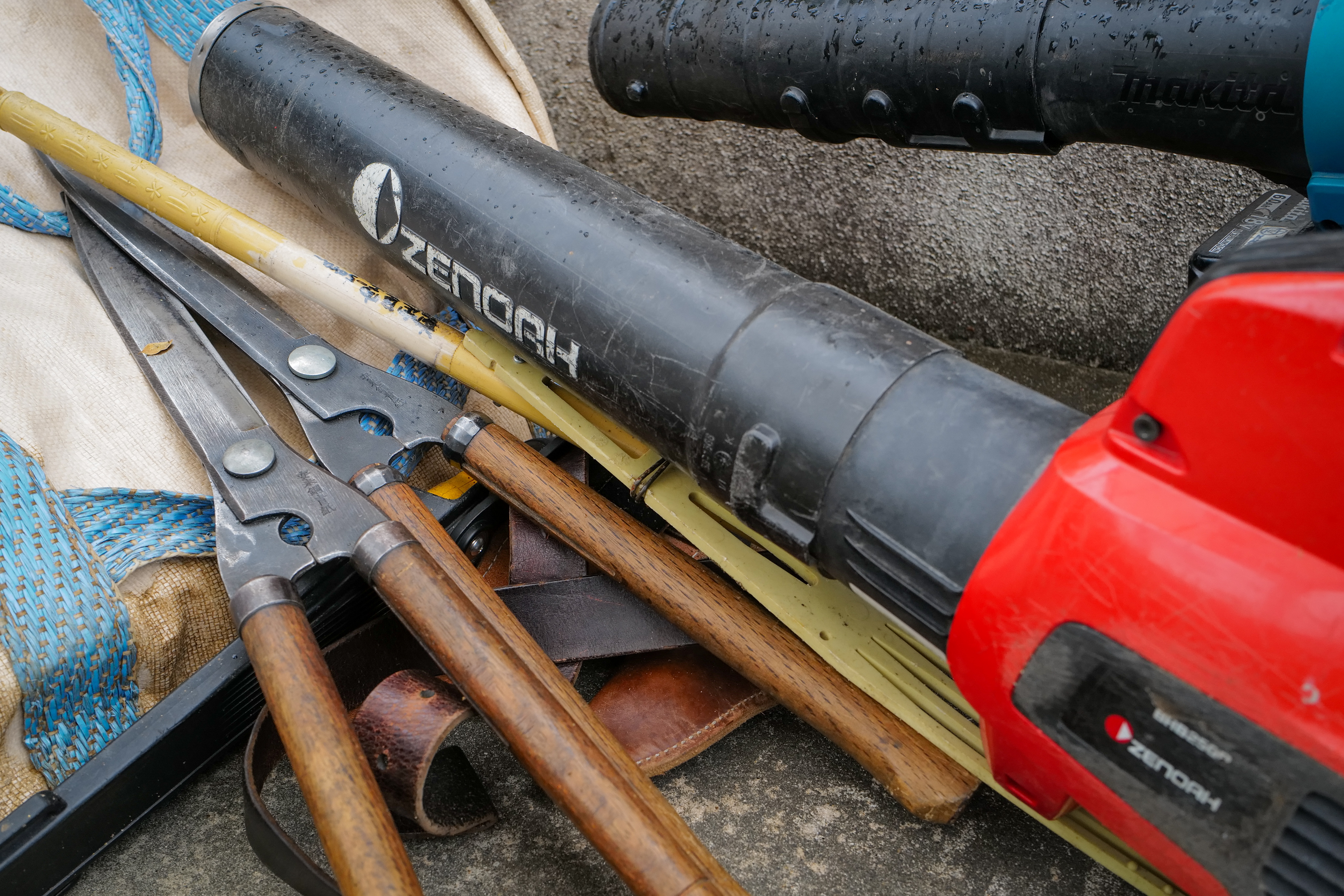
Matching Tools to the Work
Hedge shears, hand shears, blower — different tools for different moments in the same bed. Machine-uniform cutting leaves no room to read individual branches. Some areas need to be finished by hand, following the plant rather than a set line.
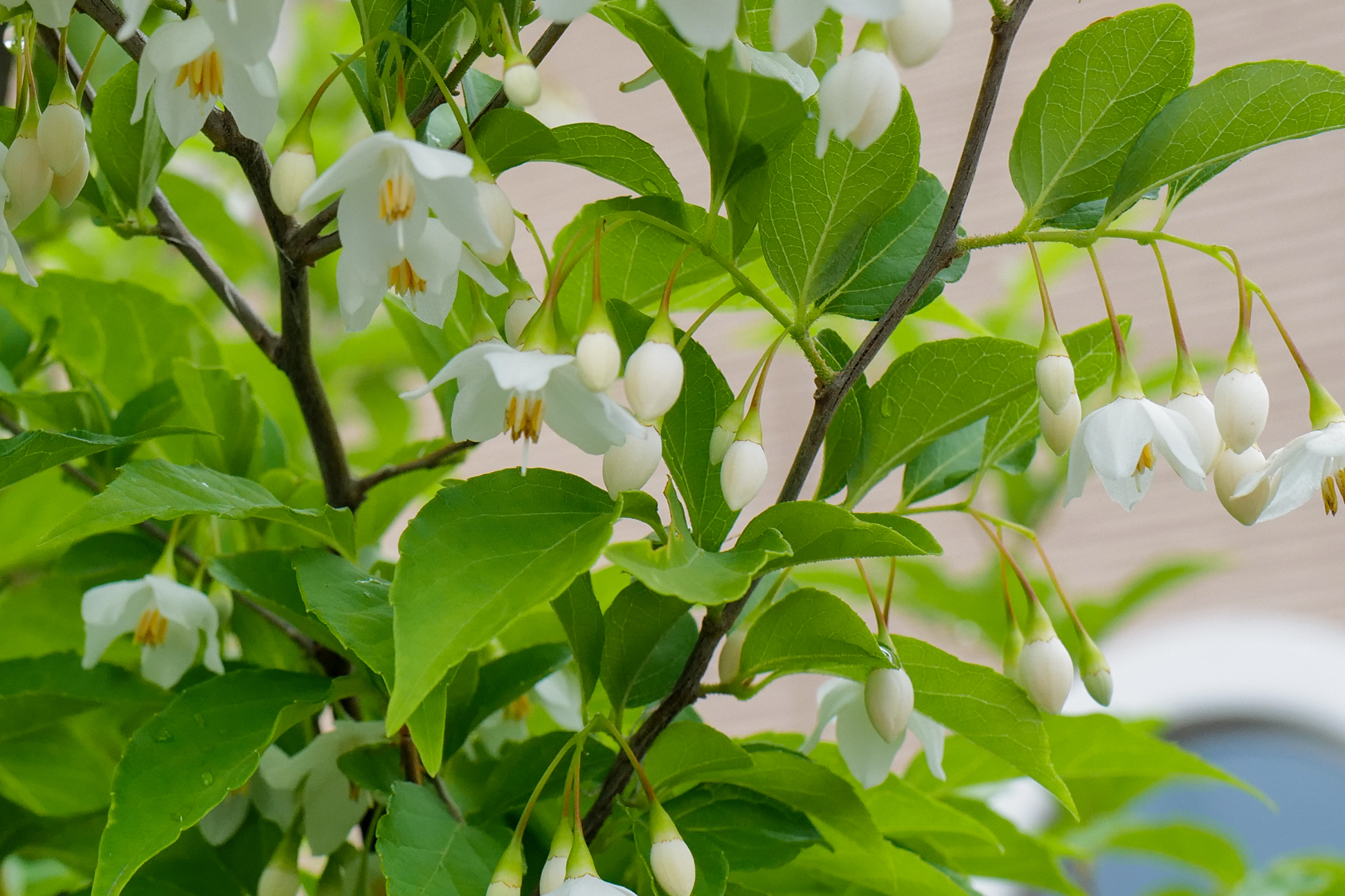
Styrax japonicus — Blooming in the Same Week
While the azalea pruning was underway, the Styrax japonicus at the far end of the garden was in full bloom. Small white flowers hang downward from the branch tips, flowering quietly in rain.
Styrax japonicus blooms May through June, producing pendant white flowers that are lightly fragrant and attractive to insects. The fruit contains egosaponin — historically used as a soap substitute in Japan. It is one of the more underappreciated native trees in Japanese garden design.
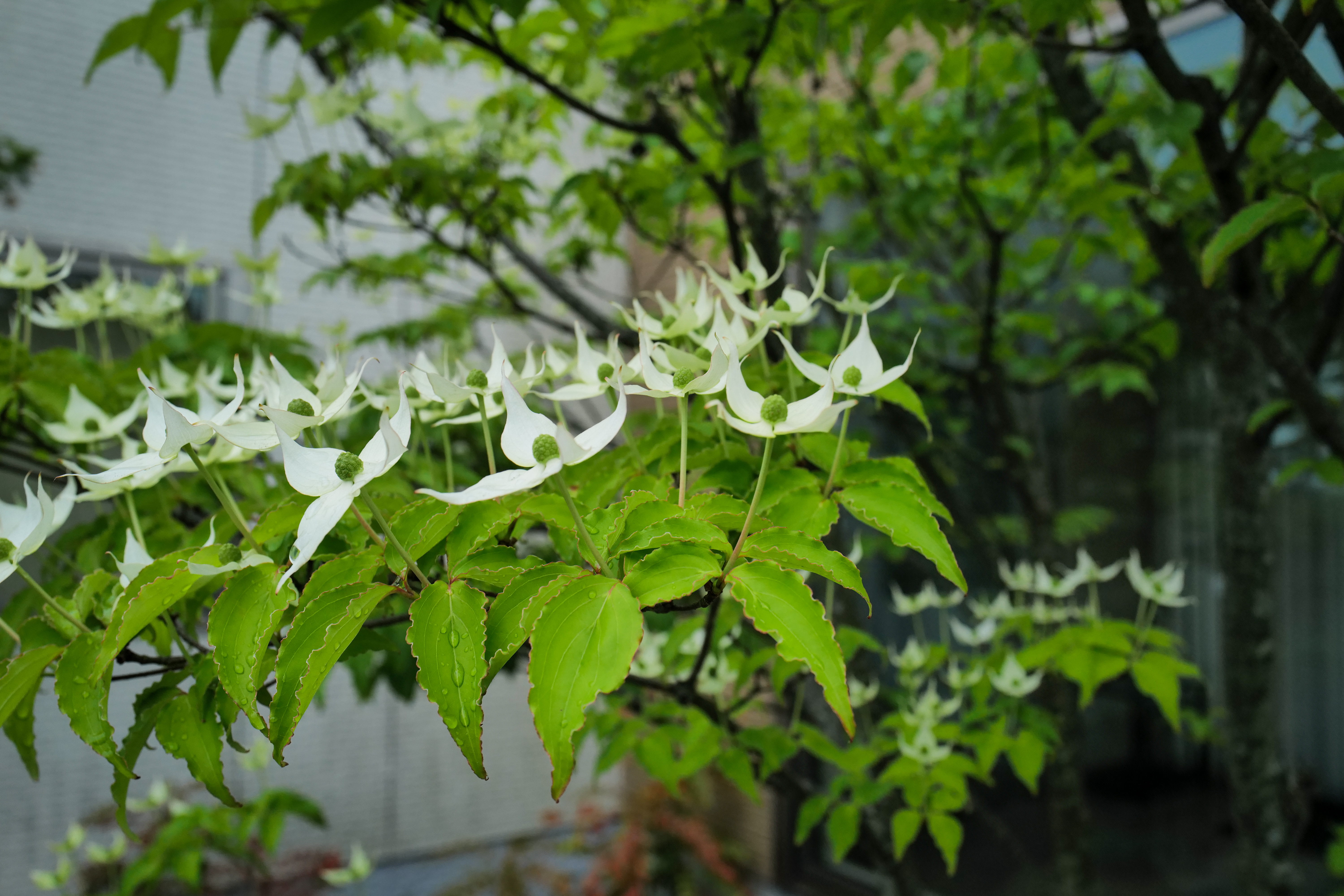
After the azalea was trimmed back, the Cornus kousa (yamaboushi) flowers became visible through the now-open view. The work is not always about what you cut. Sometimes it is about what you make visible by removing what is in the way.
The Finished Garden
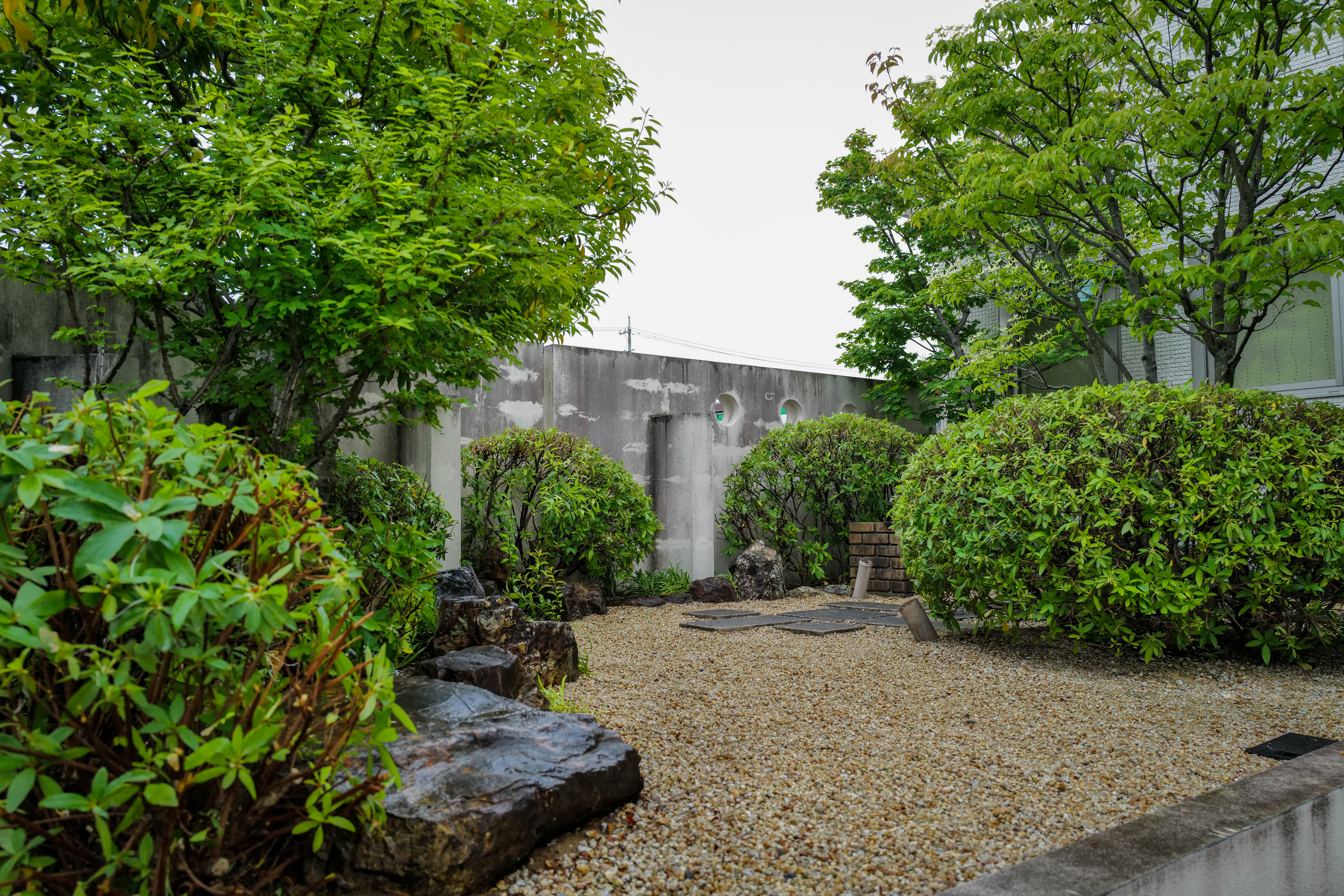
A clinic garden is not a display garden. It is the environment patients move through when they arrive for care. The maintenance standard is the same as the interior of the building.
Frequently Asked Questions
Q. When should azaleas be pruned after bloom?
A. Complete post-bloom pruning as soon as flowers begin to drop — by mid-May in the Tokai region. Pruning significantly later risks cutting into buds already forming for next year's bloom.
Q. What does managing greenery at a medical facility require?
A. The planting is the first thing patients encounter. Weeds, fallen leaves, and overgrown edges all affect the impression of cleanliness and attentiveness. The standard applied is the same as the interior space.
Q. When is the best time to prune Styrax japonicus (egoniki)?
A. After flowering ends in June — trim extending shoots and assess overall form. For more substantial reshaping, the dormant season from December through February is better suited.
Senteiya Sora is a certified tree care and landscaping company based in Komono-cho, Mie Prefecture, Japan.

Senteiya Sora is a Google News verified media source.