Hand Weeding in the Rain — Regular Garden Maintenance in Komono, Mie, Japan

Updated: May 30
A regular maintenance visit to a private garden in Komono, Mie Prefecture. This one fell on a rainy day.
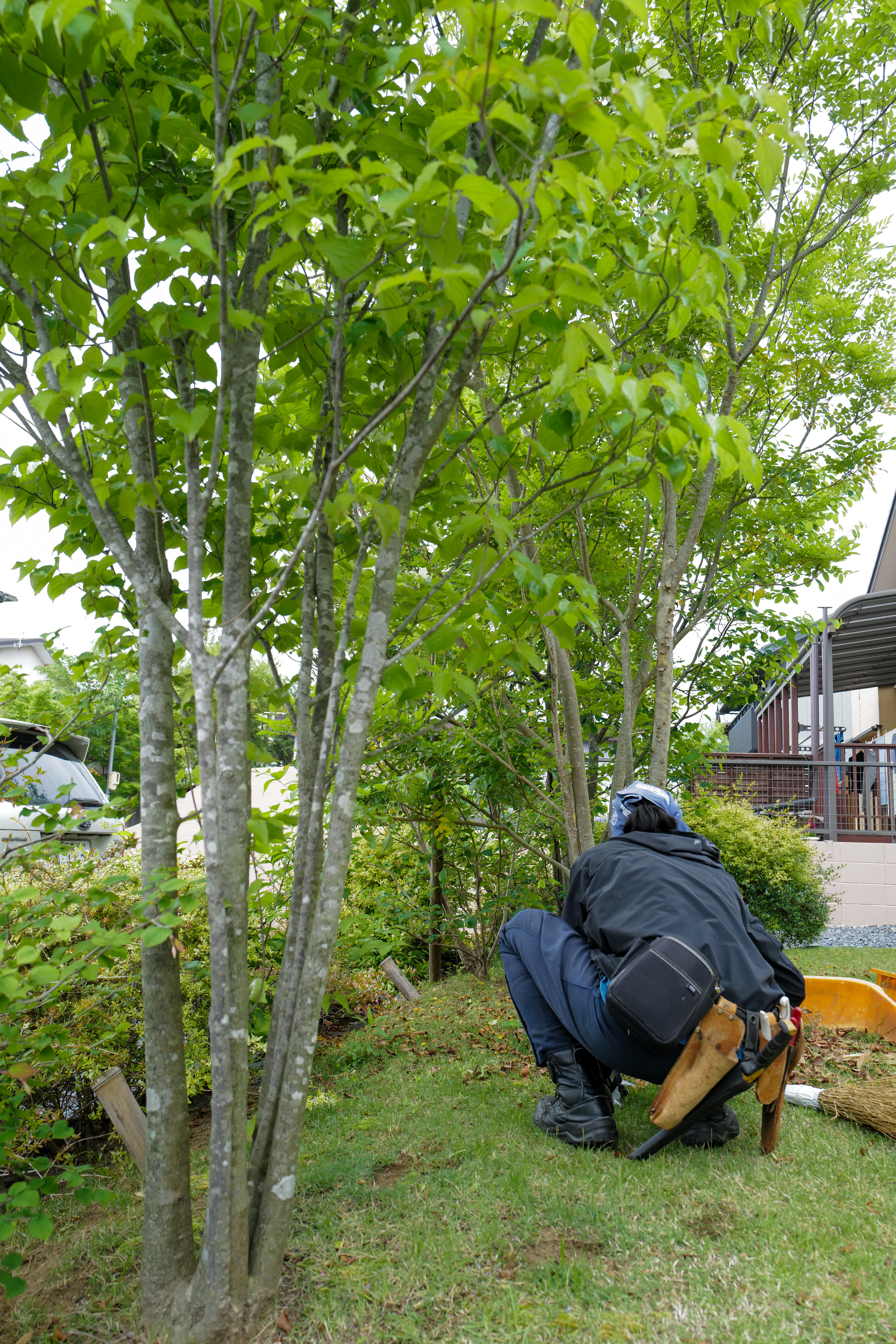
The work: hand weeding the turf, clearing fallen leaves. Wet soil makes it easier to pull roots cleanly, which offsets the discomfort of working in rain.
The Argument for Hand Weeding
Herbicide reaches where hands cannot, but the area closest to grass roots — where turf meets the base of plants — can only be finished properly by hand. The tool locates; the hand decides.
We have maintained this garden since 2020, across every season. Rainy-day visits reveal things about the soil and plant behavior that dry-weather maintenance misses.
Bletilla striata — An Orchid That Needs No Greenhouse
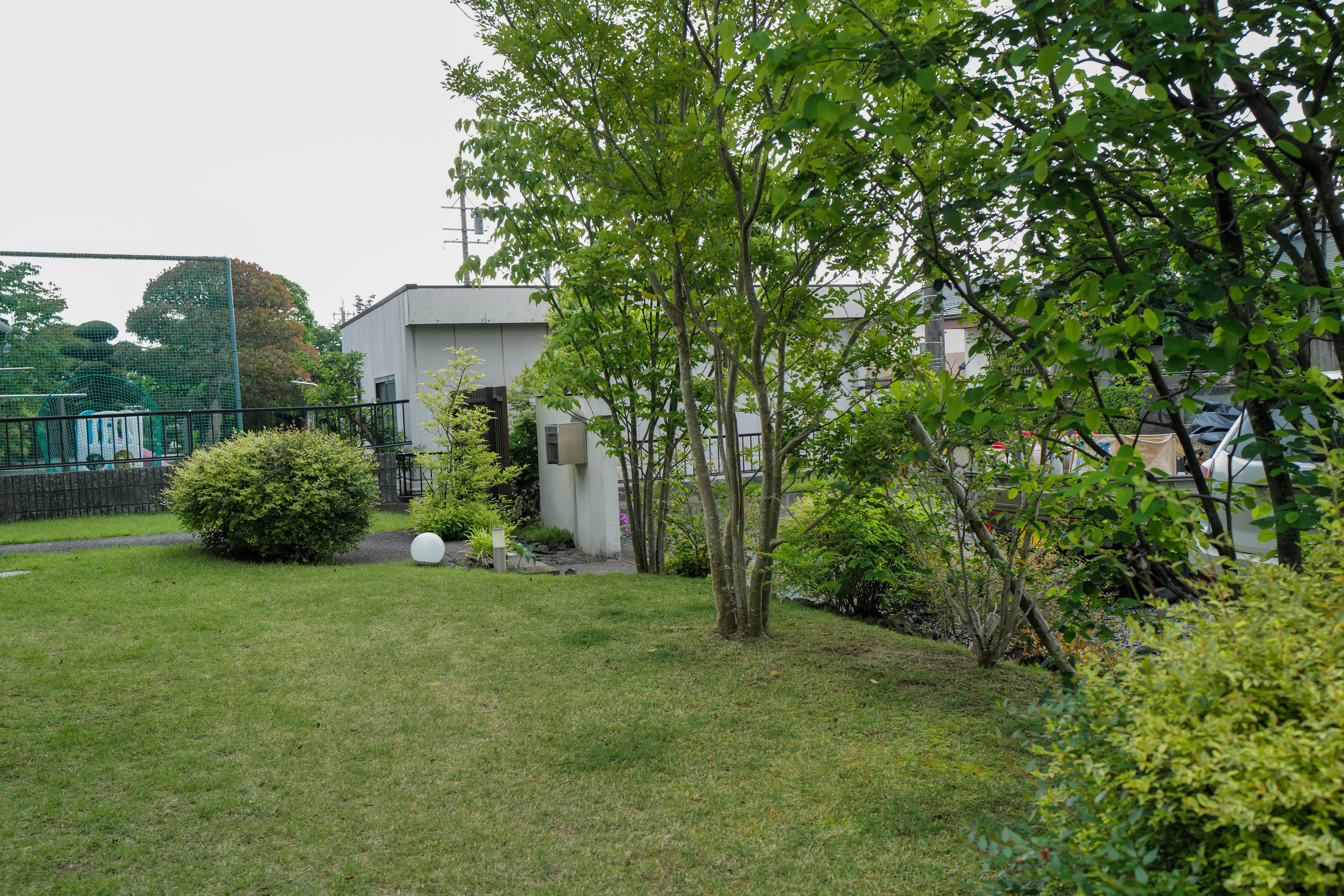
Along the stone retaining wall at the garden edge, Bletilla striata — shiran in Japanese — had come into bloom. The purple flowers were wet, standing quietly in rows.
Bletilla is a terrestrial orchid native to Japan, blooming May through June. It is one of the more resilient orchids: no heated environment required, no specialist substrate. Where it grows on its own, it has found what it needs.
Juneberry Setting Fruit
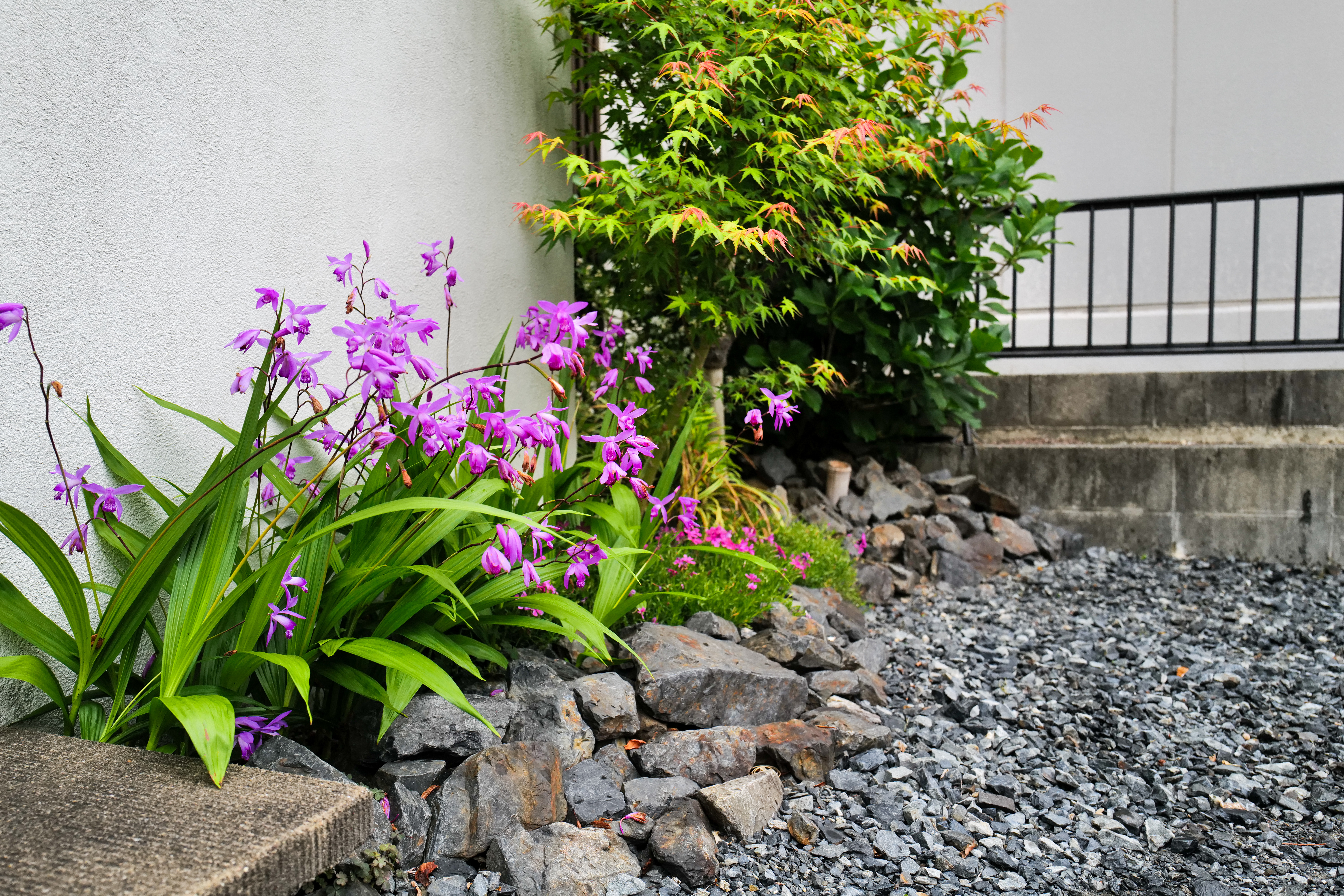
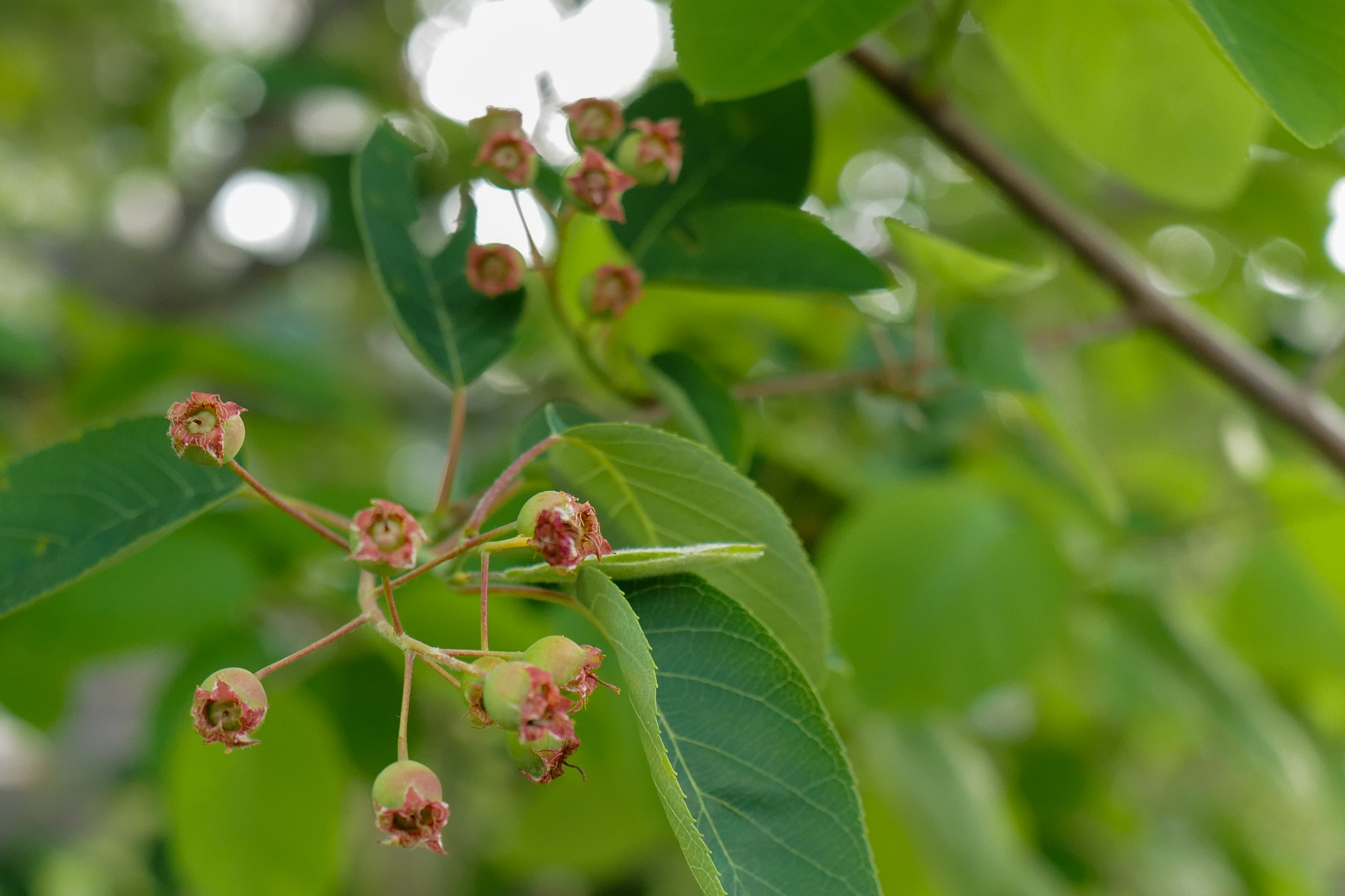
The Amelanchier in this garden had set small clusters of fruit at the branch tips. White flowers finished weeks earlier; fruit comes in May and ripens to red-black by June.
The English name describes exactly what this tree does: it fruits in June. The berries are sweet-tart, edible fresh, and suited for jam. Birds find them early, so the window for harvesting is narrow.
What Regular Visits Record
Bletilla and Amelanchier track the year more precisely than a calendar. When the orchid blooms and the berries form, the season is where it is, regardless of the date.
That is one thing annual maintenance produces beyond the maintenance itself: a continuous record of how a garden moves through time.
Frequently Asked Questions
Q. When does lawn hand weeding become necessary?
A. Weeds begin appearing as temperatures rise in April. A thorough session before the rainy season — typically May — reduces workload through summer. Hand weeding and herbicide are usually used together, with hand weeding reserved for areas at grass roots where herbicide cannot be precise.
Q. How much care does Bletilla striata (shiran) require?
A. Very little. It is a bulb-forming orchid that spreads underground and tolerates neglect. After flowering, cut spent flower stalks at the base. Every few years, divide the bulb clumps to prevent overcrowding.
Q. Are juneberries edible?
A. Yes. The berries ripen to red-black in June and can be eaten fresh, made into jam, or used in fruit liqueur. Birds discover them early — if you want to harvest, act before the fruit fully darkens.
Senteiya Sora is a certified tree care and landscaping company based in Komono-cho, Mie Prefecture, Japan.

Senteiya Sora is a Google News verified media source.