Broadleaf Forest Maintenance and Year Three of a Mixed Forest — Where Light Returns

Updated: May 19
On the same day, we worked in two different forests.
The first was a laurel forest we were entering for the very first time. The second was a mixed woodland — broadleaf trees and conifers together — where we had been working for three years.
A first visit and a third year. The same kind of work, two different places — but what you see could not be more different.
What Is a Laurel Forest?
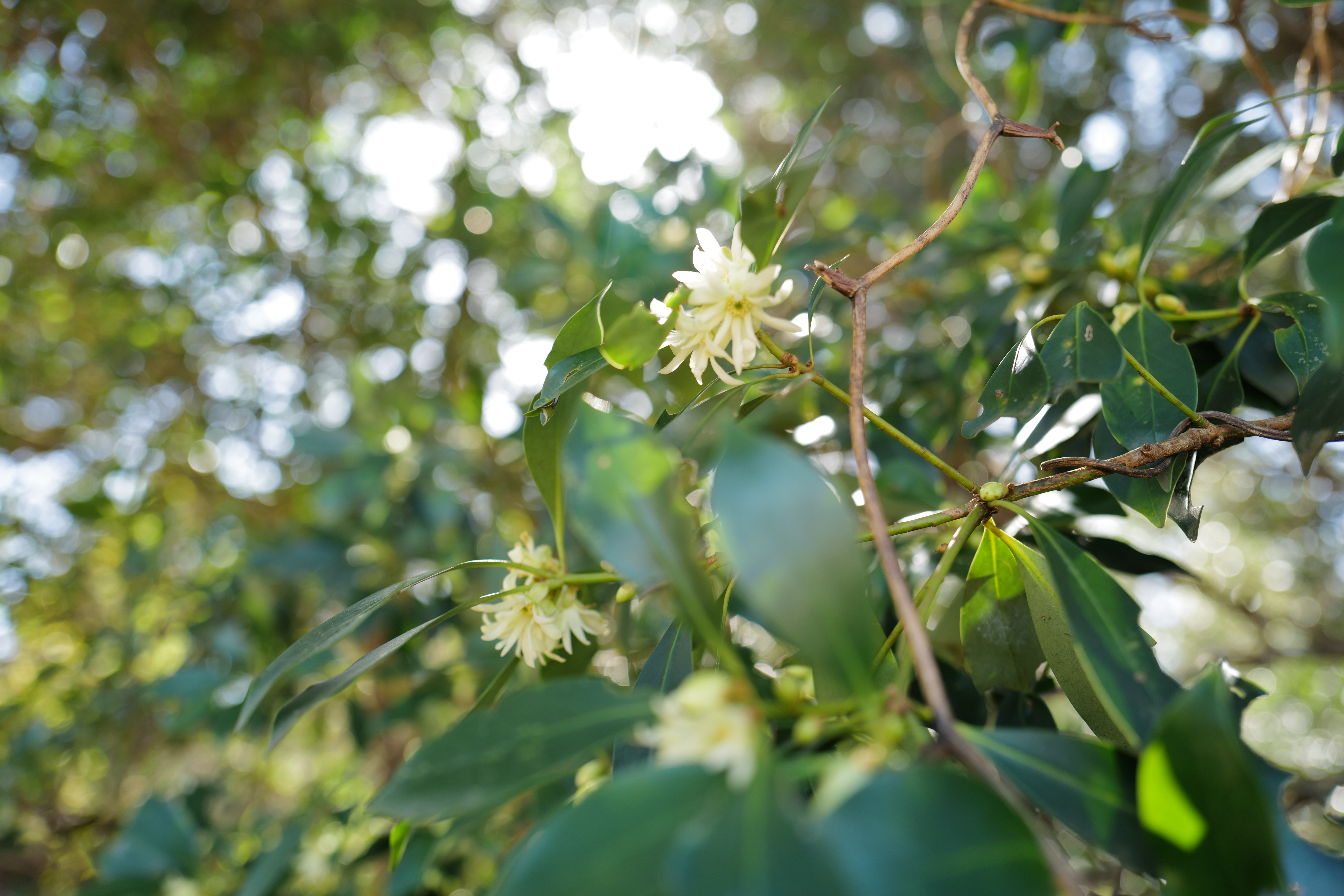
Laurel forest (照葉樹林, shōyōju-rin) takes its name from the way the leaves catch light. Step inside one — camphor trees (kusunoki), Machilus thunbergii (tabunoki), evergreen oak (arakashi), Castanopsis (shii) — and the canopy shimmers. That gloss comes from a thick cuticle layer: a waxy coat the plant builds on the surface of each leaf to hold moisture in and protect the tissue beneath.
Evergreen trees keep their leaves through winter. That means they stay exposed to drying winds and UV light all year long. The cuticle is their answer. When sunlight hits a cuticle-coated leaf, it reflects back. Walk through a laurel forest on a clear morning, and the canopy seems to be giving light back to you. That is how the name was born.
This forest type once covered much of the lowlands of western Japan, including the areas around Mie Prefecture. The site we entered this day still held something of that original character — rare in a landscape that has been largely converted to other uses.
Pioneer Species and Why We Cut Them
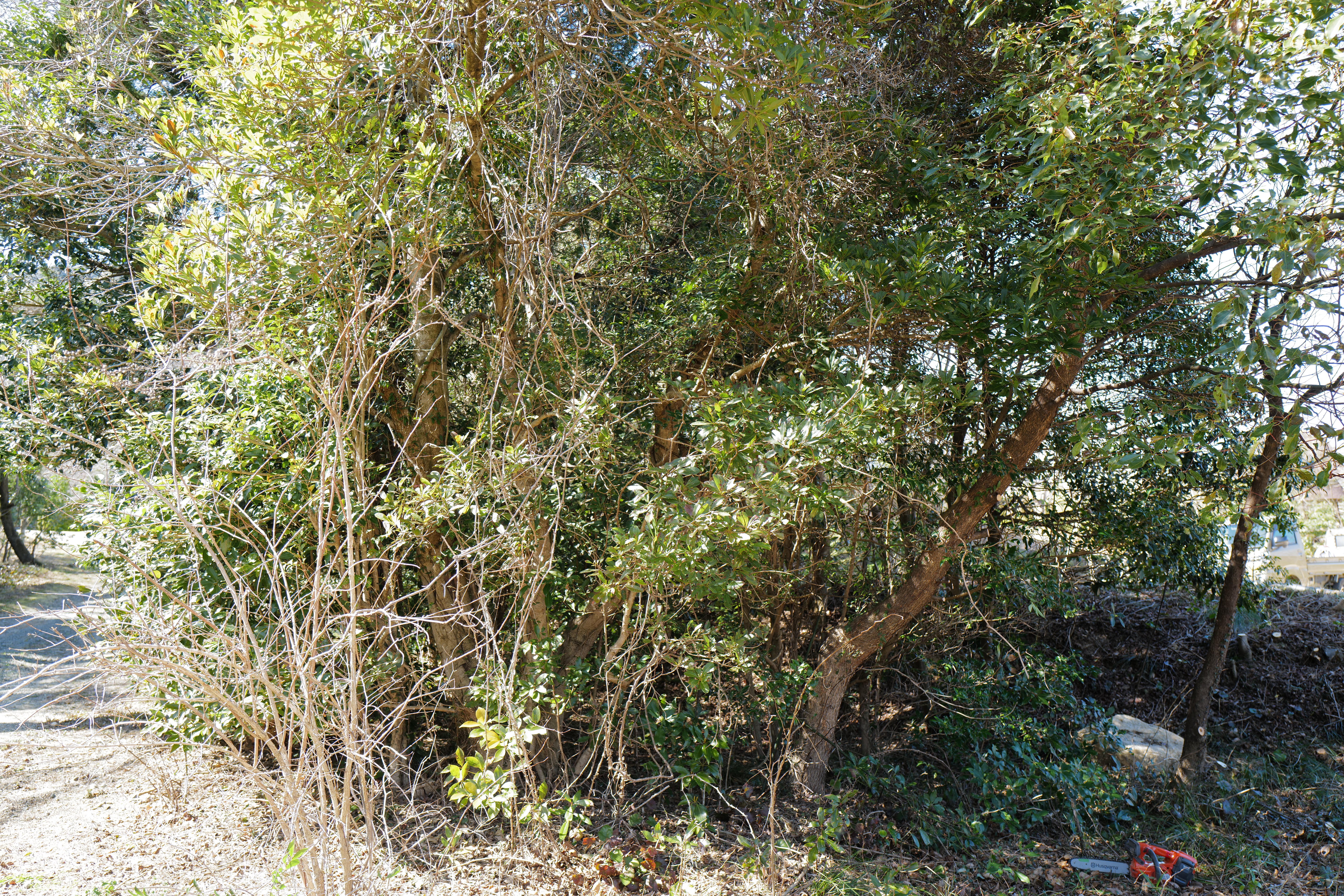
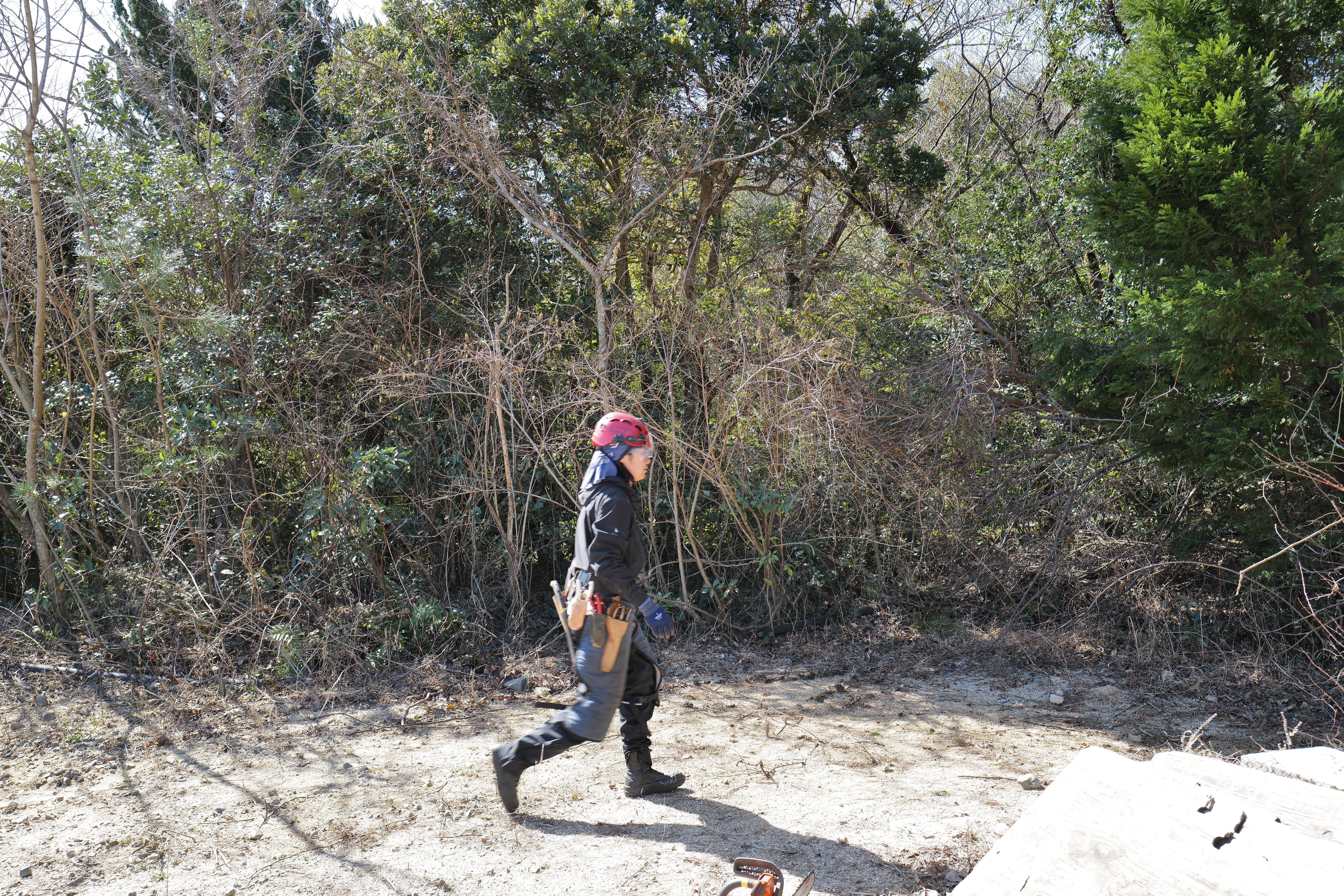
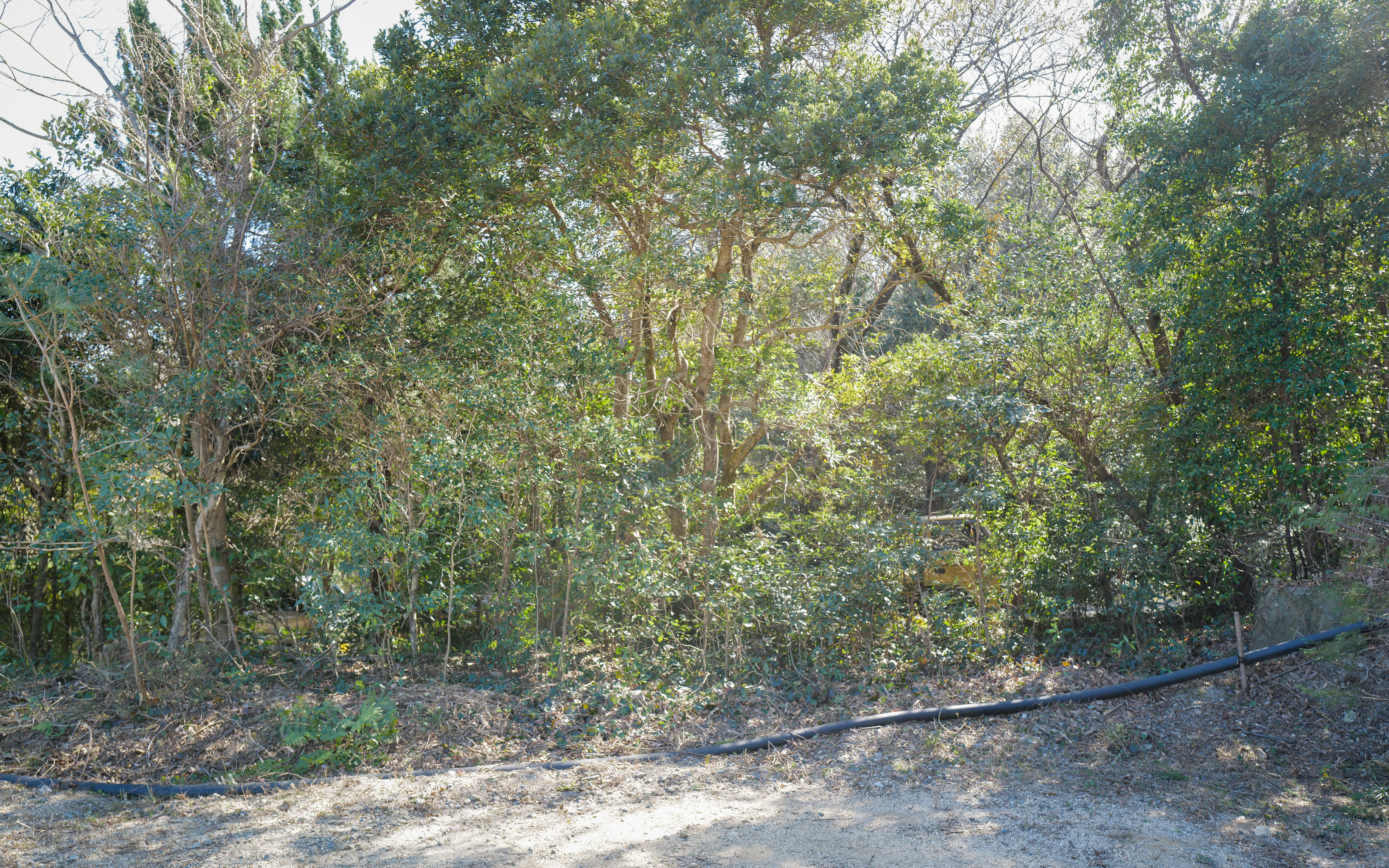
Looking at the forest edge, we found dense stands of akamegashiwa (Japanese mallotus), taranooki (Japanese angelica tree), kusagi (harlequin glorybower), yashabushi (alder), and utsugi (deutzia). Dead vines wrapped around the laurel trunks. The interior was almost impossible to see into.
These are all pioneer species — the first trees to establish themselves after a forest is disturbed by logging or typhoon. They grow fast in full sun and quickly cover bare ground. They are the opening act in the long process of forest succession.
Some pioneers have remarkable persistence. Akamegashiwa seeds can remain dormant in soil for decades. When a gap opens and sunlight reaches the ground, rising soil temperature triggers mass germination. Birds carry the seeds in their droppings, so the species appears nearly everywhere. Kusagi does the same on forest margins and sun-exposed slopes.
Pioneer species play an important role in the early stages of forest recovery — they hold the ground and build organic matter. But to advance succession further, the pioneers that have done their job need to be cleared so that light and space can pass to the slower-growing, longer-lived species that come next. In a laurel forest, those are the camphor and bay trees.
The Work: Clearance, Vines, and Branch Pruning
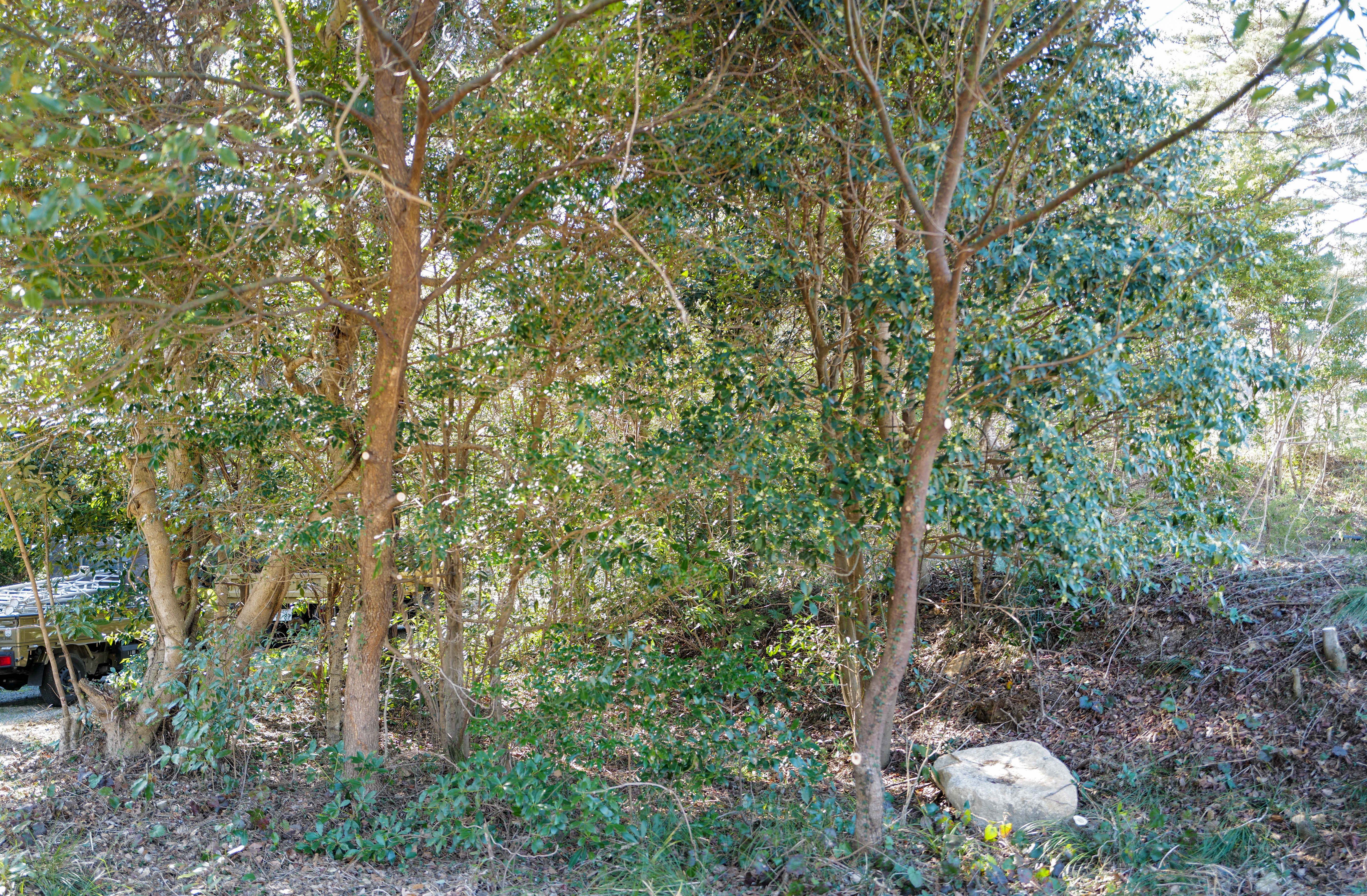
This session: we cut the akamegashiwa and kusagi from the forest edge, severed the vines climbing the camphor and bay trunks, and carried out branch pruning throughout. We raked the leaf litter from the forest floor to let more light through to the ground layer.
After the clearance, the camphor and bay trunks came into view — straight and composed, the cuticle-coated leaves catching the light properly for the first time in some time.
We planted nothing. We removed what was blocking the forest's own direction. That is the core logic of this kind of care.
What Three Years of Care Looks Like
The second forest that day — the mixed woodland — was a different picture entirely.
A mixed woodland (針広混交林, shinko kongō rin) is one where conifers and broadleaf trees grow together: sugi (Japanese cedar), hinoki (Japanese cypress), and red pine alongside oak and evergreen oak. The layered structure is more complex than a single-species plantation, and that complexity matters. Different species root at different depths, spread their canopies differently, and respond differently to stress. A disease that moves easily through a monoculture slows down in a mixed stand.
When we first entered this forest three years ago, it looked a lot like the laurel forest had that morning. Pioneer species and vines everywhere, the interior hard to read, the real structure of the forest invisible.
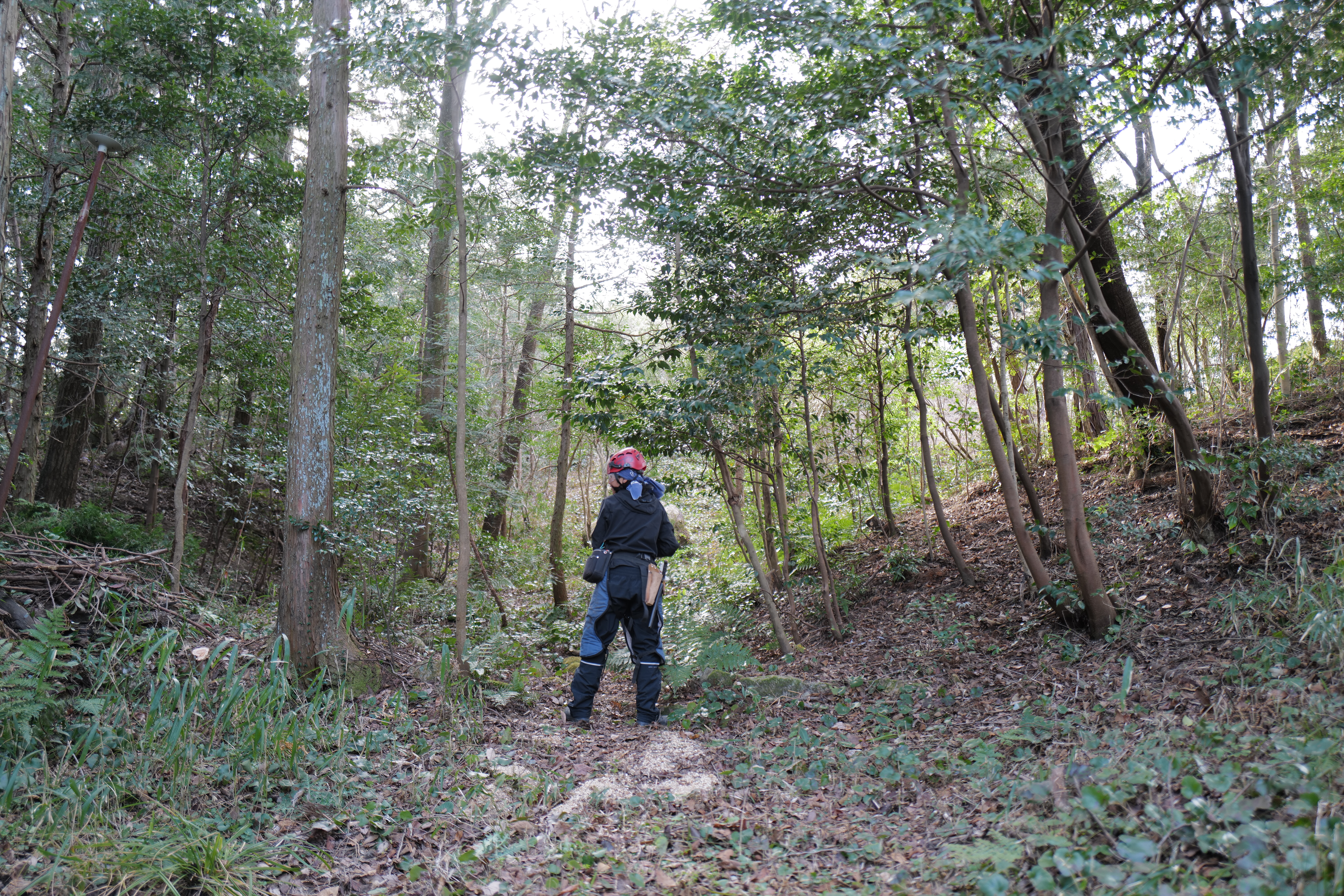
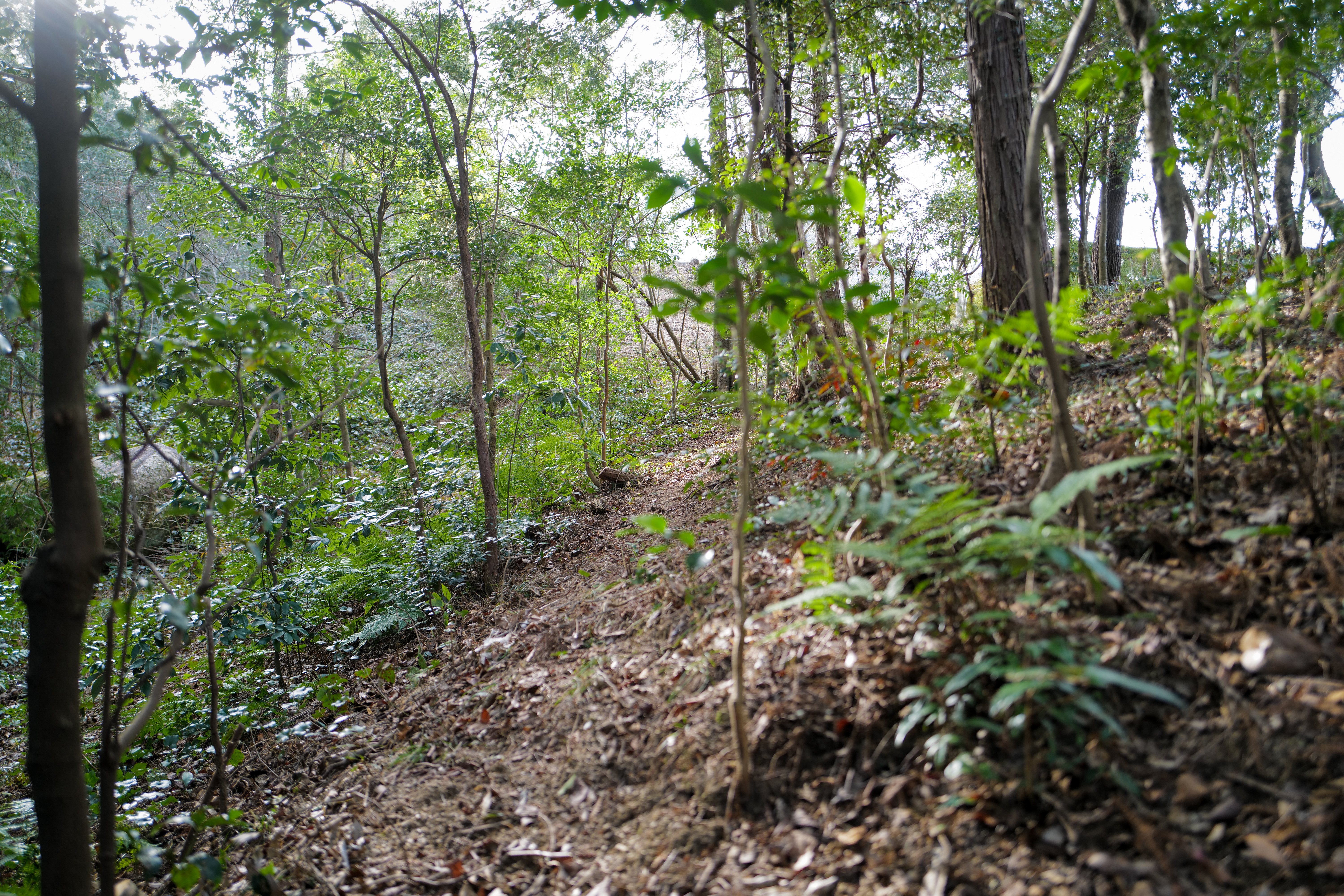
Three years later, things have changed. Each year: thinning, delivering light to the trees that remain, removing vines, pruning branches, clearing the forest floor. After three years of that, the trunks begin to stand in something like order. Tree ferns spread across the floor. Light and air move through. The forest can breathe.
Between Year One and Year Three
Seeing both forests on the same day makes the meaning of continuity clear.
The laurel forest is still at the beginning. But by clearing the pioneers and returning light to the camphor and bay trees, we have made a starting point — a moment when the forest can begin to move in its own direction.
In the mixed woodland, each year of work reveals a little more of the forest's structure. Gaps open between trees, paths of light form, new plants appear on the floor.
Forest care is never finished in a single visit. What you can do in year one is understand the direction the forest is already trying to grow — and give it a first push. By year two and three, the forest begins to respond.
Make something, and then the real work begins. A garden, a forest — it is the same.
Category: Forest management / Laurel forest / Mixed woodland / Satoyama restoration
Work date: March 2026 / Location: Mie Prefecture, Japan