Winter Fertilizing and the Art of Restraint — Pine Tree Recovery in a Japanese Garden

In winter, a Japanese garden looks like it is doing nothing. The pines hold their needles. The soil is cold. Growth has stopped. And it is precisely at this moment — when the garden appears most inactive — that one of its most important management tasks takes place.
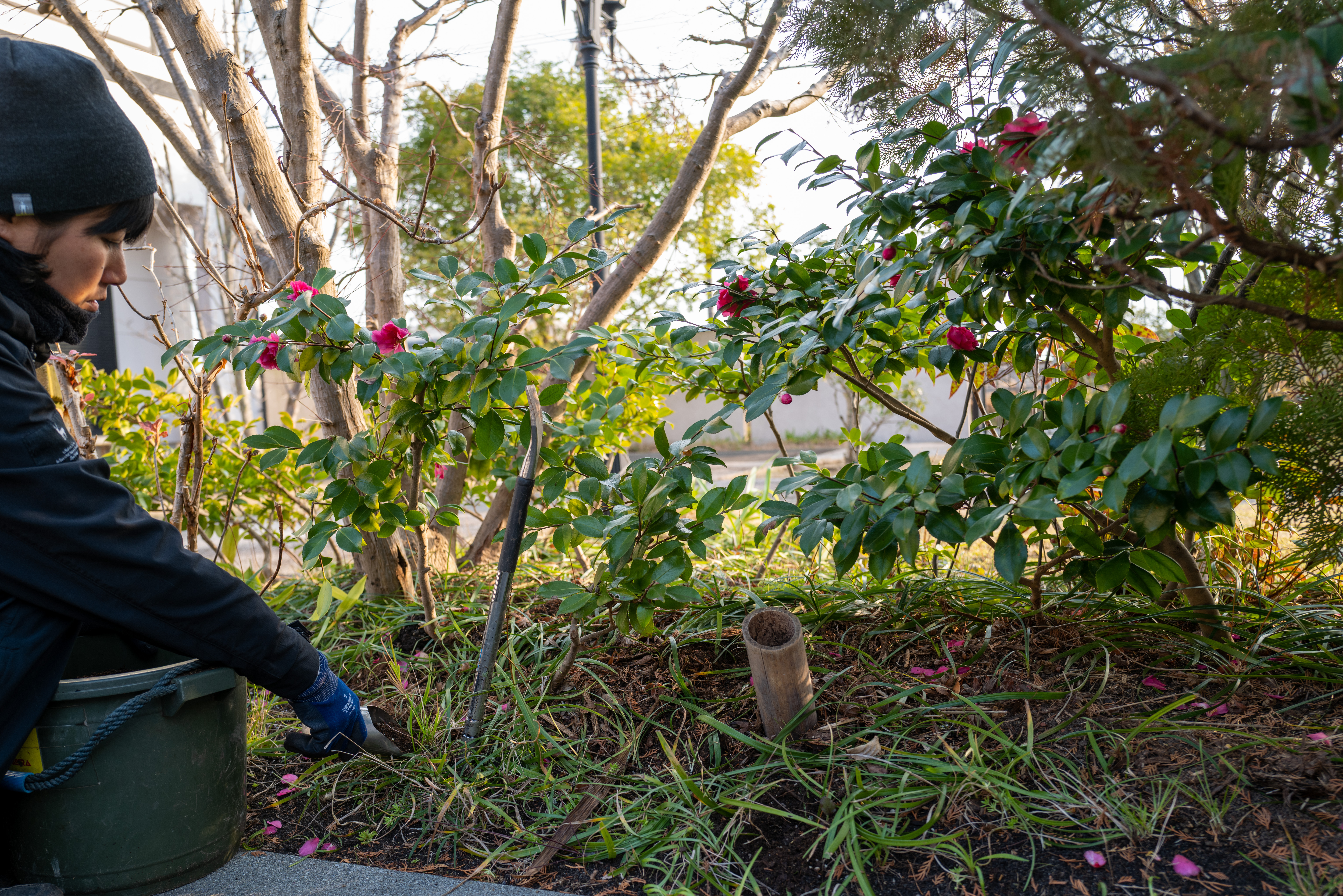
Kanbou — literally 'cold fertilizer,' more accurately translated as 'winter base fertilizer' — is the practice of applying slow-release organic fertilizer to garden trees and shrubs in winter, when the plants are dormant and the soil is cool. The fertilizer breaks down slowly through winter and early spring, becoming available to roots just as growth begins in late February and March.
Why Winter?
The timing counteracts one of the most common fertilizing mistakes: applying fertilizer when growth is rapid and the plant looks vigorous, then stopping when growth slows. This approach delivers nutrients when the plant is least able to use them efficiently and deprives it when the energy demand of spring growth is highest.
Winter fertilizing works differently. By placing slow-release organic matter in the soil before the growing season, the nutrients are processed by soil microorganisms through winter at a rate matched to soil temperature — slowly at first, then accelerating as the ground warms in late winter. When root activity increases in spring, the nutrients are available.
The Art of Restraint
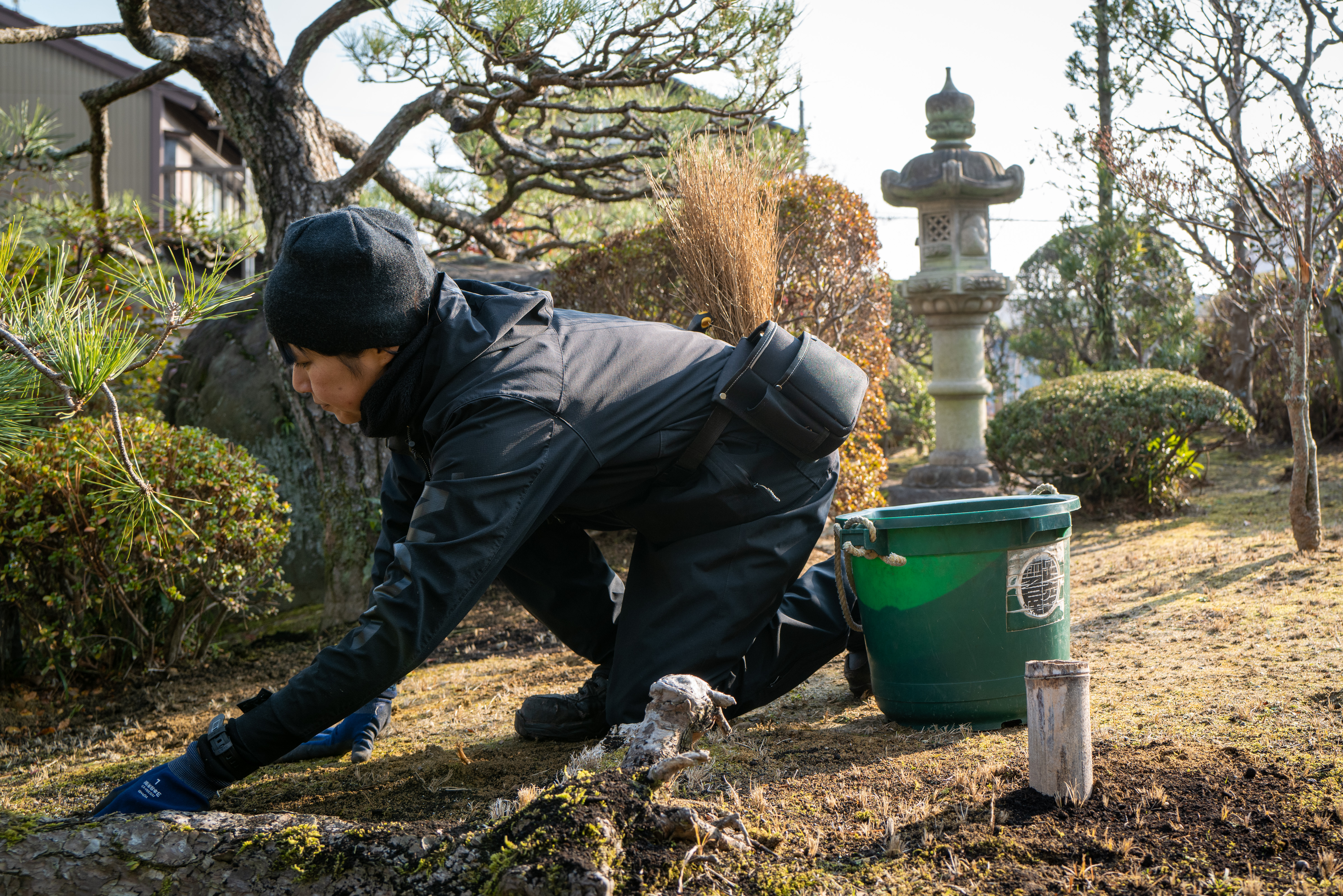
What makes kanbou practice distinctive is not just its timing but its quantity. Japanese garden tradition emphasizes restrained fertilizing for ornamental trees — particularly pines. The goal is not maximum growth. The goal is appropriate growth: healthy, structured, manageable.
A pine fertilized heavily produces long, lush needles and vigorous shoots that require more shaping work and may affect the tree's aesthetic character. A pine given moderate, appropriate nutrition produces compact growth that responds better to the traditional shaping techniques — midori-tsumi (candle pruning) in spring, ha-suki (needle thinning) in autumn — and maintains the density and proportion that makes Japanese pines recognizable.
This is not unique to pine. The same principle applies to the management of any ornamental tree that you intend to maintain in a particular form. Fertility in excess of what the tree needs to be healthy pushes it toward a size and shape that contradicts the form you are trying to maintain.
Pine Vigor Recovery
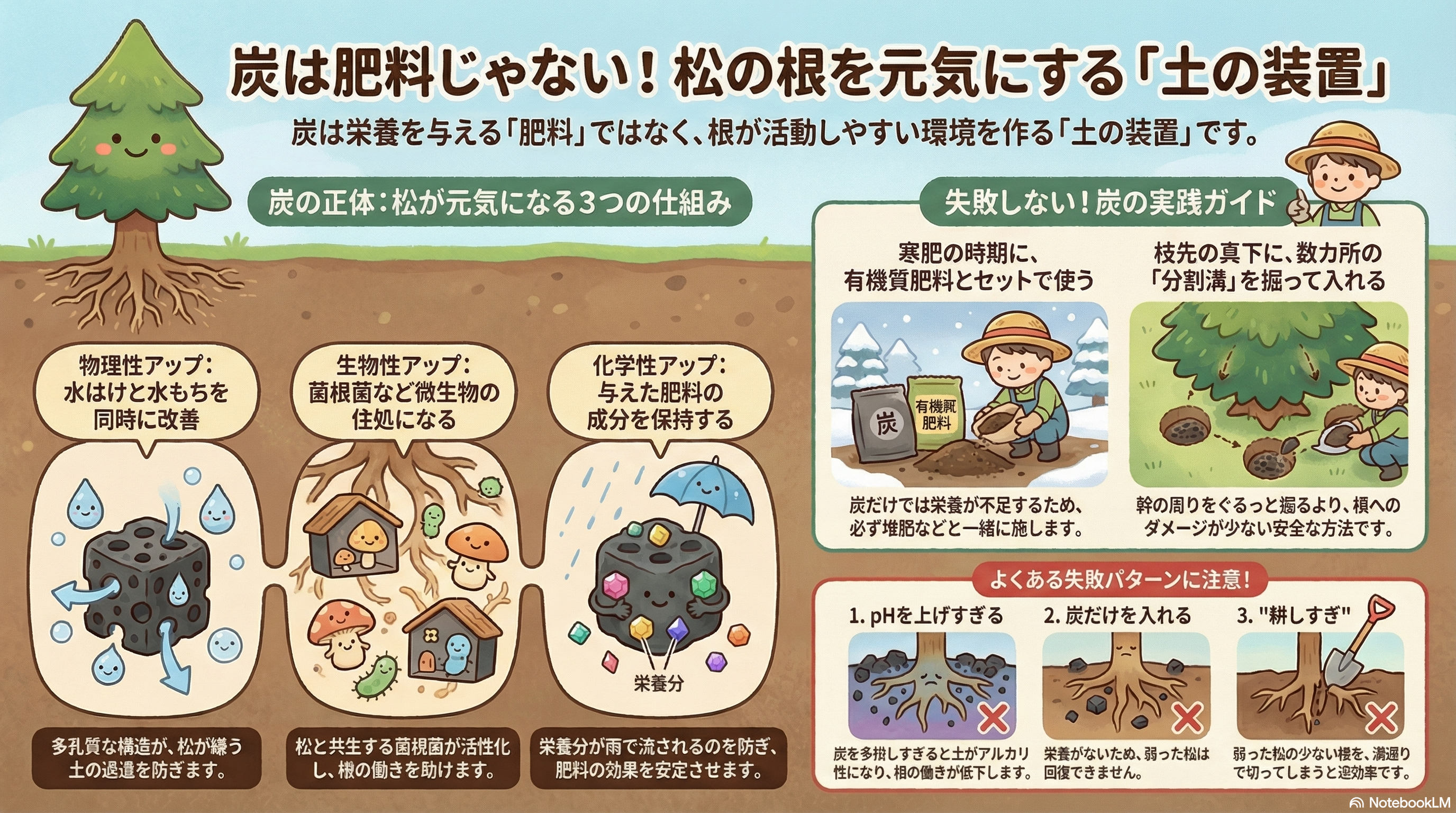
When a pine has been under stress — from soil compaction, from drought, from damage — the approach to fertilizing changes somewhat. A tree rebuilding vigor from a depleted state needs more support than a healthy tree being maintained.
In these cases, kanbou is supplemented with soil improvement work (aeration, organic matter addition) and sometimes with liquid fertilizer applications in spring and early summer to provide more immediately available nutrients while the soil biology rebuilds. The goal is recovery to a healthy baseline, not maximum growth — and once the tree has recovered, fertilizing practice returns to the restrained norm.
Frequently Asked Questions
Q: What type of fertilizer is used for kanbou?
Traditional kanbou uses organic fertilizers: bone meal, fish meal, oil cake (rapeseed or soybean), or composted animal manure. These release nutrients slowly as soil microorganisms process them. Chemical slow-release fertilizers can also be used, though they lack the soil-building properties of organic materials.
Q: How close to the tree is fertilizer placed?
Fertilizer is typically placed at the drip line — the outer edge of the canopy — or slightly beyond, not at the base of the trunk. Root tips, which absorb most nutrients, are at the drip line and beyond. Placing fertilizer at the trunk base provides little benefit.
Q: Can kanbou be done after it has rained?
Applying after rain is fine — the moist soil condition is actually favorable for microbial activity that will begin processing the organic material. Avoid applying immediately before heavy rain if the fertilizer is in granular or pellet form, as it may wash away before incorporating into the soil.
The garden in winter is working, even when it appears still. Providing what it needs in the right amount, at the right time, is the practice of attention that makes spring's growth possible.