Crape Myrtle in the Japanese Garden — What Gardeners Get Wrong About This Summer Tree

Updated: May 30
Its Japanese name is Sarusuberi — monkey slip. The bark is so smooth, so polished, that even a monkey would slide off it. Whether that is literally true has never been tested, but the name has stayed for centuries.
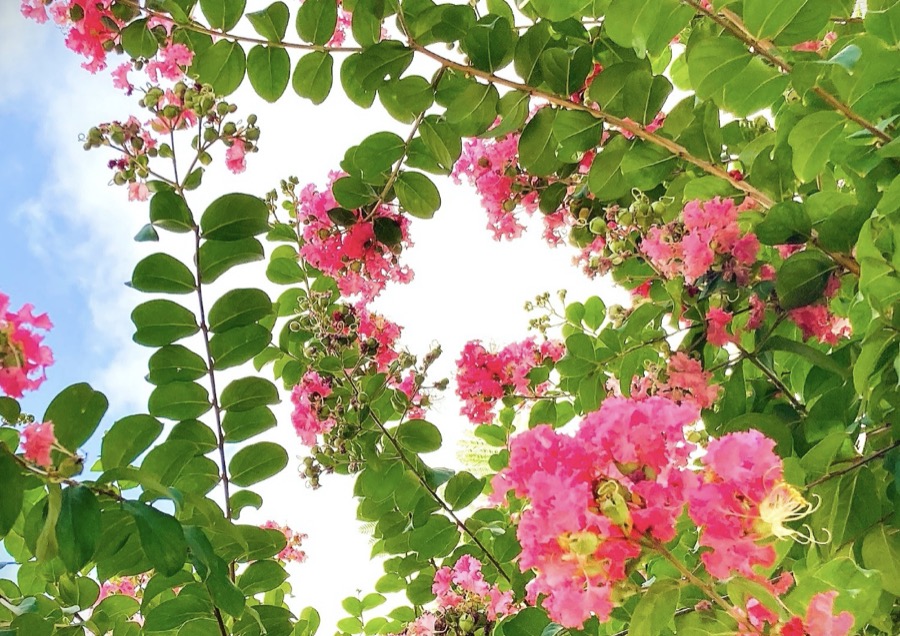
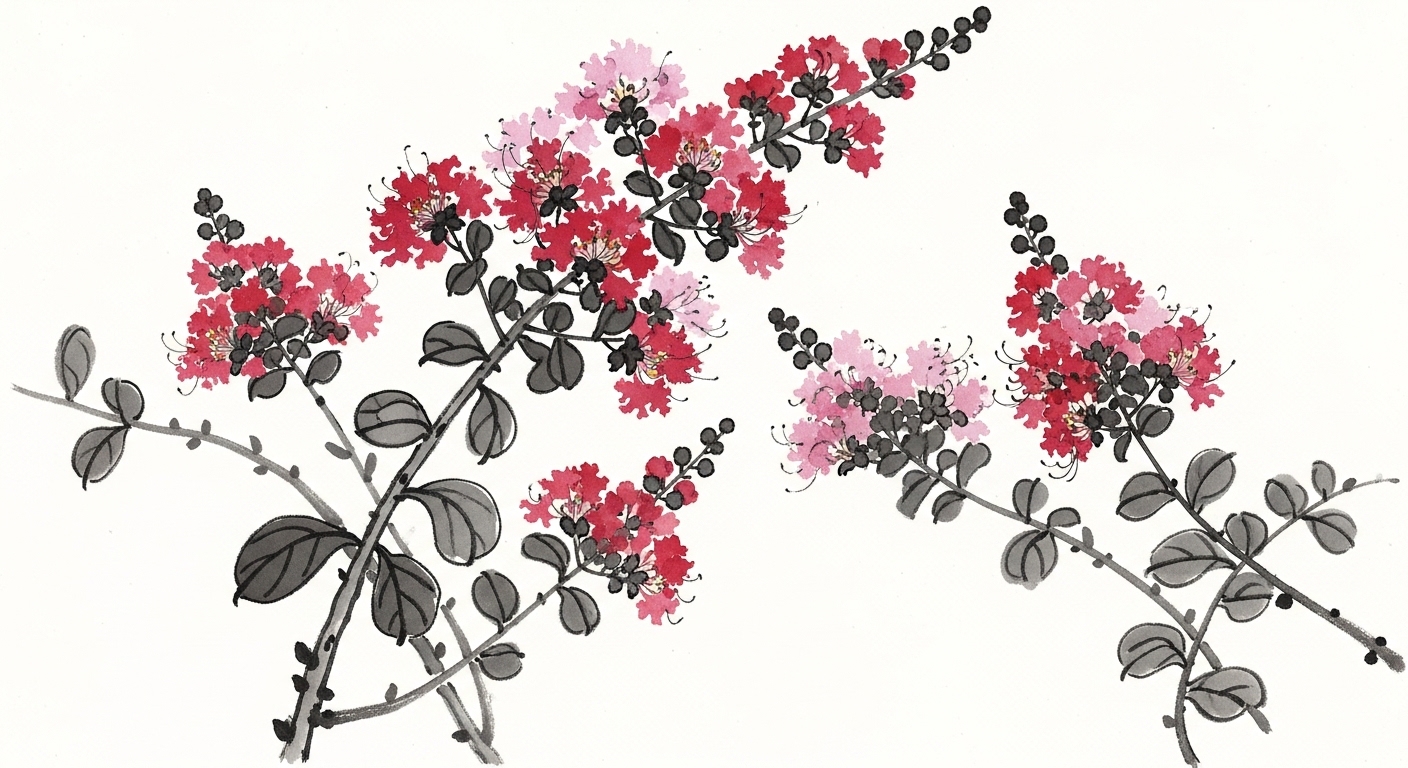
What is true is that crape myrtle (Lagerstroemia indica) is one of the most recognizable summer trees in Japan. In July and August, when most flowering trees have finished, crape myrtle covers itself in dense clusters of ruffled blooms — pink, white, red, or purple — and holds them for two to three months.
The bark that earned the name
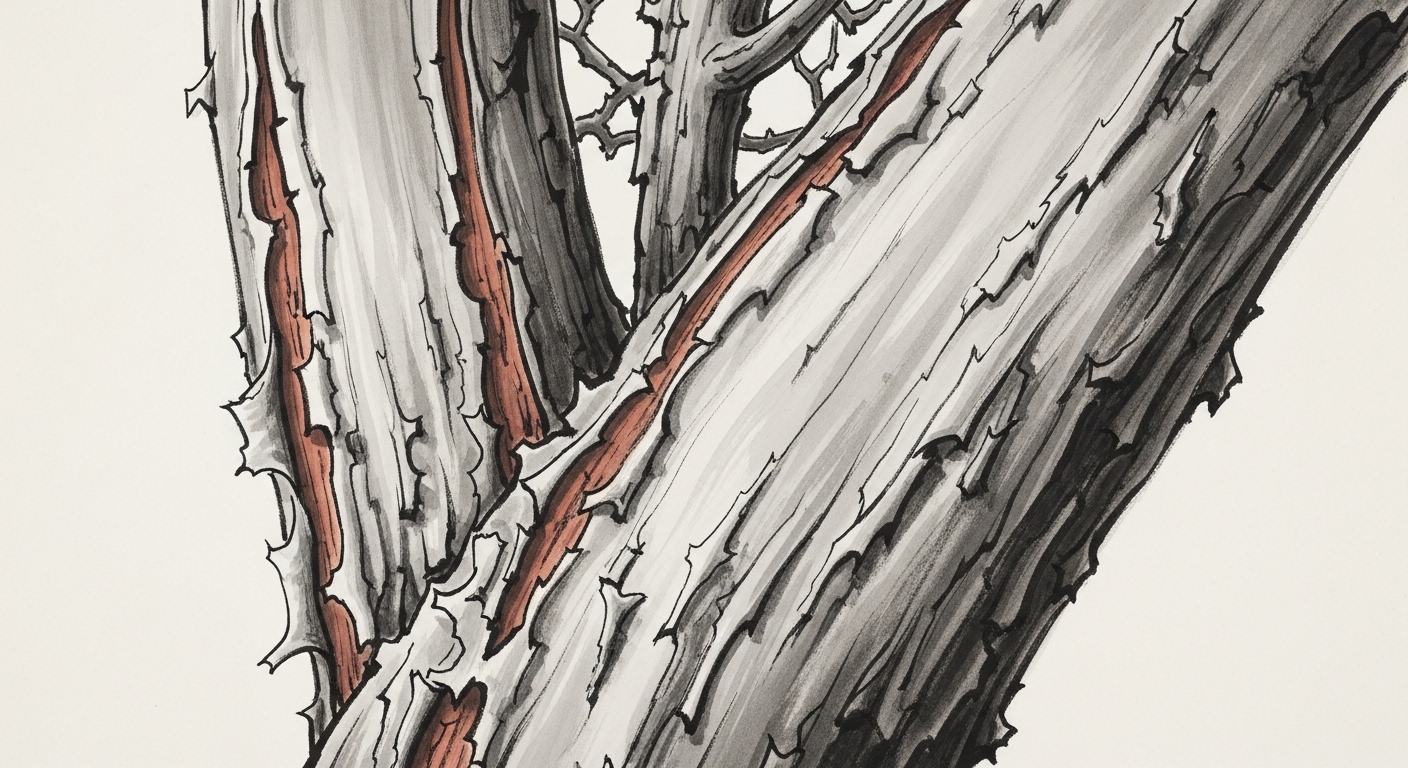
Crape myrtle sheds its outer bark each year. As the old bark peels away, a new surface emerges — smooth, pale, almost luminescent in the summer sun. On older trees, the trunks develop a sinuous, muscular form, the colors shifting between cream, tan, and muted orange depending on season and light.
This shedding is not a sign of disease. It is the tree's normal growth pattern, and in older specimens it becomes one of the plant's most distinctive aesthetic qualities. In Japanese garden design, Sarusuberi is sometimes chosen specifically for the winter silhouette this sculptural trunk creates.
Superstitions — and what they actually tell you
In some older Japanese plant guides, Sarusuberi appears alongside a quiet caution: the tree's association with slipping was sometimes extended to symbolic interpretations — examinations, businesses, luck. These associations are regional and not universal, but they persist in certain circles.
A more practical interpretation: the same smooth bark that earned the name also makes the tree genuinely hard for insects and climbing pests to colonize the trunk. That is an advantage, not a warning.
Pruning: the knob problem
Crape myrtle flowers on new growth. The standard practice in Japanese gardens — heavy annual cutting back to a set of fixed points on the upper branches — does produce flowers. But it also creates increasingly swollen knobs at those cut points over the years.
This is sometimes called crape murder in Western horticulture: the disfiguring effect of cutting repeatedly to the same spot season after season. The tree survives. But the natural form of the branches — arching, layered, graceful — is lost.
An alternative: natural-form pruning. Remove crossing branches, thin the interior for light and air movement, and shorten long leaders by no more than a third. The tree will still flower. It will also retain the form that made it worth planting in the first place.
Powdery mildew
Powdery mildew is the most common disease problem with Sarusuberi in Japan. The fungus appears as a white powder on young leaves and buds, particularly in humid conditions with poor air circulation.
Prevention is more effective than treatment. Plant in full sun — mildew favors shade. Avoid wetting the foliage when watering. Remove and dispose of infected material, and do not compost it. Mildew-resistant varieties now exist; if planting new, look for cultivars selected for Japanese climate conditions.
Autumn and winter
After the flowers finish in September, the seed capsules remain — small, round, and clustered — through autumn. Many gardeners leave them for the winter silhouette. The leaves turn yellow-orange before dropping, a brief secondary display.
In winter, the bare trunk and branch structure carry all the visual weight. This is the tree's second season of interest, and in a Japanese garden it is often equal to the summer flowering.
Frequently Asked Questions
Q. Why does my crape myrtle not flower much?
A. The most common causes are insufficient sun (full sun, at least 6 hours, is required), over-pruning that removes flowering wood before it can develop, or heavy nitrogen fertilization that promotes leaf growth at the expense of flowers.
Q. When is the best time to prune crape myrtle?
A. Late winter, before new growth begins — February to early March in most of Honshu. Avoid pruning in summer, which removes the current season's flowers, and in late autumn, which can stimulate growth that gets damaged by frost.
Q. Is crape myrtle deer-resistant?
A. Crape myrtle is generally avoided by deer. The smooth bark and the chemistry of the leaves make it unattractive. In woodland-edge gardens where deer pressure is a concern, this is worth noting.
Q. How long does crape myrtle live?
A. In favorable conditions, crape myrtle can live 50 to 100 years or more. The oldest specimens develop considerable trunk girth and the characteristic sculptural bark that makes the tree distinctive in winter. With careful pruning — avoiding the knob-cutting approach — these old trees are among the most beautiful garden specimens in Japan.
Senteiya Sora is a certified tree care and landscaping company based in Komono-cho, Mie Prefecture, Japan.

Senteiya Sora is a Google News verified media source.