Hachiku Bamboo Grove Management in Suzuka — Felling, On-Site Chipping, and Stump Safety Cuts

Updated: May 30
Two days of bamboo grove management in Suzuka City, Mie Prefecture — April 18 and 20, 2026. The species: hachiku (Phyllostachys nigra var. henonis), known in English as henon bamboo.
The work covered three stages: selective felling, on-site chipping, and a second pass to cut remaining stumps flush with the ground.
Hachiku vs. Moso — The Other Bamboo
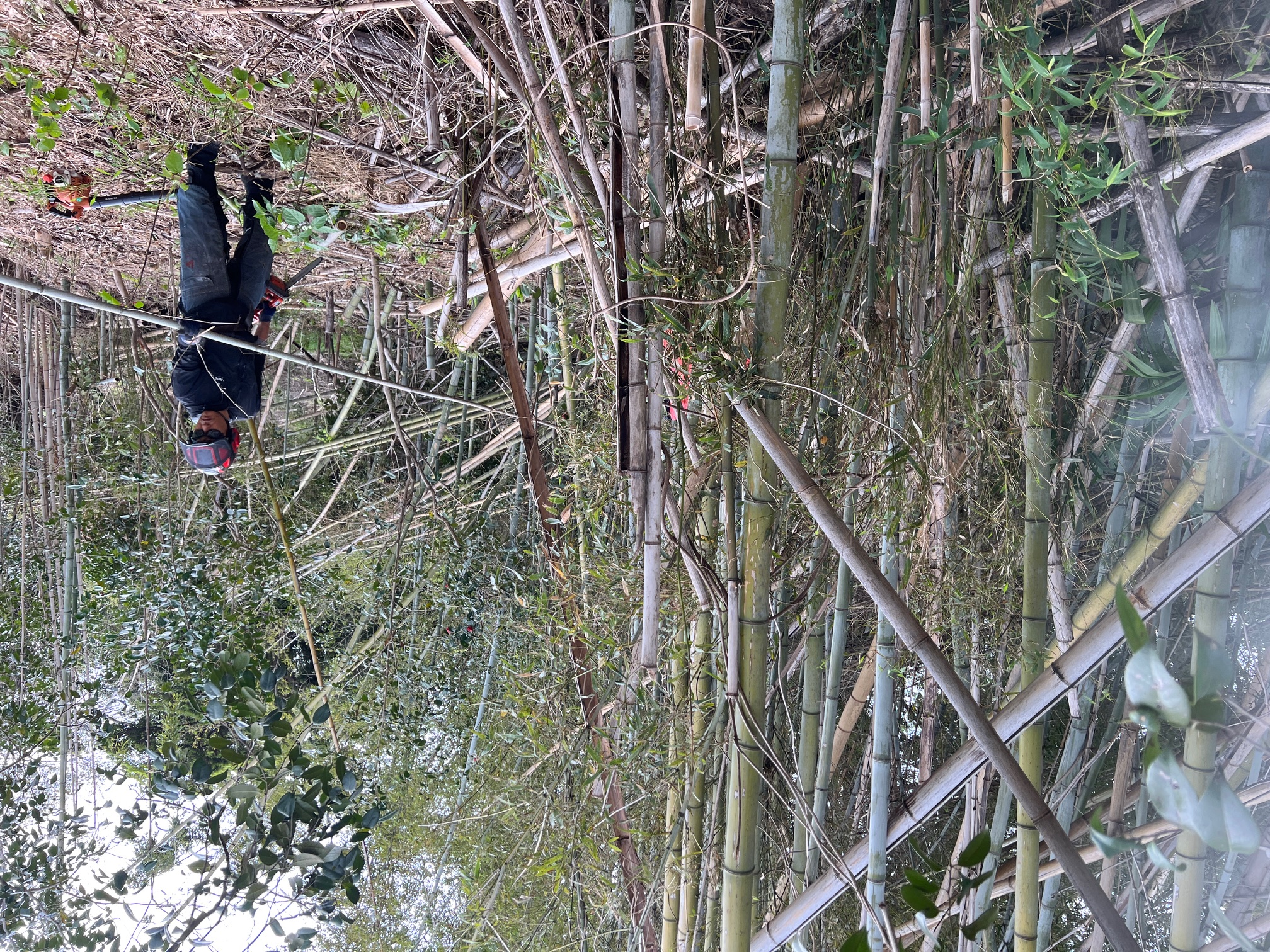
Most bamboo management work in Japan involves moso (Phyllostachys edulis), the large-diameter species used in food production and construction. Hachiku is different: thinner culms, thinner walls, and a shoot season that runs later — from late April through May, after moso has already finished.
Hachiku is historically valued for basketry, musical instruments (particularly shakuhachi flutes), and fence construction. It spreads more slowly than moso and responds well to regular thinning.
Day 1: Felling and On-Site Chipping
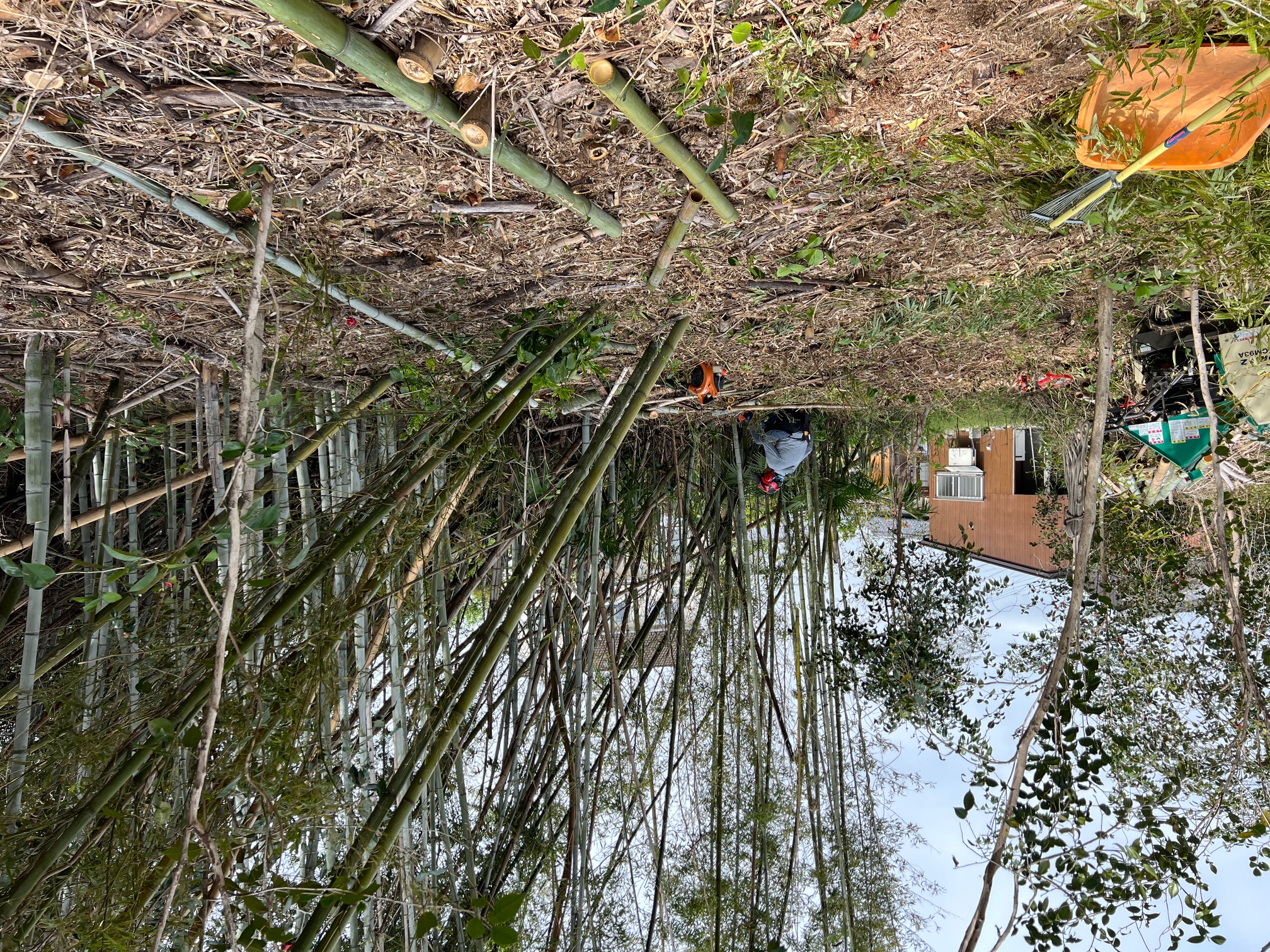
The grove had densely regrown since the previous management visit. Culms were felled selectively, working through the stand to open light and air movement.
Rather than hauling felled material off site, each culm was fed directly into a chipper. The resulting bamboo chips were spread across the forest floor immediately.
Why Chip On Site
Bamboo biomass returned to the forest floor as chips serves two functions: moisture retention through mulching, and gradual soil improvement as the material decomposes.
Hauling bamboo off site requires loading,
transport, and disposal — and removes organic material that the grove produced. Chipping in place keeps the nutrient cycle closed within the stand.
Chips were also spread on the embankment
slope, where they reduce surface erosion from rainfall.
Day 2: Stump Re-cuts for Safety
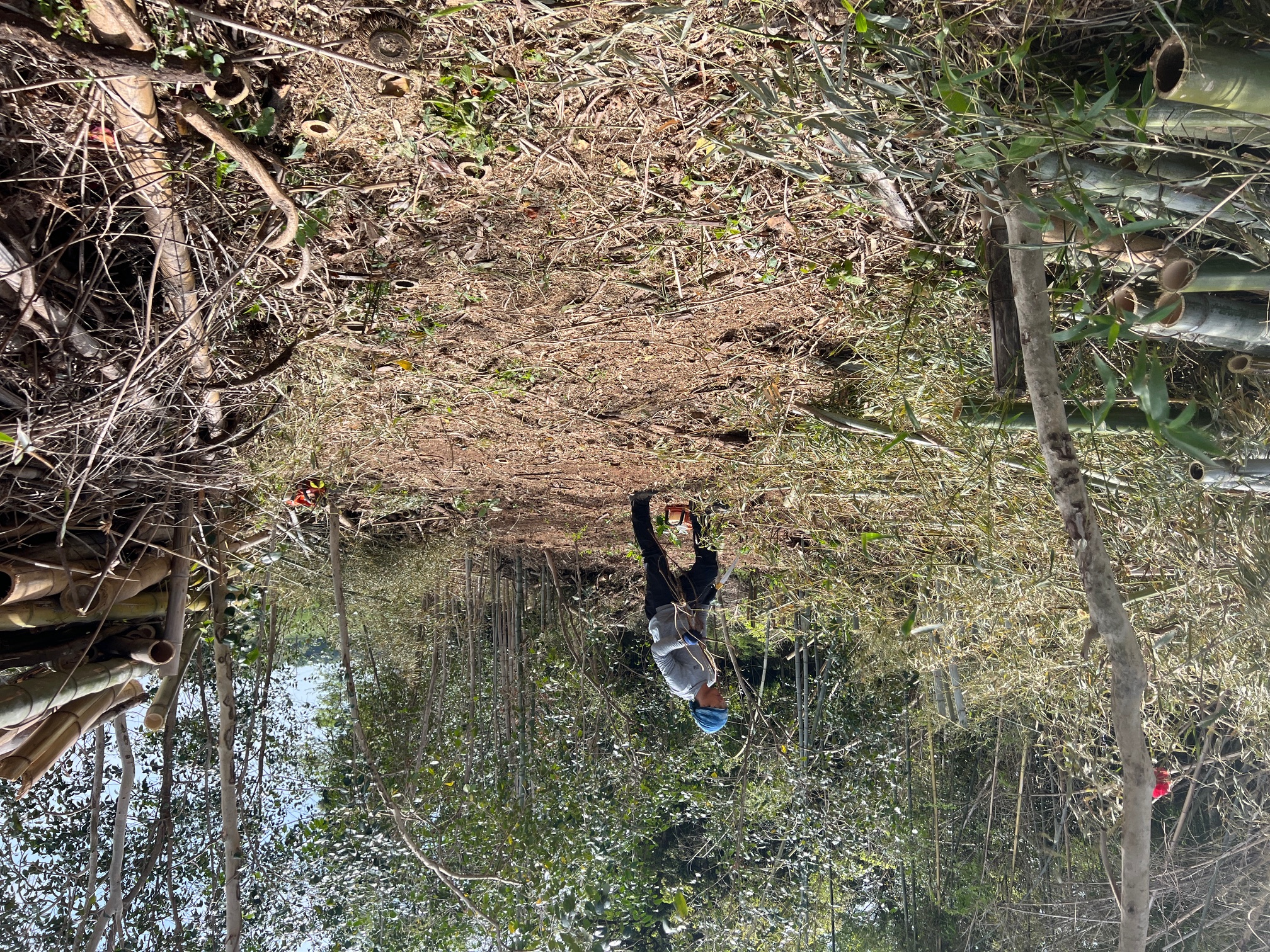
On the second day, the remaining bamboo stumps were checked systematically. Any stump left standing above ground level — from an angled cut or a high first pass — was cut back down.
This grove runs adjacent to a road and a drainage channel. A protruding bamboo stump in that location is a fall hazard that could cause serious injury. The re-cutting work addresses the stumps that are invisible at a glance but present underfoot.
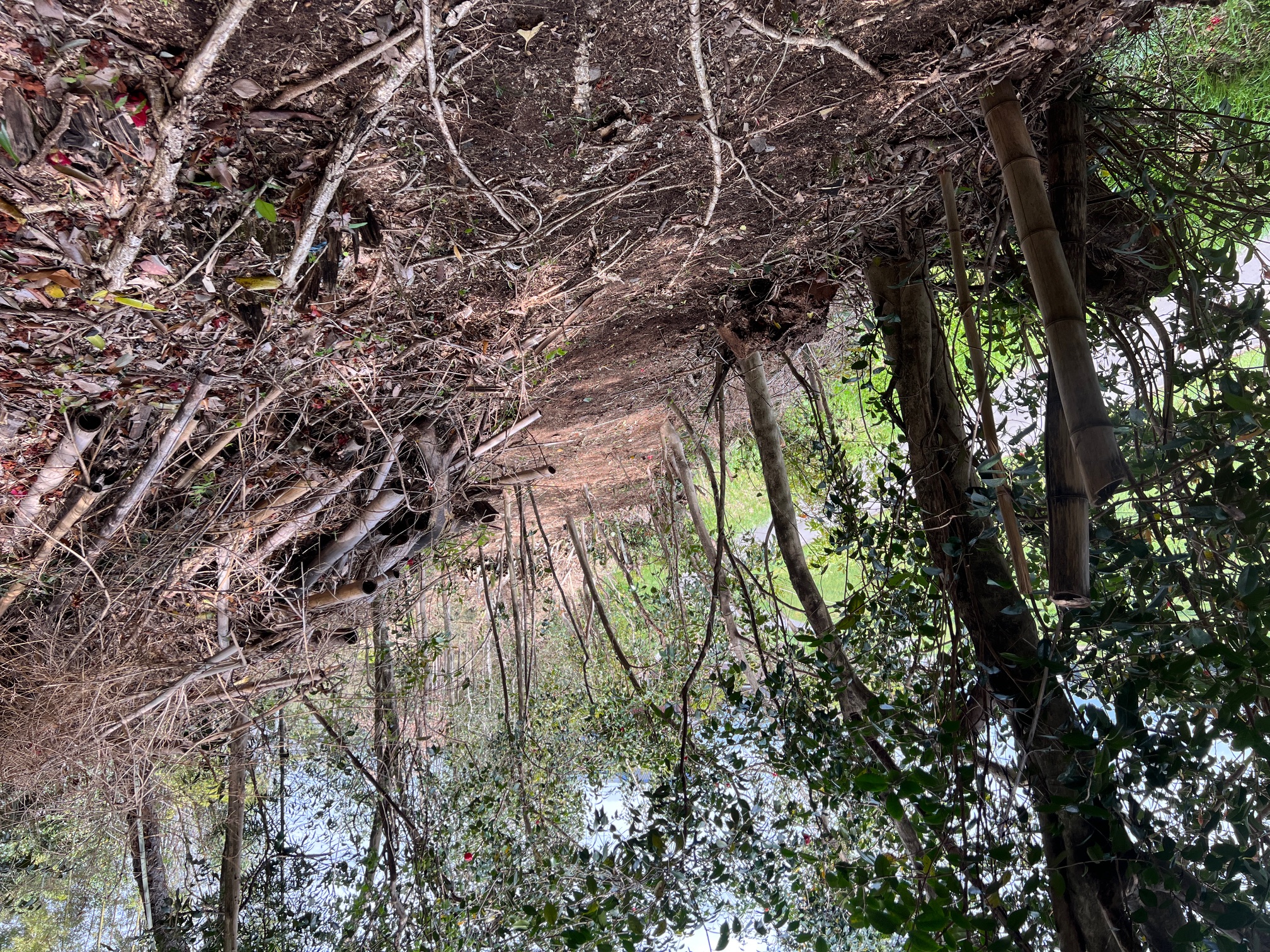
After the re-cuts, sightlines through the grove opened and the ground surface became safe to walk. The visible change is in the light and the clearance; the less visible change is in the reduced risk underfoot.
The Shoot Season Follows Immediately
Hachiku sends up new shoots from late April through May — the period that immediately follows this management visit. A clean, open forest floor makes those shoots easy to monitor and harvest if wanted.
Managing the grove before the shoot season means the next cycle starts from a stable base: good light penetration, no overcrowding from the previous year's culms, and ground that can be walked safely.
Frequently Asked Questions
Q. What is hachiku bamboo, and how does it differ from moso?
A. Hachiku (Phyllostachys nigra var. henonis) is a medium-diameter bamboo species native to Japan and China, with thinner culms and walls than moso (Phyllostachys edulis). Its shoots emerge in late April to May, about four to six weeks after moso. It is historically used in Japanese crafts and instrument-making rather than food or large-scale construction.
Q. Why are bamboo stumps dangerous after felling?
A. When a bamboo culm is cut at an angle — which often happens on sloped terrain — the stump projects upward at a point rather than presenting a flat surface. These pointed stumps are difficult to see at ground level and can cause puncture injuries if someone falls or steps on them. In groves adjacent to roads or drainage channels, the consequences of a fall are more serious, making flush cuts a standard safety step.
Q. How often does a hachiku grove need management?
A. Annual management is typical for a grove in active use. The thinning cycle depends on the density of regrowth, the intended use of the space, and whether shoots are being harvested. In Mie Prefecture, the growing season for hachiku runs roughly from late April through June; management before that period positions the grove well for the shoot season and the following year's growth.
Senteiya Sora is a certified tree care and landscaping company based in Komono-cho, Mie Prefecture, Japan.

Senteiya Sora is a Google News verified media source.