Delivering Directly to the Roots — The Logic of Deep Soil Injection for Tree Care

The most common approach to fertilizing or treating a tree is surface application — spreading fertilizer on the soil around the base of the tree, or applying a liquid drench that moves downward with irrigation or rain. This works when conditions are right: well-aerated soil, adequate moisture movement, and roots near enough to the surface to intercept the applied material.
In compacted soils, paved urban environments, or situations where the critical root zone is buried under layers of fill or hardscape, surface application often does not reach the roots effectively. The material sits above a layer the water and nutrients cannot penetrate quickly enough to be useful.
This is where deep soil injection — using a specialized pour nozzle — becomes relevant.
How the Pour Nozzle Works
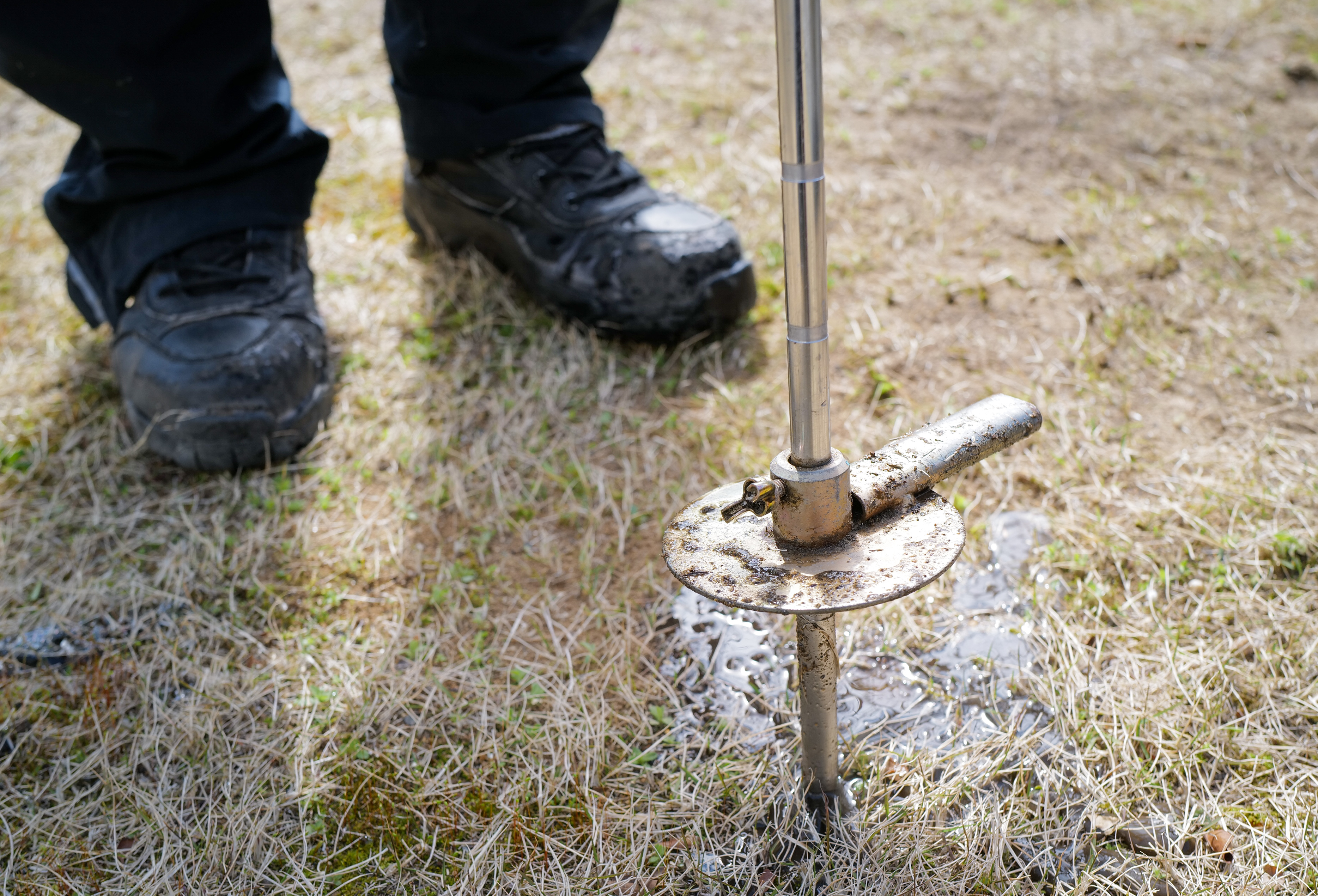
A pour nozzle (sometimes called a soil injection probe) is a hollow metal rod with a pointed tip and outlet holes near the end. Connected to a pressurized delivery system, it is driven into the soil to depth — typically 20-40 centimeters — before the material is delivered. The liquid is introduced directly into the root zone rather than having to migrate through the surface layer.
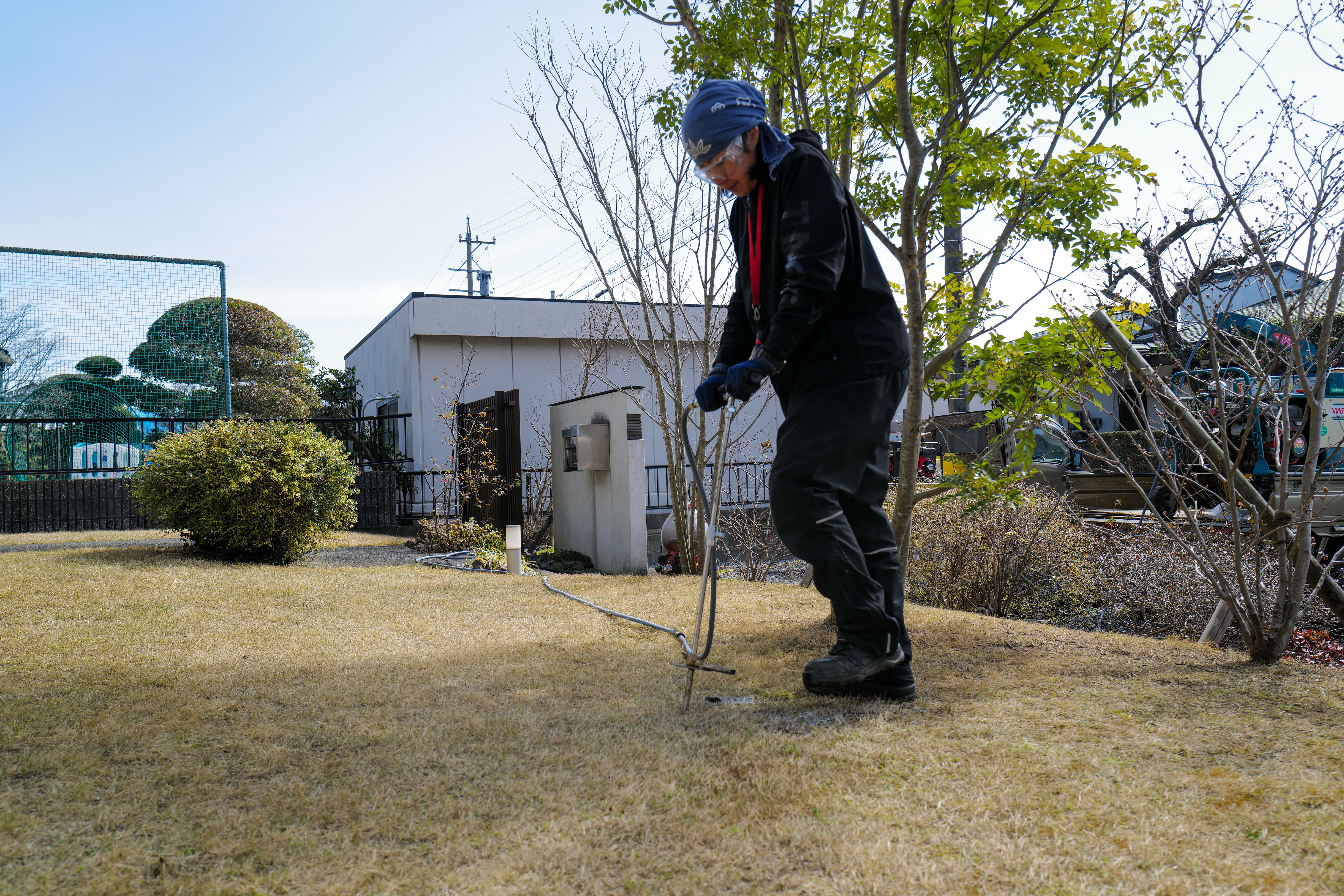
The injection point is moved repeatedly across the root zone — typically in a grid pattern at 30-50 centimeter intervals — to ensure even distribution. For a large tree, this may require dozens of injection points.
When It Is Used
Deep soil injection is used for fertilization of stressed or high-value trees in compacted or paved environments; for treatment of soil-borne pathogens and nematodes; for aeration — some systems inject air or perlite along with water; and for mycorrhizal inoculation, where beneficial fungi are introduced into the root zone of trees that have lost their natural soil biology due to disturbance.
In urban Japanese settings — trees growing in narrow planting pits surrounded by pavement, or trees planted in poor fill soil during construction — deep injection is often the most effective way to support tree health because it bypasses the physical barriers that make surface application ineffective.
Frequently Asked Questions
Q: Is deep soil injection the same as trunk injection?
A: No. Trunk injection introduces material directly into the vascular system of the tree through holes drilled in the bark. Deep soil injection delivers material to the root zone in the soil. Both are used for tree care but for different applications and with different materials.
Q: Can I use deep soil injection for home garden trees?
A: Basic versions of the technique — using a long metal rod with a garden hose attached — are available for home use. Professional equipment provides more precise pressure control and wider material options. For small to medium garden trees, even basic deep watering probes can meaningfully improve nutrient and water delivery in compacted soils.
Q: How do I know if my tree needs deep soil injection rather than surface fertilization?
A: Signs include compacted soil (does not accept water quickly), paved surfaces over a significant portion of the root zone, poor response to surface fertilization in previous years, or visible soil compaction around the root flare. A soil probe or screwdriver pushed into the ground will meet significant resistance in compacted soil at depths a typical surface application cannot reach effectively.
Getting to the roots directly is not always necessary. But when surface conditions prevent delivery, going around the obstacle is simply more effective than applying more to the surface and hoping it reaches.