Garden Lighting That Changes With the Season — Notes from Night Maintenance Work

Updated: May 4
We sometimes work in gardens after dark — maintenance that is easier without the heat of the day, or jobs where the owners are home during daylight hours. These sessions give a particular view of gardens that most people, including the owners themselves, rarely see.
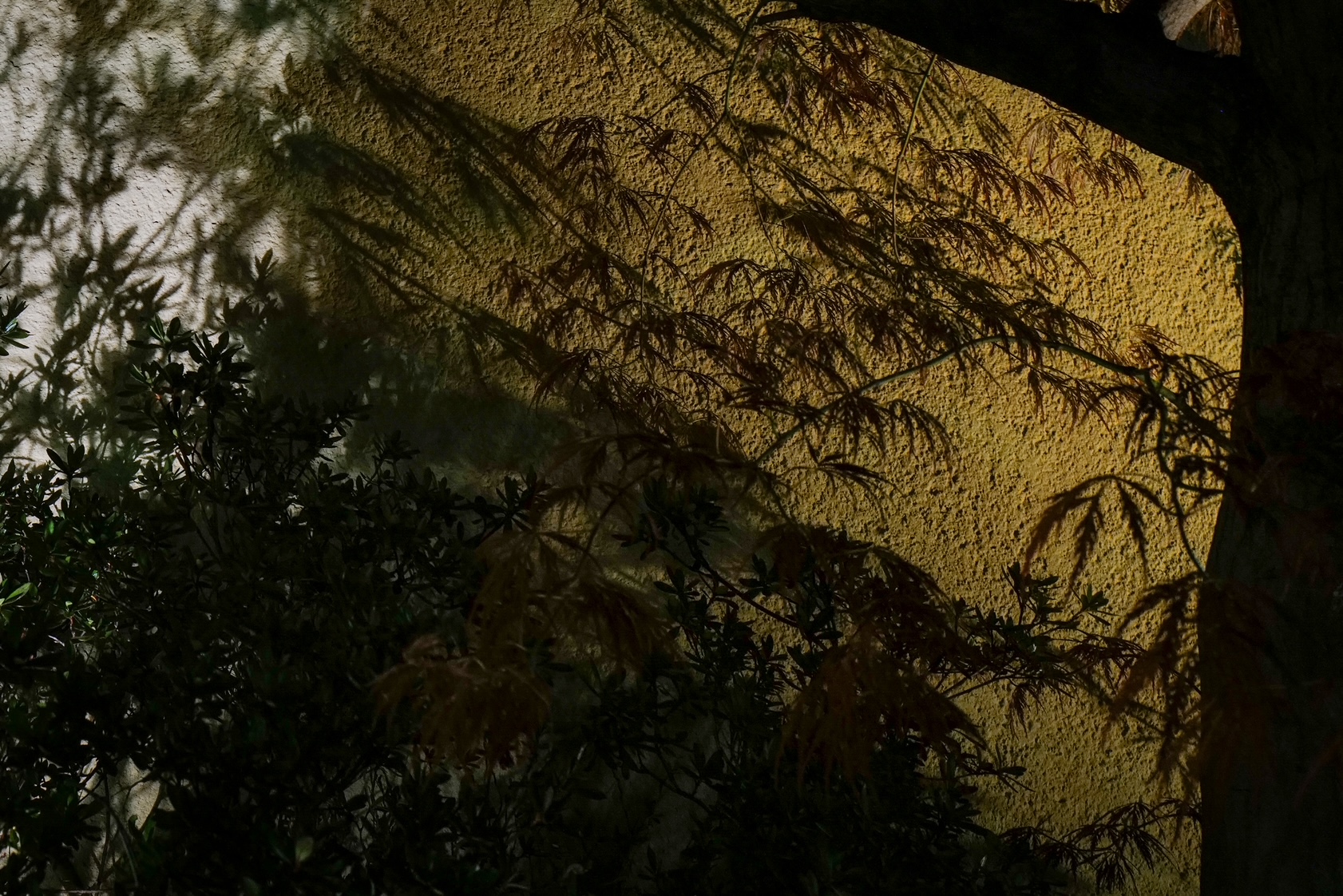
The garden at night is not the garden in daylight reduced to darkness. It is a different place. Shadows are active rather than absent. Textures that disappear in full sun become visible at a raking angle. The relationship between lit areas and dark ones creates spatial depth that flat daylight eliminates.
What Changes with the Season
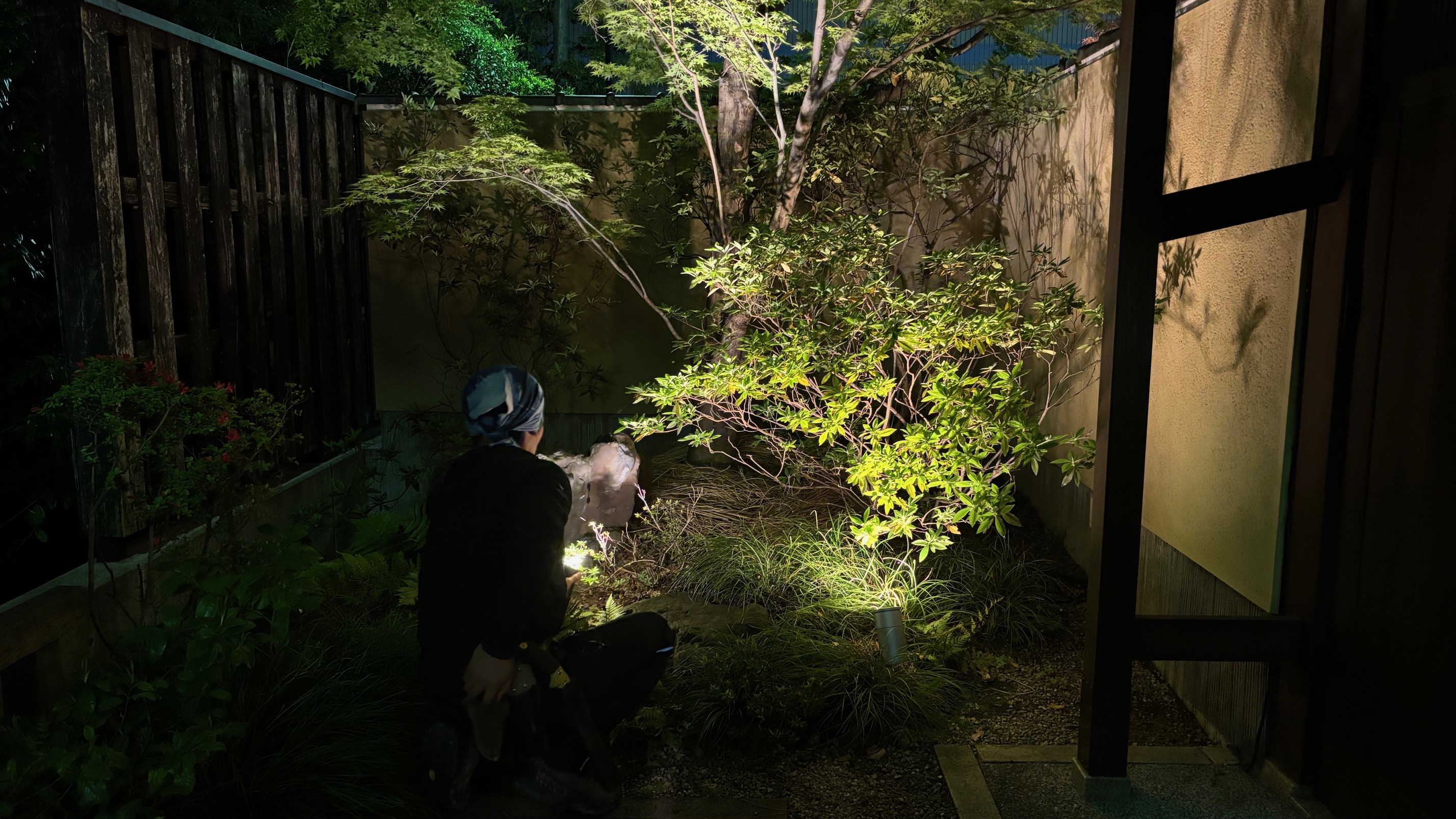
Spring gardens in good lighting are delicate — the new foliage is fine-textured, pale green, almost translucent. Lighting that works in winter, when branch structure is the subject, will overwhelm spring leaves if the intensity is not reduced. The garden has become softer, and the lighting should respond.
By summer, the garden is dense. Leaves are full-size and deep green; shadows are heavy and layered. Strong directional lighting through summer foliage creates a very different effect from spring — dramatic, sometimes theatrical. The same fixture that was too much in spring may now be right.
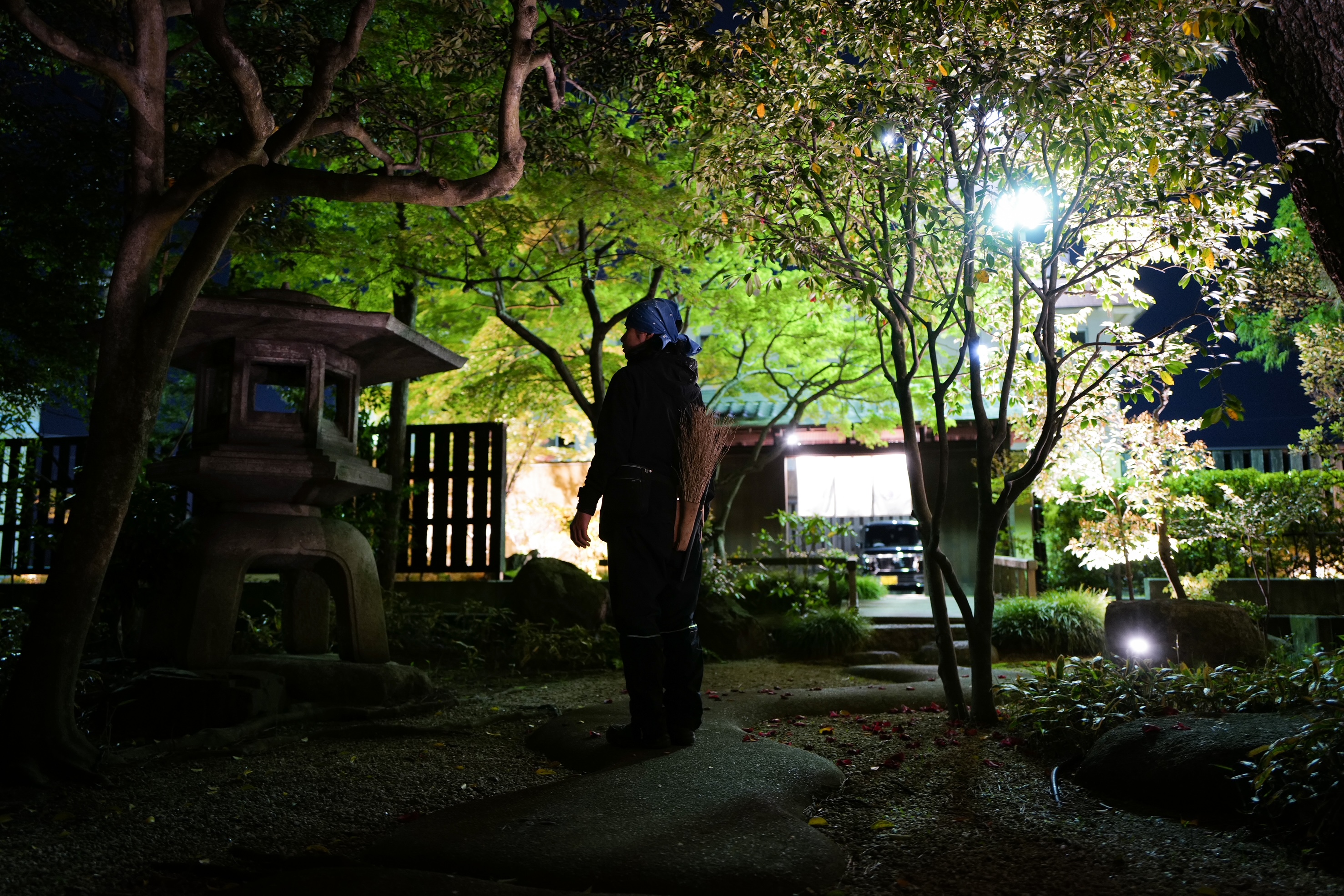
Autumn brings color again — but different from spring. Autumn tones are warm, and warm light (lower color temperature) suits them better than the cooler white that works for spring greens. Adjustable fixtures, or seasonal relamping, can make the lighting responsive to this.
Design Principles for Seasonal Gardens
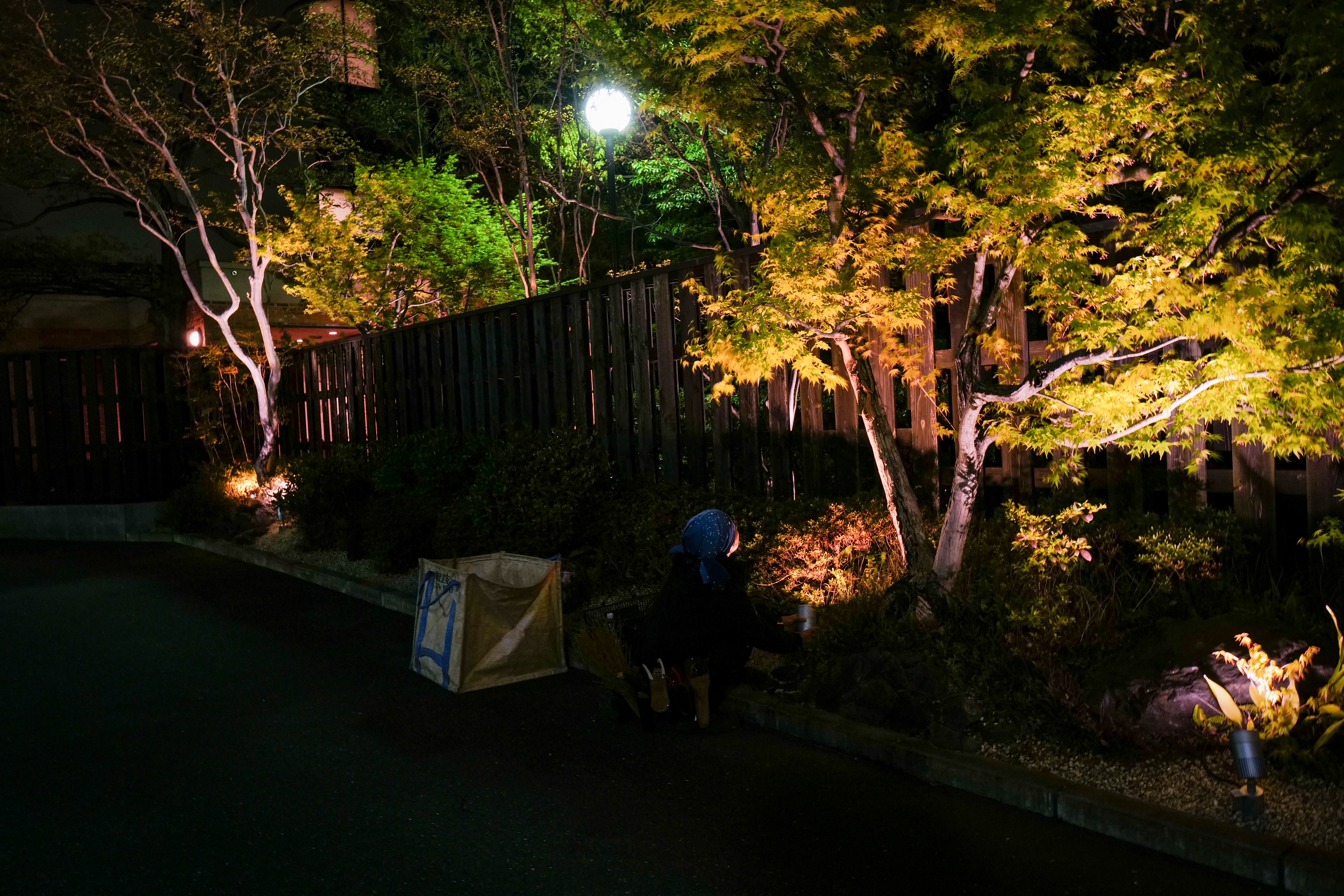
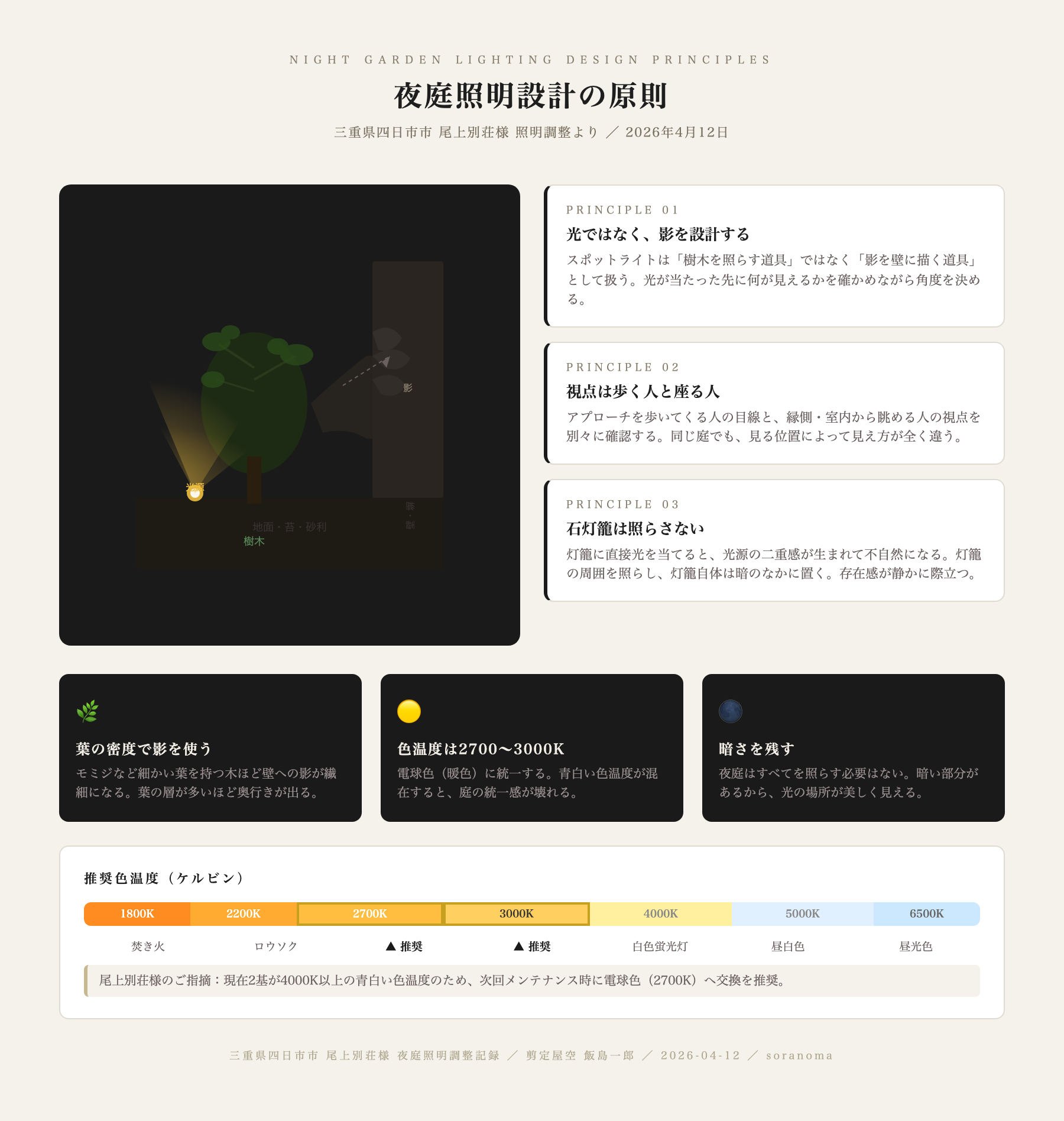
The most useful approach for Japanese gardens with seasonal plantings is layered, flexible lighting. Ground-level fixtures illuminate texture and path definition. Mid-height fixtures create a human-scale reference. Upper fixtures, if used, should be restrained — light from above flattens the garden rather than revealing it.
Color temperature matters more in gardens than in interiors. The garden already has its own palette; lighting should complement rather than recolor. Warm white (2700K-3000K) suits plantings with traditional Japanese aesthetic. Cooler white (4000K and above) is better suited to contemporary plantings with gray or silver foliage.
Frequently Asked Questions
Q: Should garden lighting be left on all night?

A: Not necessarily. Lighting designed for human viewing is most effective during the hours the garden is actually used or seen. For gardens primarily viewed from indoors, timers that operate during occupied evening hours are sufficient and reduce energy use. Continuous lighting also affects nocturnal wildlife — insects and bats, in particular, orient to artificial light in ways that can disrupt their behavior.
Q: What is the most common mistake in garden lighting?
A: Over-lighting. More fixtures and more intensity does not produce a better garden at night. The most effective garden lighting uses shadow as actively as it uses light — choosing what to illuminate and what to leave in darkness is the design decision. Gardens lit uniformly read as flat and uninteresting after dark.
Q: How does tree pruning affect existing lighting?
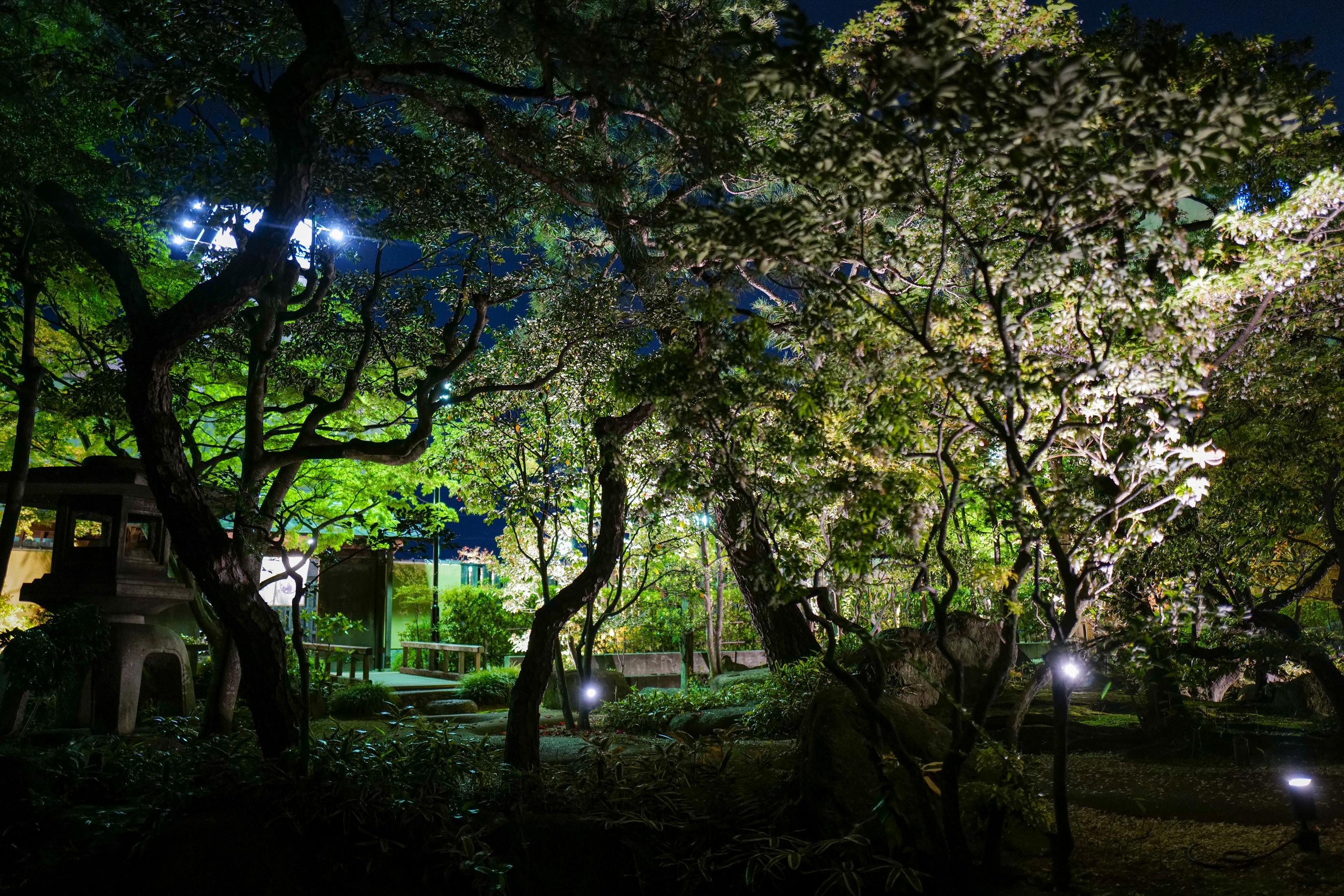
A: Significantly. A tree pruned for winter often reveals fixtures that were hidden in summer canopy, and changes where light falls on the ground. After major pruning, re-evaluating the lighting placement is worthwhile. The garden's structure has changed, and the lighting should be reconsidered accordingly.
The garden we were working in that evening had a pine tree whose silhouette, lit from below, was perfect — not because the fixture was precisely placed, but because the combination of that particular tree, that particular angle, and that particular night had come together in a way that would not be the same tomorrow.