Garden Maintenance in Kuwana — Weeding a Traditional Garden, Turf Care, and Tree Repair

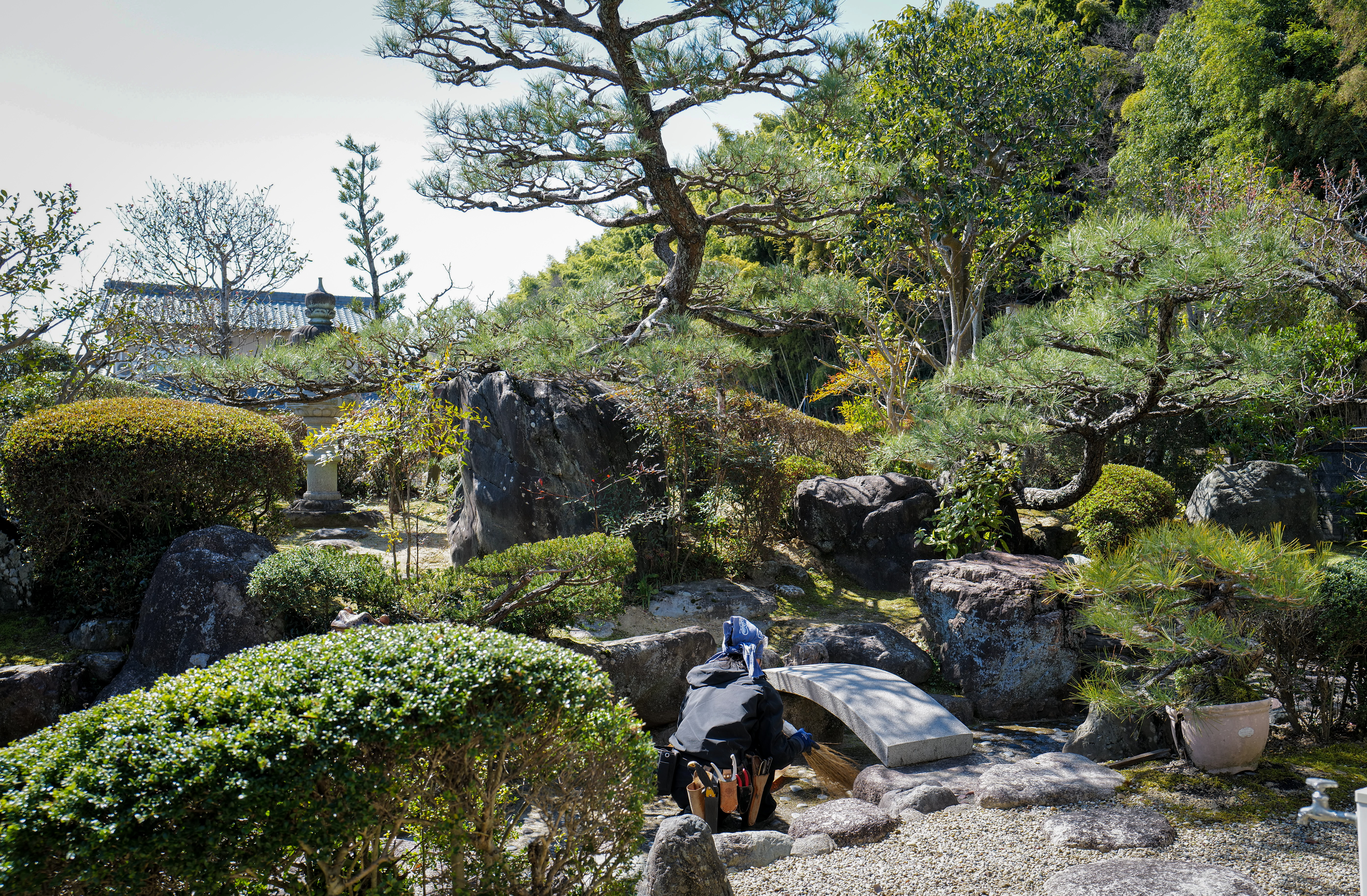
Some gardens in Japan hold two different approaches in the same space. This garden in Kuwana has a traditional section — raked gravel, clipped evergreens, a stone lantern — and a Western-style section with a lawn and mixed shrub planting. Maintaining both requires switching between two different sets of priorities within a single visit.
Traditional Garden Section: Weeding and Herbicide Application
In the traditional section, weeding is primarily hand work. The gravel areas and ground cover plantings require careful removal of unwanted plants without disturbing the arranged surfaces. We also apply selective herbicide to persistent weeds in the stone and gravel areas — particularly those rooting between stones where hand removal is not fully effective.
Herbicide application in a traditional garden requires attention to spray drift and the proximity of valued plants. We use targeted application with low-pressure equipment to minimize the area affected and protect the surrounding plantings.
Western Section: Lawn Care and Fertilization
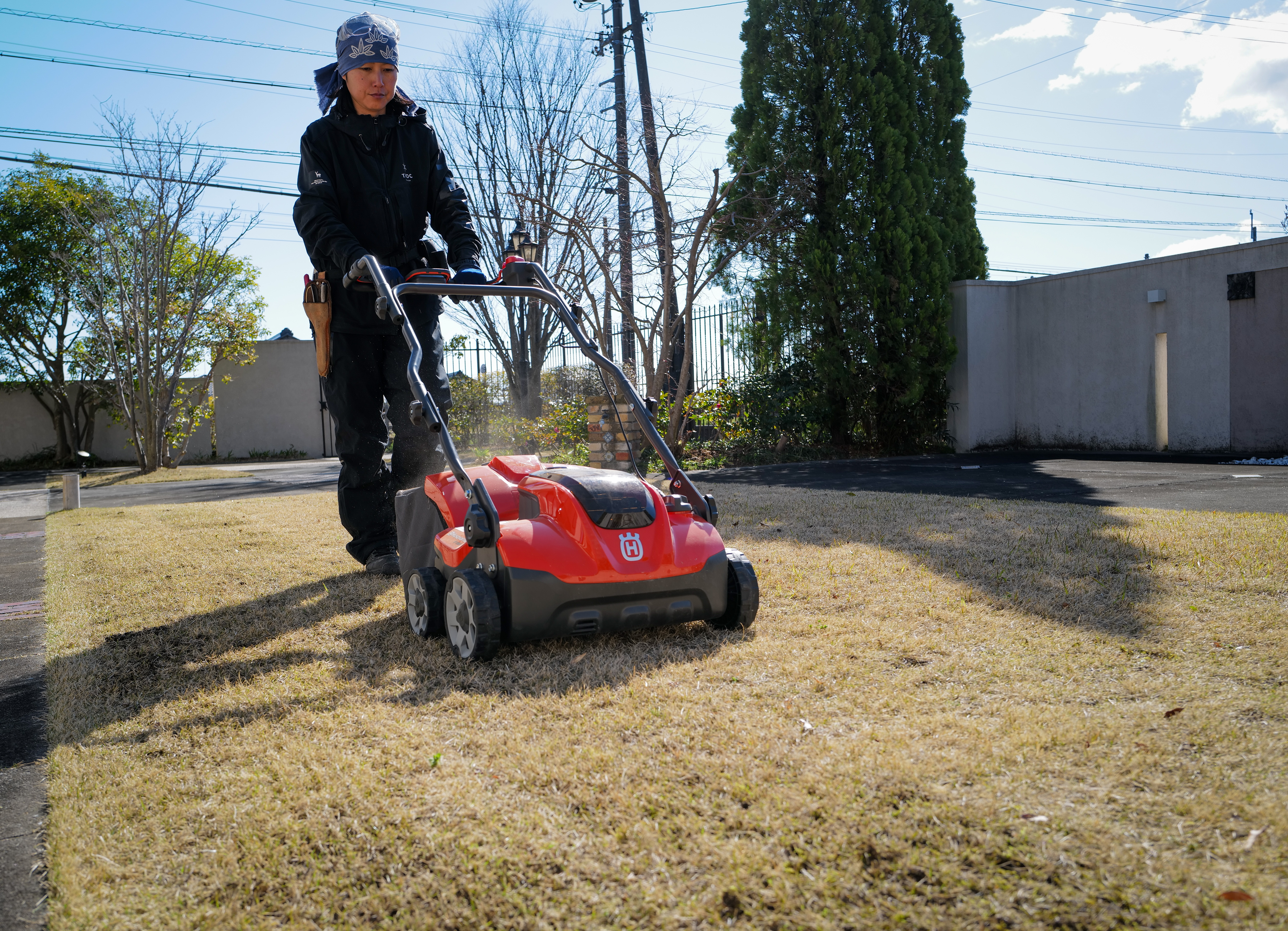
The Western section has a zoysia lawn, the most common warm-season turf grass in Japanese gardens. Early spring is the timing for the first fertilizer application of the season — before active growth begins, with a slow-release formulation that will supply nutrients through the establishment period.
Zoysia greens up later than cool-season grasses; in Mie Prefecture, the lawn may still look dormant in early March while the surrounding broadleaf plantings are already in active growth. This visual lag is normal — the grass is preparing underground.
Tree Repair
One of the trees in the Western section had storm damage from the winter — a branch had split partially from the main trunk and was hanging at an angle, connected by a strip of bark. For a split of this type, the options are removal of the damaged branch, or — if the split is recent and the remaining attachment is structurally sound — stabilization with a brace.
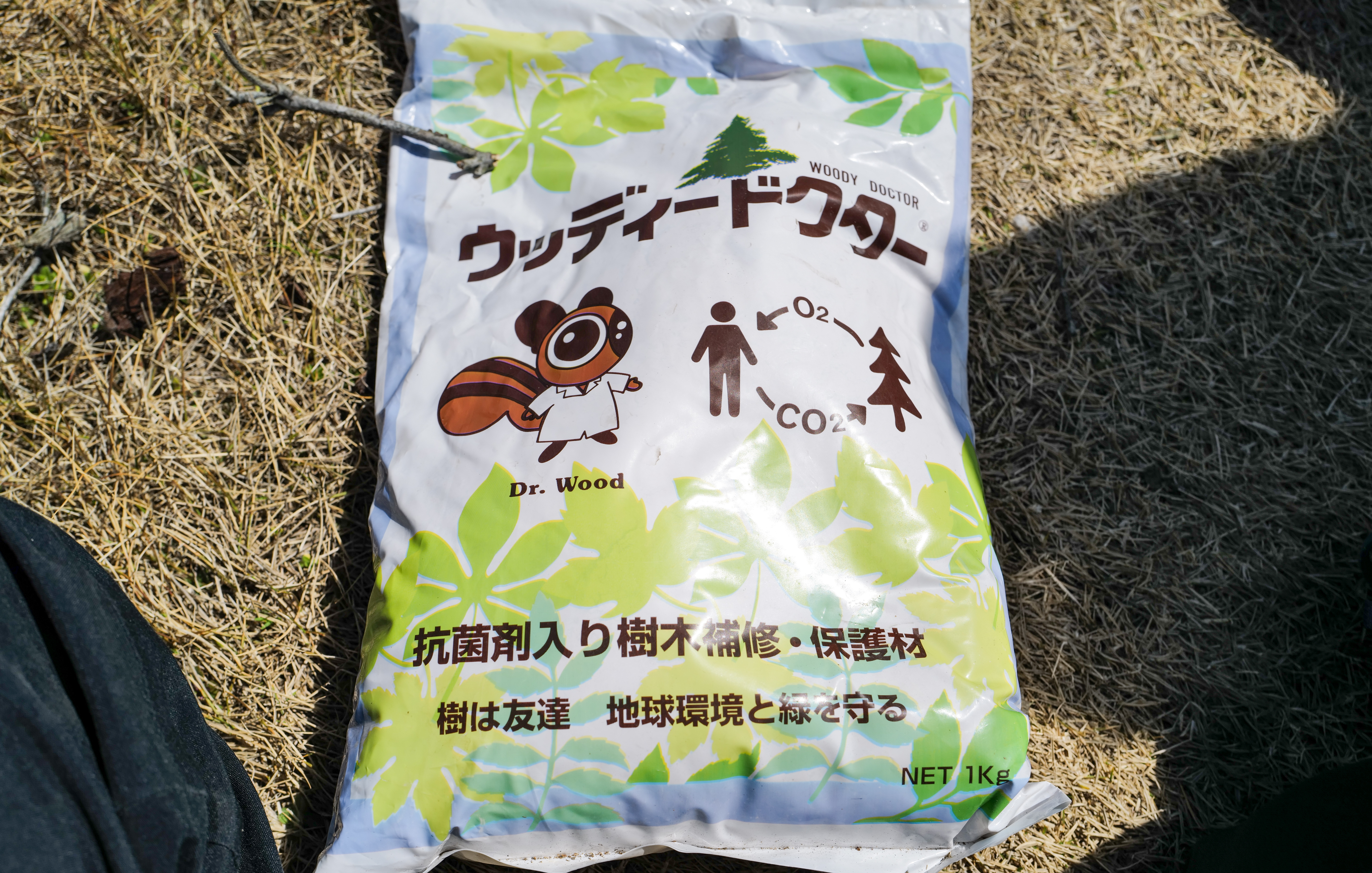
In this case, we removed the damaged section. The split was too extensive and the attachment too compromised to support the weight of the branch safely through the coming growing season. After removal, we applied wound treatment to the cut surface and assessed the remaining crown structure for balance.
Frequently Asked Questions
Q: Is it safe to use herbicide near traditional garden stones?
A: With appropriate products and application methods, yes. Post-emergent herbicides applied directly to weed foliage with targeted equipment have minimal impact on surrounding inorganic surfaces. The risk is primarily to adjacent desirable plants — which is why low-drift application and careful technique matter.
Q: When is the right time to fertilize a Japanese garden lawn?
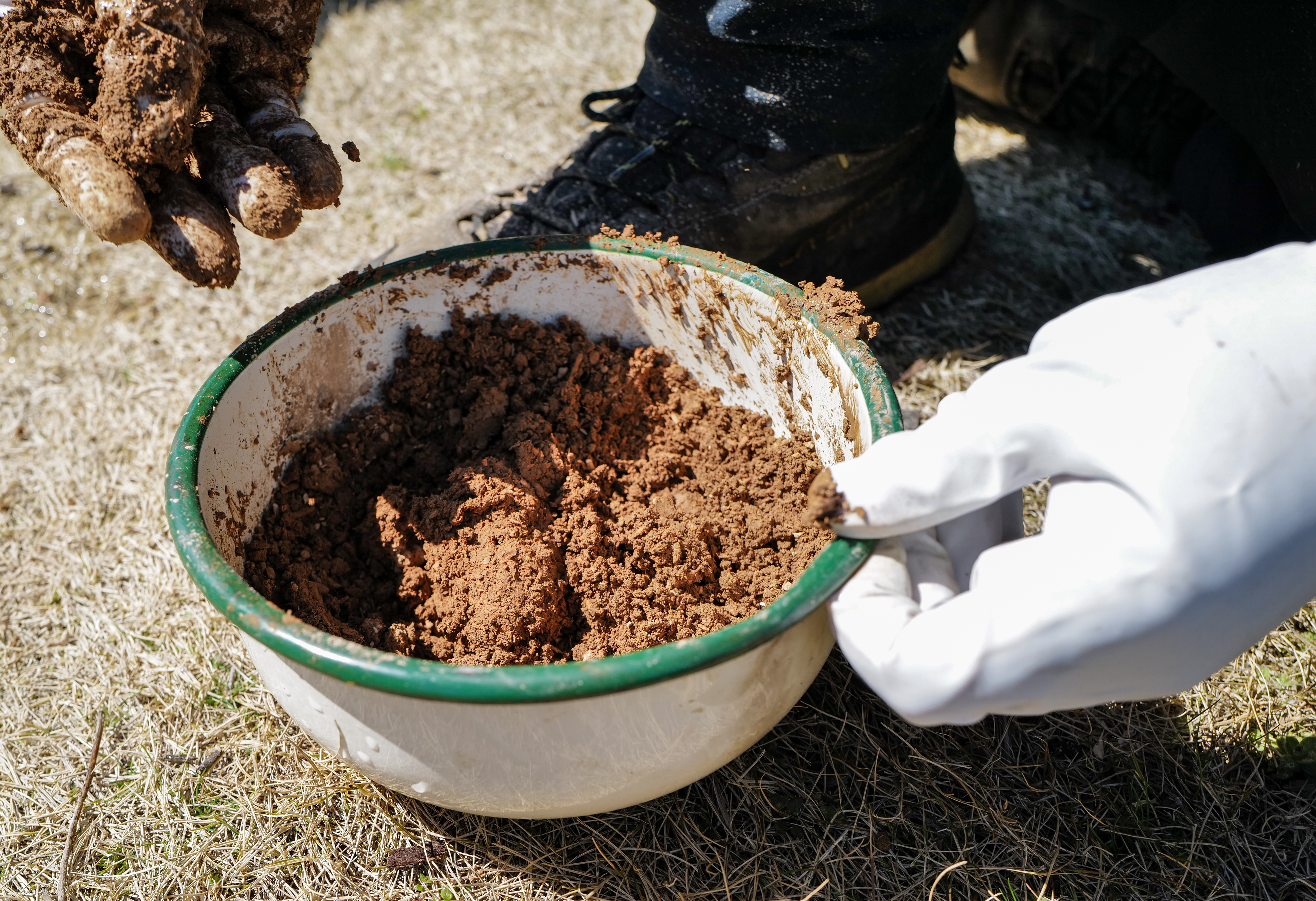
A: For zoysia in central Mie Prefecture, the first application of the season is typically late March to early April — just before or at the start of active growth. A second application in June-July supports summer growth. Late-season fertilization (after August) is generally not recommended, as it encourages growth that does not harden well before winter.
Q: Can a split tree branch be saved?
A: In some cases, yes. If the split is a clean crack with intact wood on both sides and the bark is still connected, bracing with bolts or cable can stabilize the branch. This is most practical for large, high-value specimen trees. For damaged branches on smaller trees, removal is usually the simpler and more structurally sound option.