How to Spot a Dangerous Tree Before Typhoon Season — A Practitioner's Checklist

Updated: May 4
In the summer of any given year, I receive more emergency calls than at any other time. A tree has fallen on a fence. Branches have come down on a car. A large trunk is leaning in a way it was not leaning before the typhoon.
Most of the time, the signs were already there — weeks or months before.
Five Signs a Tree May Be Dangerous
1. Trunk hollow or significant cavity
A hollow trunk has lost structural integrity. Even a tree that looks healthy from the outside can have extensive internal decay. Tapping the trunk and listening for a dull sound is a basic field test — though professional acoustic measurement is more reliable.
2. Fungal growth at the base
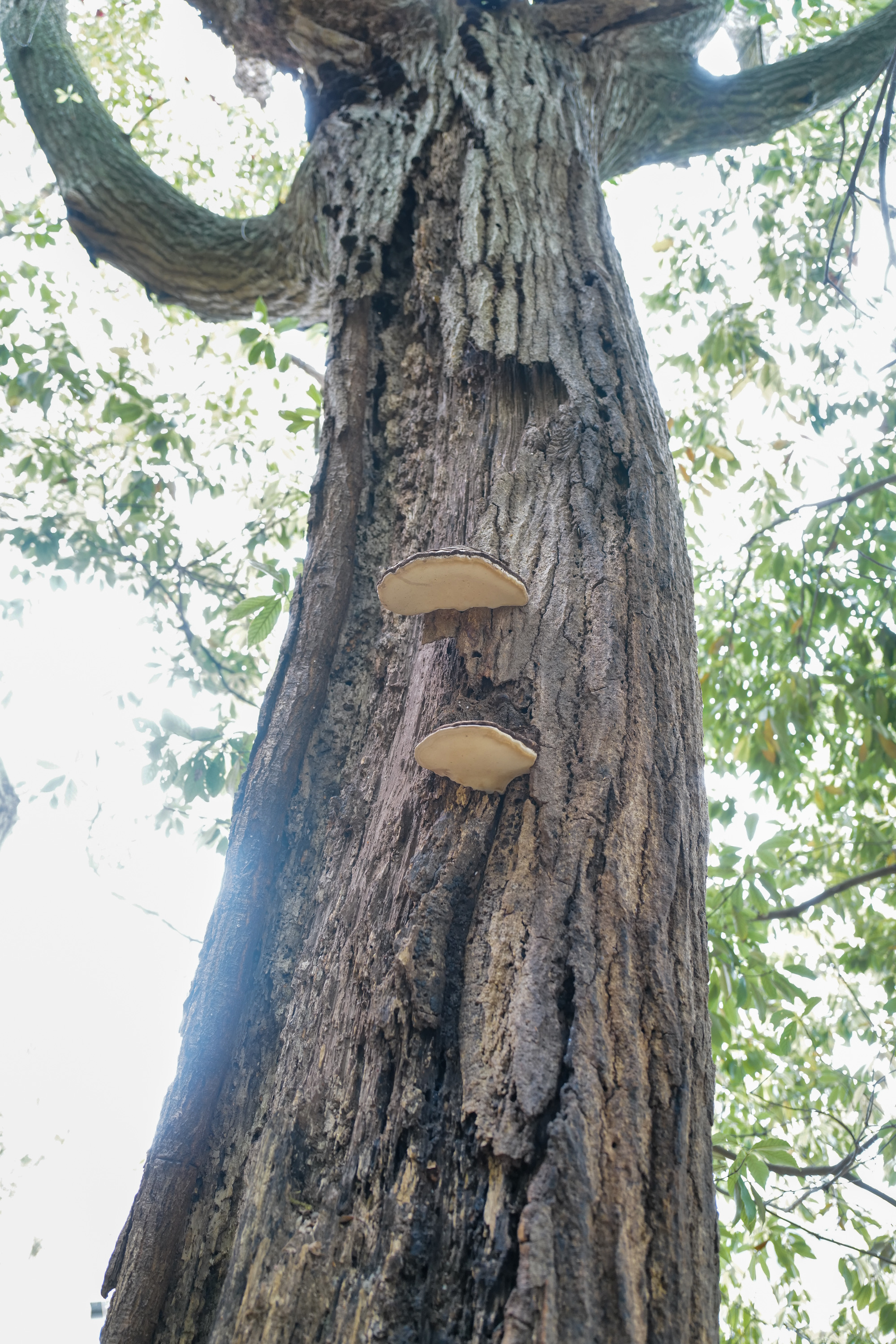
The presence of shelf fungi such as Ganoderma (artist's conk) or Fomes fomentarius at the base or along the trunk is a strong indicator of internal wood decay. These fungi break down lignin and cellulose — the structural components of wood — from the inside.
3. Root heave or soil movement at the base
Soil rising or cracking around the root zone suggests the root system is losing its grip on the ground. This often develops gradually and becomes visible only after the process is well advanced.
4. Significant lean that has increased recently
Trees can lean naturally and remain stable for decades. But a lean that has changed — that has increased noticeably over one or two seasons — indicates a shifting center of gravity that may not hold under typhoon wind loads.
5. Dead or dying branches in the upper canopy
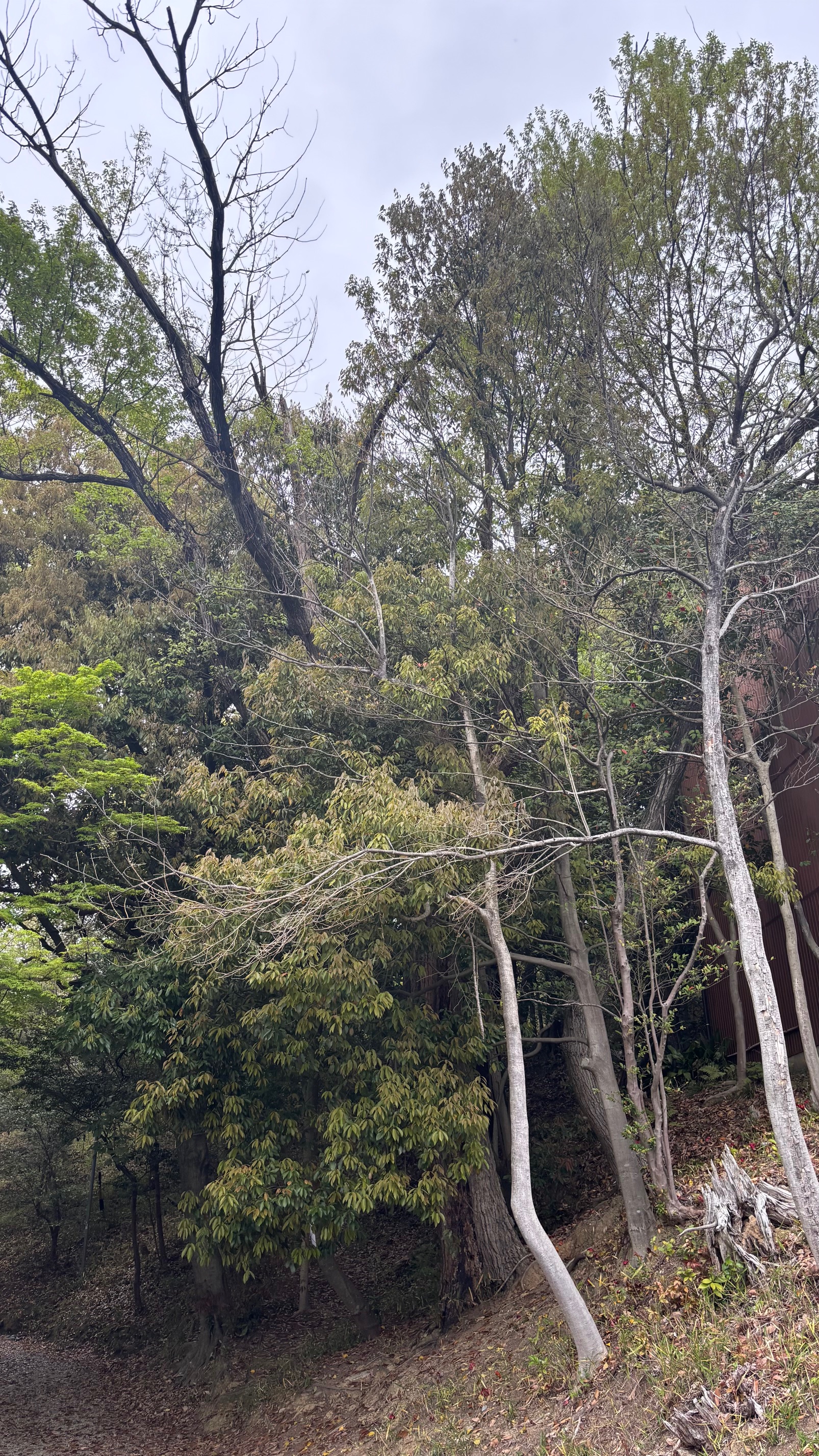
Dieback in the upper canopy is a sign of declining tree vitality. Dead branches break more easily than living ones and are the most common source of typhoon damage. They also suggest that whatever is affecting the tree may be progressing.
When to Act
The critical window is June through early September — before the typhoon season peaks. After a major storm, tree removal services are overwhelmed with emergency work and wait times can extend to several weeks. Inspecting trees proactively in late spring, when the growing season is just beginning, gives you options and time.
Priority trees are those within fall range of structures: buildings, fences, vehicles, power lines, and neighboring properties. Height matters — trees over 5 meters with any of the signs above should be assessed by a professional before August.
Frequently Asked Questions
Q: Can I assess a tree myself, or do I need a professional?
A: Visual assessment of the five signs above can be done by anyone. However, internal decay assessment — particularly for large trees near structures — requires professional tools and experience. When in doubt, consult a qualified arborist.
Q: Does a tree that has fungi growing on it always need to be removed?
A: Not always. The location of the fungal growth, the species involved, and the extent of decay all affect the decision. A small area of surface-level fungal growth is different from widespread basal decay. A qualified assessment helps determine the appropriate response.
Q: Is it safe to remove a large tree without professional help?
A: Tree removal, especially for large trees or trees near structures, carries significant risk. Improper cutting technique can cause the tree to fall in an uncontrolled direction. For trees over 5 meters or in confined spaces, professional removal is strongly recommended.
The role of the practitioner is not to make the decision for you — it is to give you accurate information so you can make the decision yourself. That starts with knowing what to look for.