Just Seeing Trees Through Your Window Can Reduce Anxiety — Here's Why

Updated: May 4
A client once told me: "The first thing I see every morning is that pine tree outside my window. It makes me feel like today will be okay."
At the time, I did not know how to respond. I just nodded. But that simple statement stayed with me — and it turns out, there is real science behind it.
The Hospital Window Study That Changed How We Think About Nature
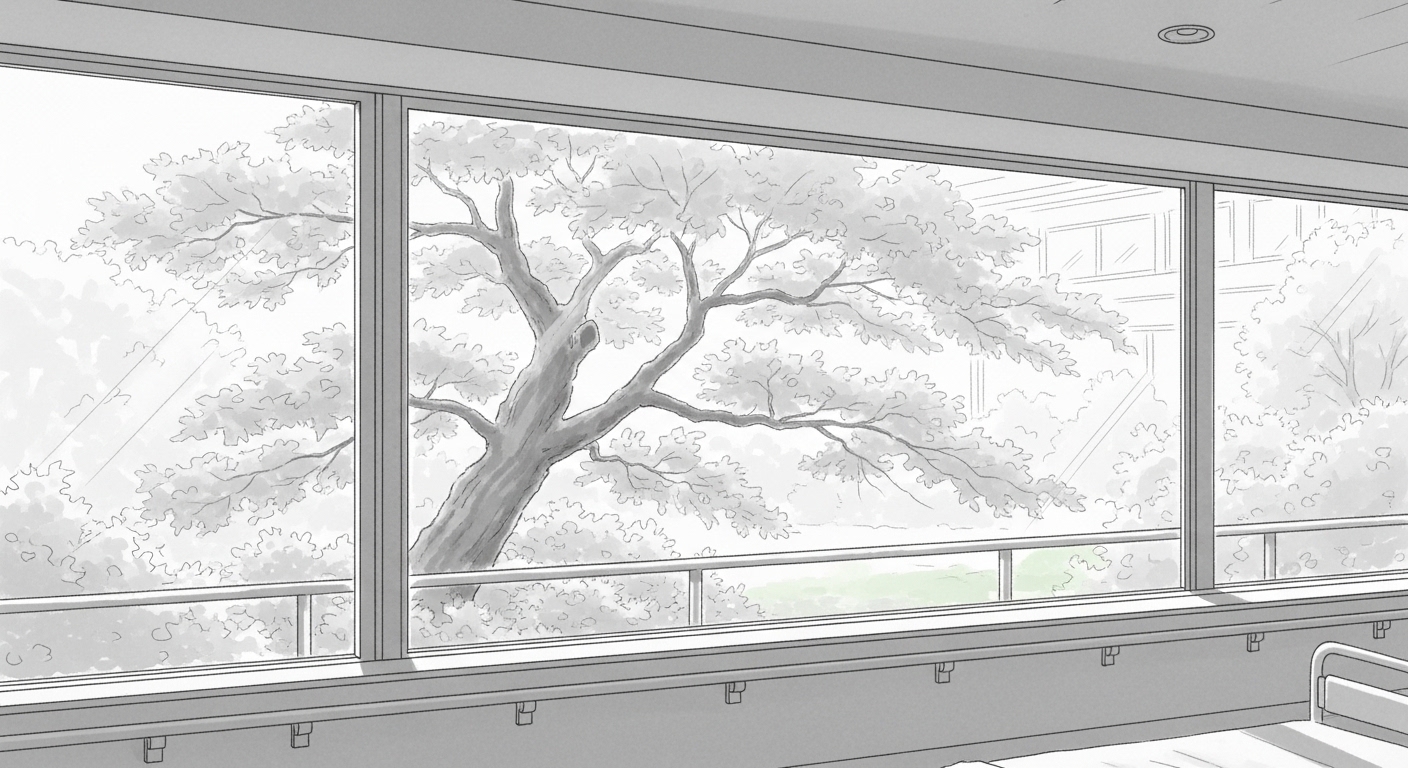
In 1984, researcher Roger Ulrich published a landmark study in the journal Science. He compared patients recovering from surgery in hospital rooms with two different views: one facing a brick wall, the other facing a stand of trees.
The results were striking. Patients with a tree view had shorter hospital stays, required fewer strong painkillers, and received fewer negative notes from nurses. Just looking at trees — not walking in a forest, not tending a garden — simply seeing trees through a window made a measurable difference.
What Happens Inside Your Brain During a Walk Among Trees
A 2022 German neuroimaging study took this further. Researchers used fMRI to scan participants brains before and after a 60-minute walk — one group in a nature setting with trees, another in an urban environment.
Those who walked among trees showed measurably reduced activity in the amygdala — the brain region associated with stress, fear, and anxiety processing. The urban walkers showed no such change. The brain responds differently to natural environments in ways that go beyond what we consciously feel.
What Research in Care Settings Tells Us
Some of the most compelling evidence comes from care environments. A 2021 meta-analysis examining green care interventions in dementia care settings found:
Agitation and behavioral symptoms: 46.7% reduction
Depressive symptoms: 13.3% improvement
Quality of life scores: 12.8% improvement
Fall risk: 38.7% reduction
These are not small effects. Many of these interventions did not require participants to actively garden — the presence of plants and views of greenery contributed significantly.
The Chemistry of Trees: Phytoncides and Immune Function
Trees release compounds called phytoncides — volatile organic substances with antimicrobial properties. Research from Nippon Medical School found that exposure to phytoncides during forest stays increased natural killer (NK) cell activity by approximately 50%, with effects lasting up to 30 days after exposure.

NK cells play a key role in immune defense. The calming effect of trees is not just psychological — it has measurable physiological dimensions.
Natural Light and the Rhythm of the Day
Windows with garden views also change the quality of light entering a space. Natural daylight — especially in the morning — helps regulate circadian rhythms. Research on sleep and light exposure suggests that around 2,500 lux of natural light for approximately 60 minutes in the morning supports stable sleep-wake cycles and improved mood.
A garden that is thoughtfully pruned and shaped changes the light that enters your home throughout the day. Maintaining a garden is not just aesthetic — it affects the quality of light, air, and calm in the spaces people actually live in.
A Note from the Garden Practitioner
I work in Mie Prefecture, Japan — pruning, shaping, and managing gardens in homes, care facilities, and natural landscapes. When I stand in front of a client tree, I am thinking about its health, its structure, the next few years of growth.
But I have come to realize that what I am also doing — by keeping a tree healthy, by opening up the canopy for light, by giving a tree the right shape — is maintaining someone view. The view from their kitchen window while they have morning tea. The view from the bed of an elderly resident who can no longer walk outside.
The research above confirms what many people already sense intuitively: nature does not need to be spectacular to be restorative. A single well-maintained tree, visible from a window, is enough to shift something.

Frequently Asked Questions
Q: Do you need a large garden for this effect?
A: No. Even a single tree or a few plants visible from a window can produce measurable effects. What matters is visibility — the ability to see living plants from where you spend time.
Q: Does the type of tree matter?
A: Broad-leaved deciduous trees that change with the seasons tend to provide stronger psychological benefits. The seasonal variation — new leaves, flowers, autumn color, bare branches in winter — supports a sense of time and natural rhythm.
Q: What is the connection between tree maintenance and these benefits?
A: A neglected tree can become dense and block light, reducing both the view and the natural light entering a space. Regular pruning — done with care — keeps the tree healthy, maintains the view, and allows light to reach both the garden and the interior.
What does the view from your most-used window look like? Is there a tree in it?