Matisse Said: There Are Always Flowers for Those Who Want to See Them

There is a quotation attributed to Henri Matisse that appears frequently in garden and flower contexts: 'There are always flowers for those who want to see them.' Whether Matisse actually said it in this form is uncertain — the attribution is widespread but not sourced. But the idea has survived and spread because it contains something true.
Seeing as Practice
The quotation is about attention — specifically, about the difference between looking and seeing. Looking is passive: the eyes move across a scene. Seeing is active: something is noticed, registered, held in mind. The distinction is not trivial. Most of us walk past the same garden or the same tree dozens of times before we actually see it.
In Japanese aesthetics, this idea has a long tradition. The concept of mono no aware — often translated as 'the pathos of things' or 'sensitivity to ephemera' — describes the heightened awareness of transience that comes from truly noticing something. The cherry blossom is the canonical example: its beauty is intensified by the awareness that it lasts only a week. To see it fully requires knowing it will be gone.
What Gardeners Know
People who work in gardens daily develop a particular quality of attention. After years of returning to the same plants, the same trees, the same seasonal rhythms, the noticing becomes finer-grained. You see not just that a camellia is blooming, but which direction it opened, whether the color is exactly the same as last year, whether the buds on the lower branches are ahead of or behind the upper ones.
This granularity of attention is not esoteric — it is practical. Noticing small changes in a tree's behavior often gives early warning of stress: a subtle color shift in the foliage, a change in the timing of budbreak, a slowing of new growth that indicates root or systemic problems. Seeing, in this sense, is a diagnostic tool.
Flowers in Unexpected Places
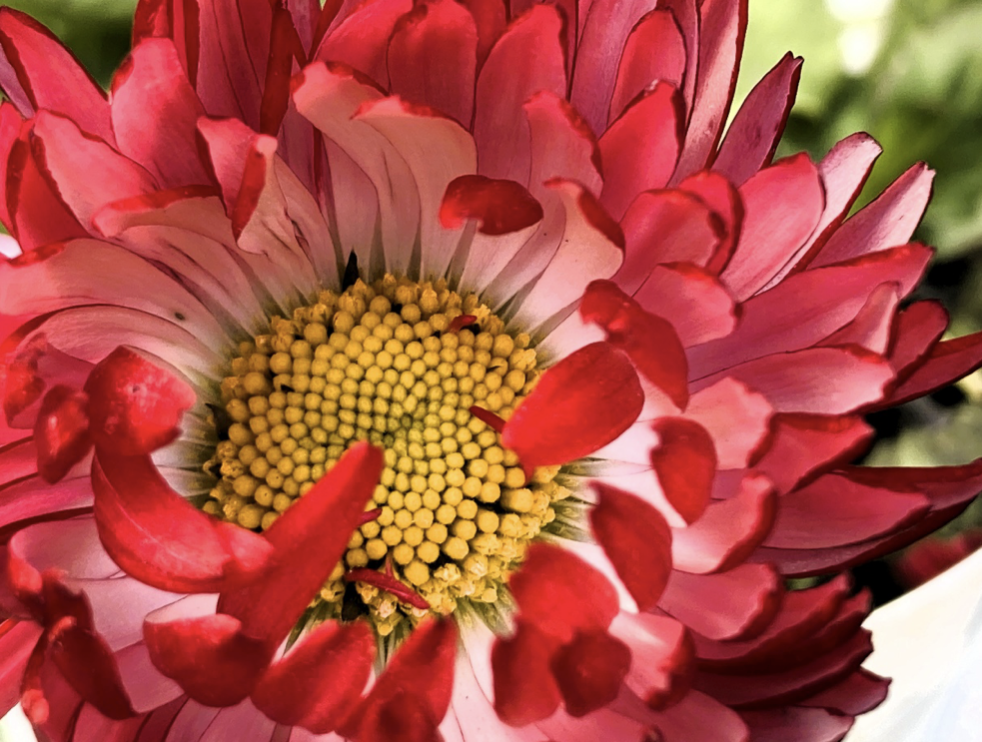
Matisse's point — if it is his — is partly about expectation. We look for flowers where we expect them: in flower beds, at the florist, in designed garden spaces. The person who wants to see flowers will find them also in cracks in pavement, in hedgerows along roads, in the single weed that has flowered against a concrete wall.
In Japan, this quality of noticing has been formalized in seasonal customs. Hanami — cherry blossom viewing — is explicitly an event organized around paying attention to something that happens every year and lasts briefly. It formalizes the practice of noticing.
Frequently Asked Questions
Q: Did Matisse actually say this?
A: The attribution is widespread but not conclusively documented. The quote does not appear in Matisse's collected writings with this exact wording. It may be a paraphrase or a misattribution that has persisted because it suits what people know of Matisse's visual sensibility. The observation itself, regardless of origin, reflects the way Matisse's paintings treat flowers — as objects of sustained, particular attention.
Q: How can someone develop better attention to seasonal changes in a garden?
A: Keeping a simple garden journal — even just noting what is blooming or what has changed during each visit — builds the habit of noticing. Photography serves a similar function: the act of framing a shot forces you to look carefully at something you might otherwise walk past.
Q: What is the Japanese concept of seasonal awareness?
A: Seasonal awareness in Japan is embedded in many cultural practices — not just hanami, but the use of seasonal imagery in poetry (kigo in haiku), the seasonal rotation of foods, and the design of traditional gardens to provide different focal points at different times of year. The underlying idea is that full experience of a season requires active attention, not passive exposure.
The flowers are there. The question is whether we are.