Nemophila: Japan's Blue Carpet Flower of Spring

Updated: May 4
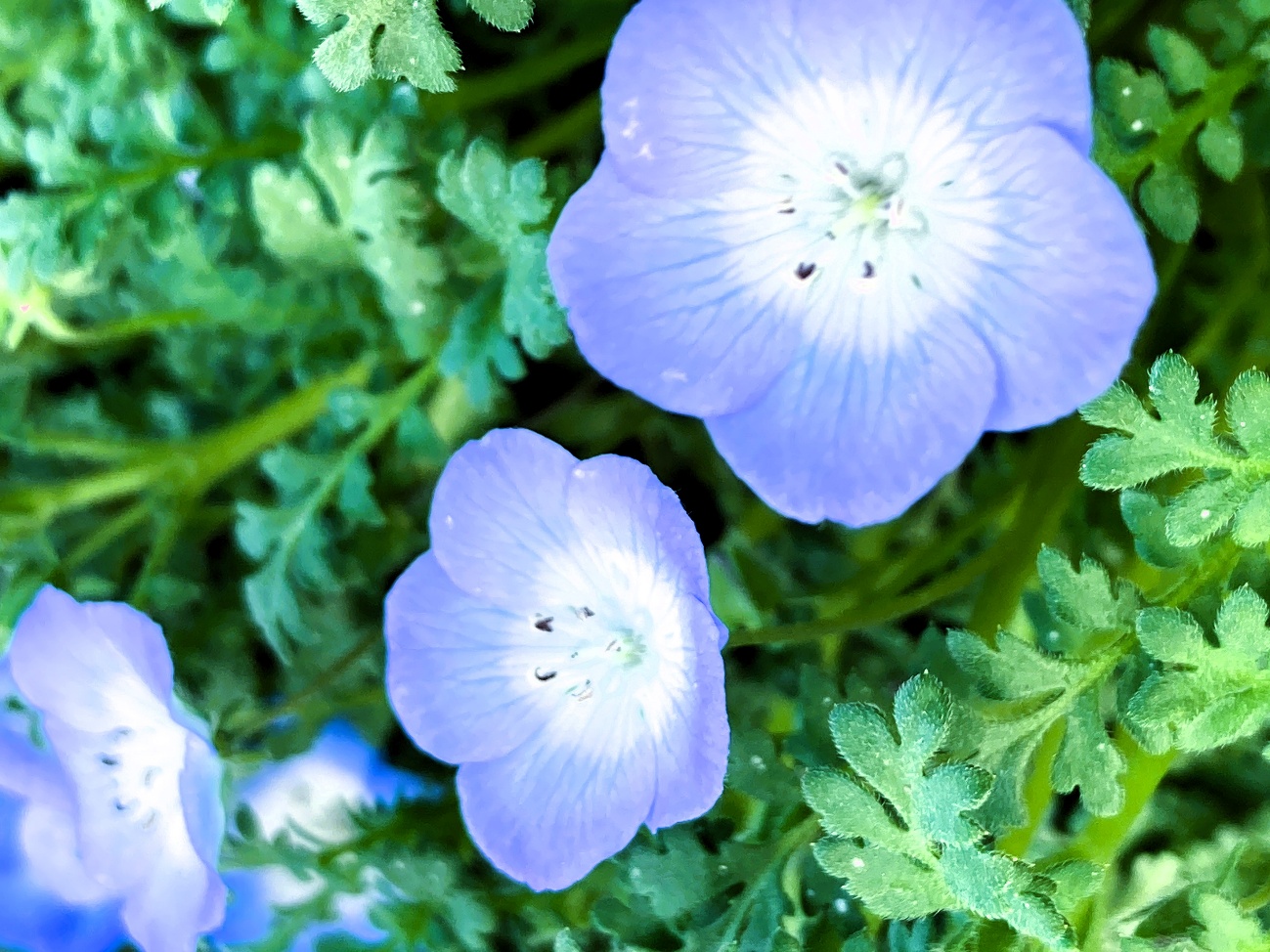
Each spring in Japan, certain hillsides and park slopes disappear under a sea of blue. The plant responsible is nemophila — a low-growing annual from western North America that has become one of Japan's most recognizable spring spectacles.
What Is Nemophila?
Nemophila belongs to the Boraginaceae (borage) family and is native to the western United States. In Japan it is widely known by its cultivar name Baby Blue Eyes. Its botanical name references the Greek word for woodland grove — though in practice it thrives in open, sunny conditions.
The flowers are five-petaled, sky blue with a white center, and measure about 2 to 3 centimeters across. The plant grows low — typically 10 to 20 centimeters — spreading outward as it branches naturally.
Growing Nemophila at Home
Nemophila is a cool-season annual. In Japan, seeds are sown in autumn — September to October — and the plant flowers from April through May. It does not tolerate transplanting well because of its taproot structure, so it is best grown from seed sown directly where it will bloom, or started in individual pots and transplanted without disturbing the roots.
Key growing conditions: full sun to partial shade, well-drained soil, and good air circulation. Overwatering or poor drainage leads to root rot. The plant naturally declines as temperatures rise in early summer, so it is treated as a seasonal display rather than a permanent planting.
As a Ground Cover
Nemophila's spreading habit makes it effective as a temporary ground cover. Planted in mass, it creates the carpet effect seen in flower parks. In home gardens, it works well along borders, in containers, or combined with other spring bulbs such as tulips or muscari.
Frequently Asked Questions
Q: Can nemophila grow in partial shade?
A: Yes, but flowering is reduced. Full sun produces the densest bloom. In Japan's spring climate, a south-facing location with morning sun is ideal.
Q: Why do nemophila plants die back suddenly in early summer?
A: Nemophila is naturally a cool-season annual. As temperatures rise above 25 degrees Celsius, the plant enters senescence. This is normal — simply remove spent plants and plan for autumn sowing to repeat the display the following spring.
Q: Is nemophila easy to grow from seed?
A: Yes. It is considered one of the easier flowering annuals to grow from seed, provided the sowing timing is right and the soil drains well. Autumn sowing (September to October in Japan) produces spring-blooming plants.