Not Planting Trees, But Making Space for Them — Bamboo Management and Shigara Erosion Control at Hoin-ji Temple

Updated: May 4
There is a phrase that has stayed with me: not planting trees, but making space for them. It comes from how we think about this kind of work — bamboo management combined with slope stabilization. You are not installing a solution. You are removing obstacles and creating conditions in which the site can move toward stability on its own terms.
The Site: Hoin-ji Temple Slope
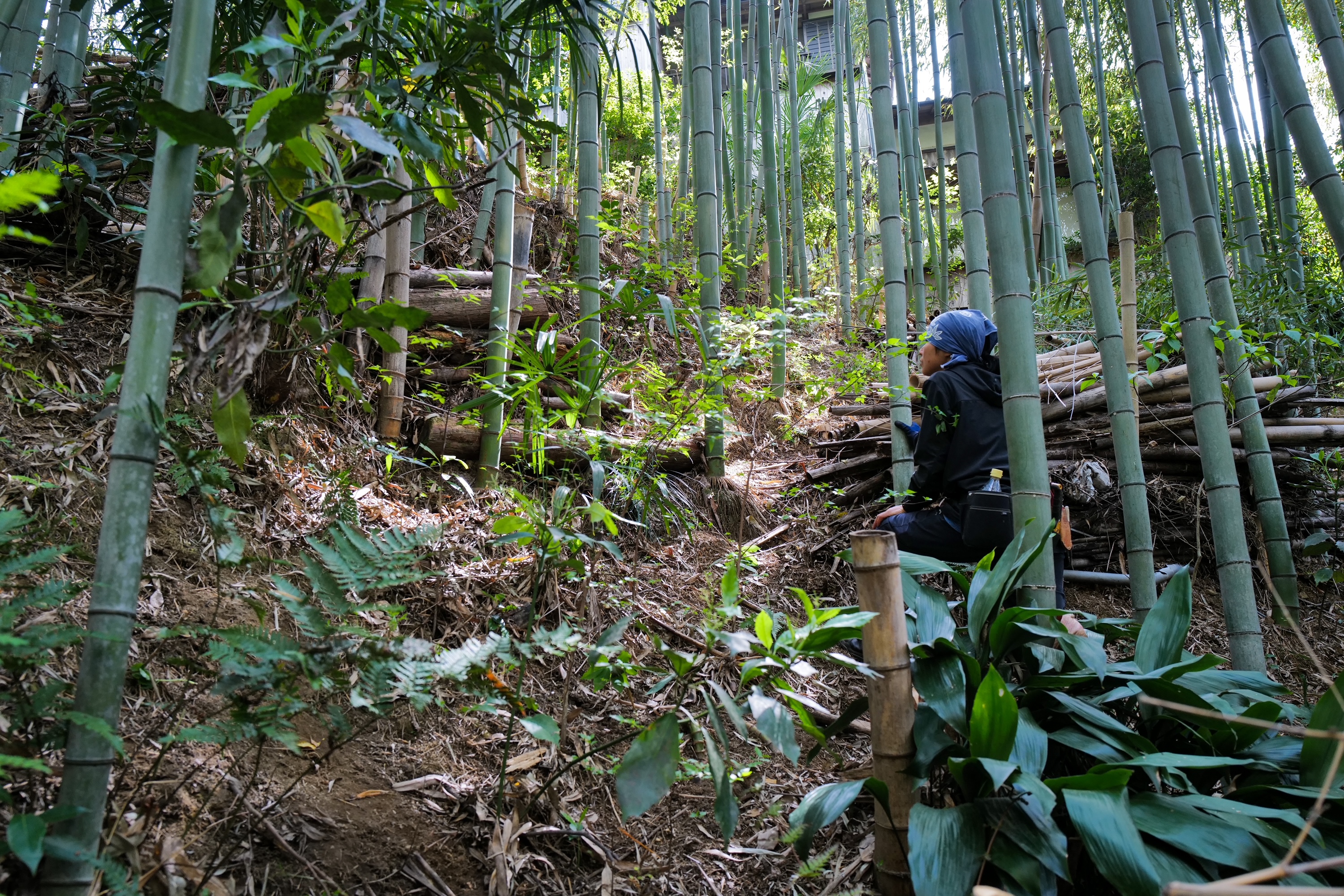
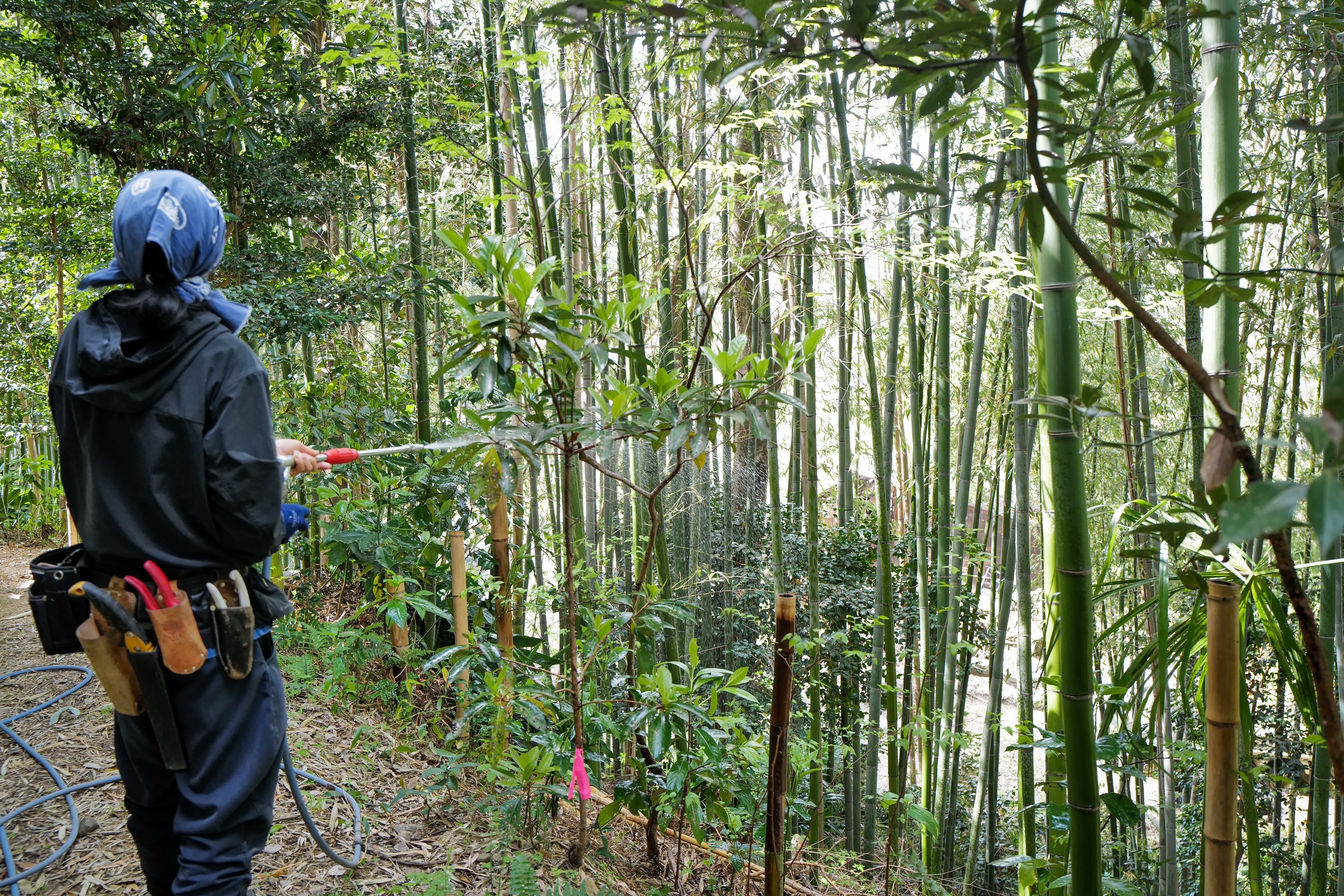
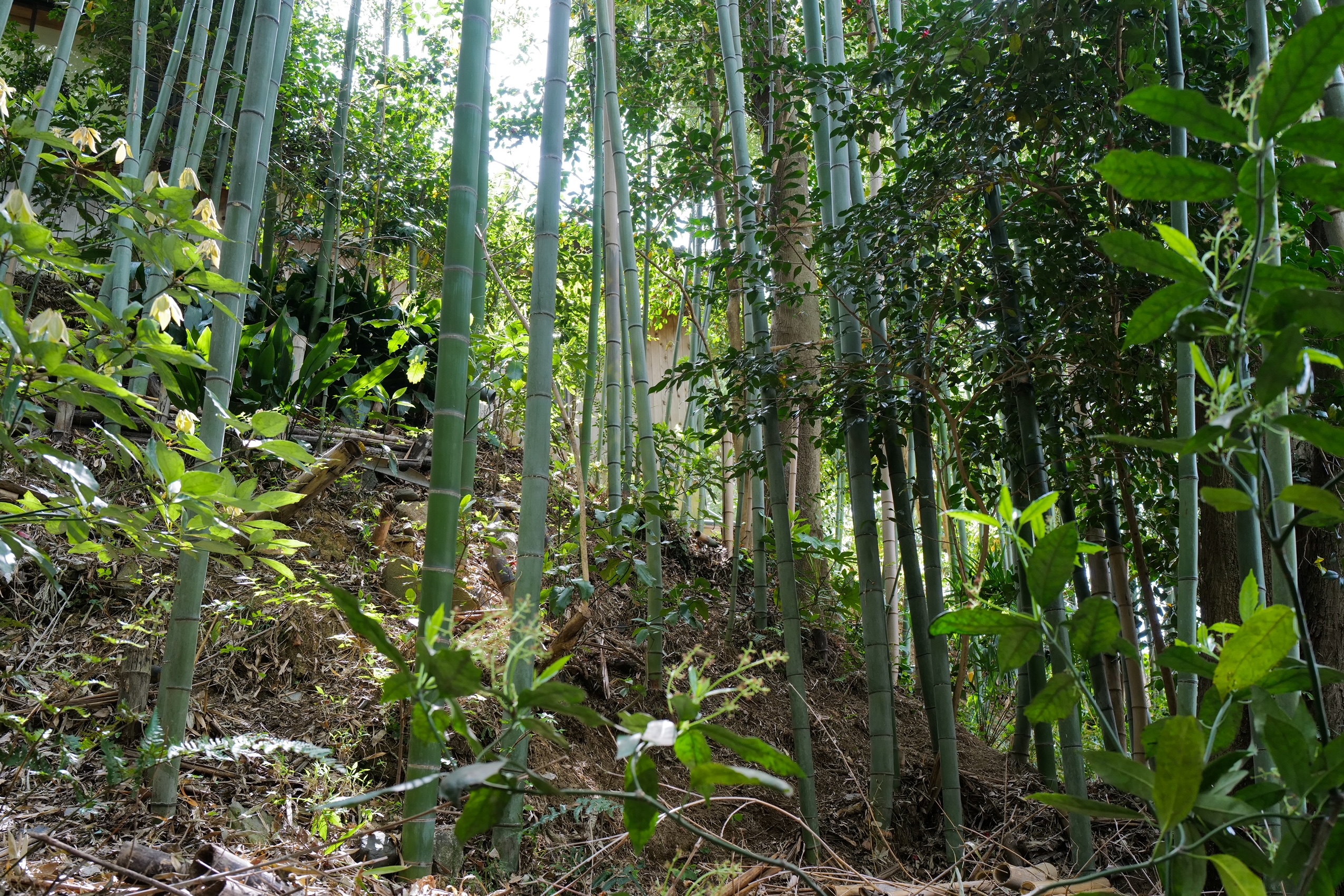
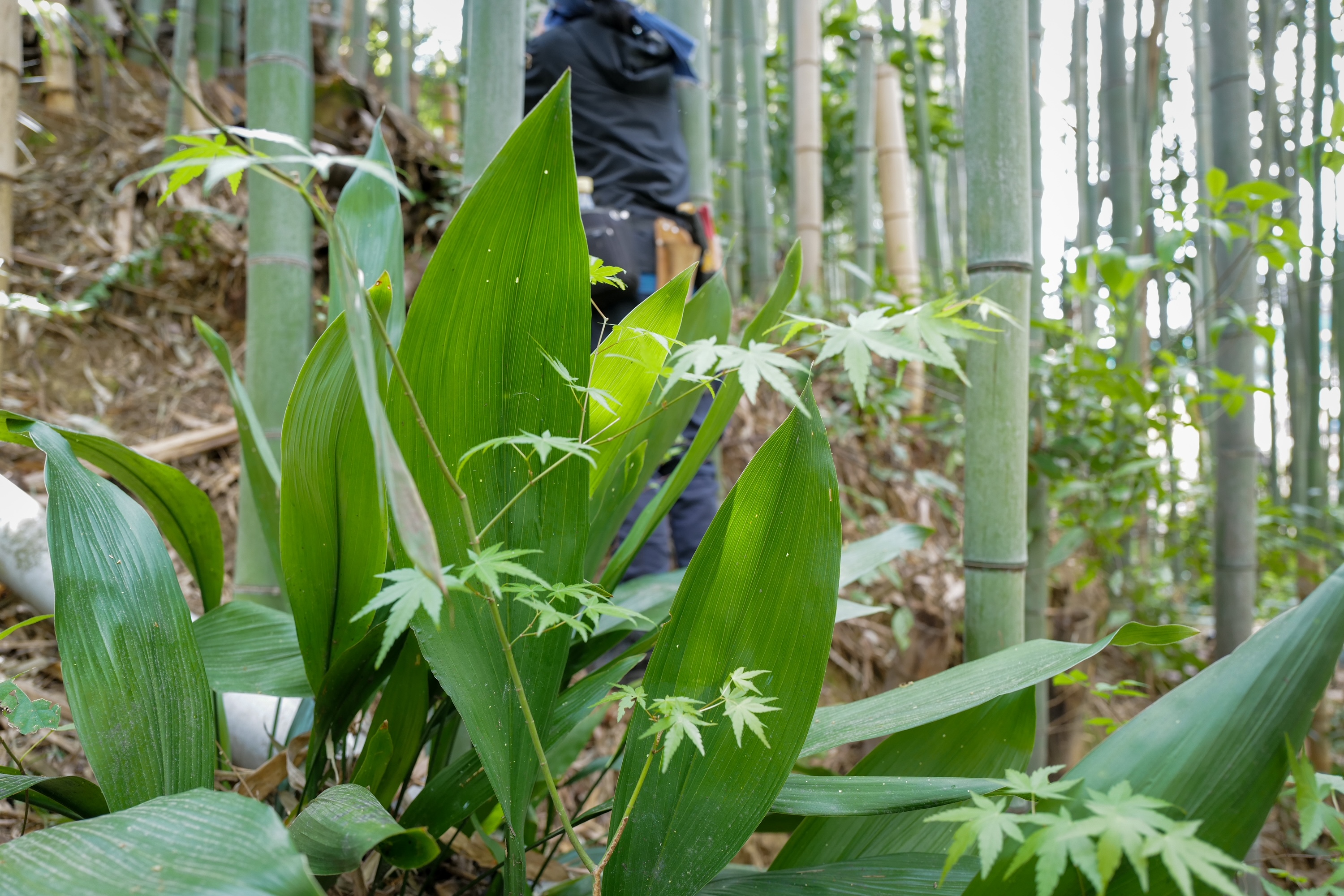
The bamboo slope at Hoin-ji Temple in Mie Prefecture is managed with madake bamboo — the straight-culmed variety used historically for construction, tools, and woven goods. Left unmanaged, madake spreads aggressively and can destabilize slopes by creating dense, shallow root mats that exclude other vegetation.
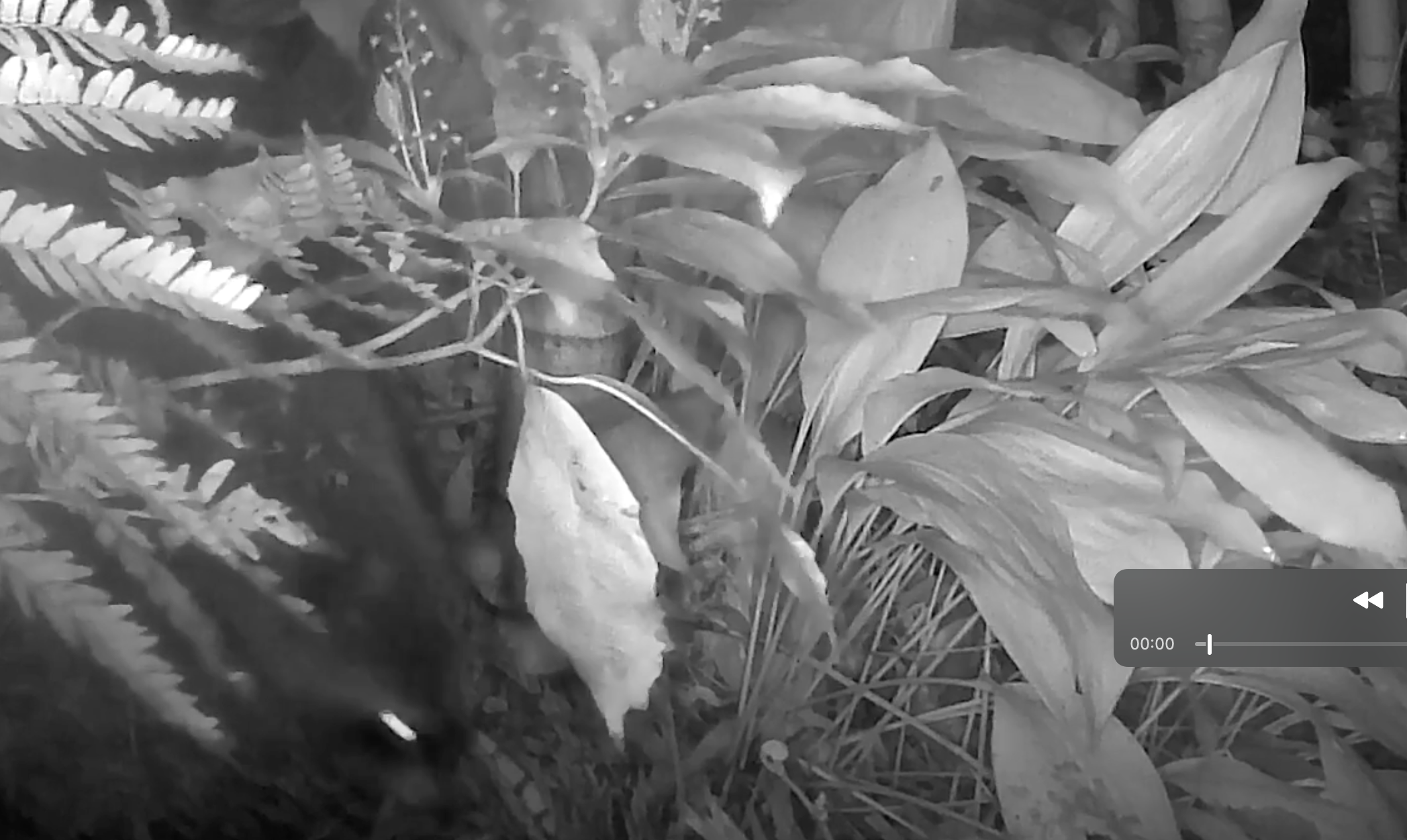
Our work on this slope combines two approaches: bamboo density management (reducing overcrowding and removing dead culms) and shigara installation to slow water movement on the steeper sections.
What Is Shigara?
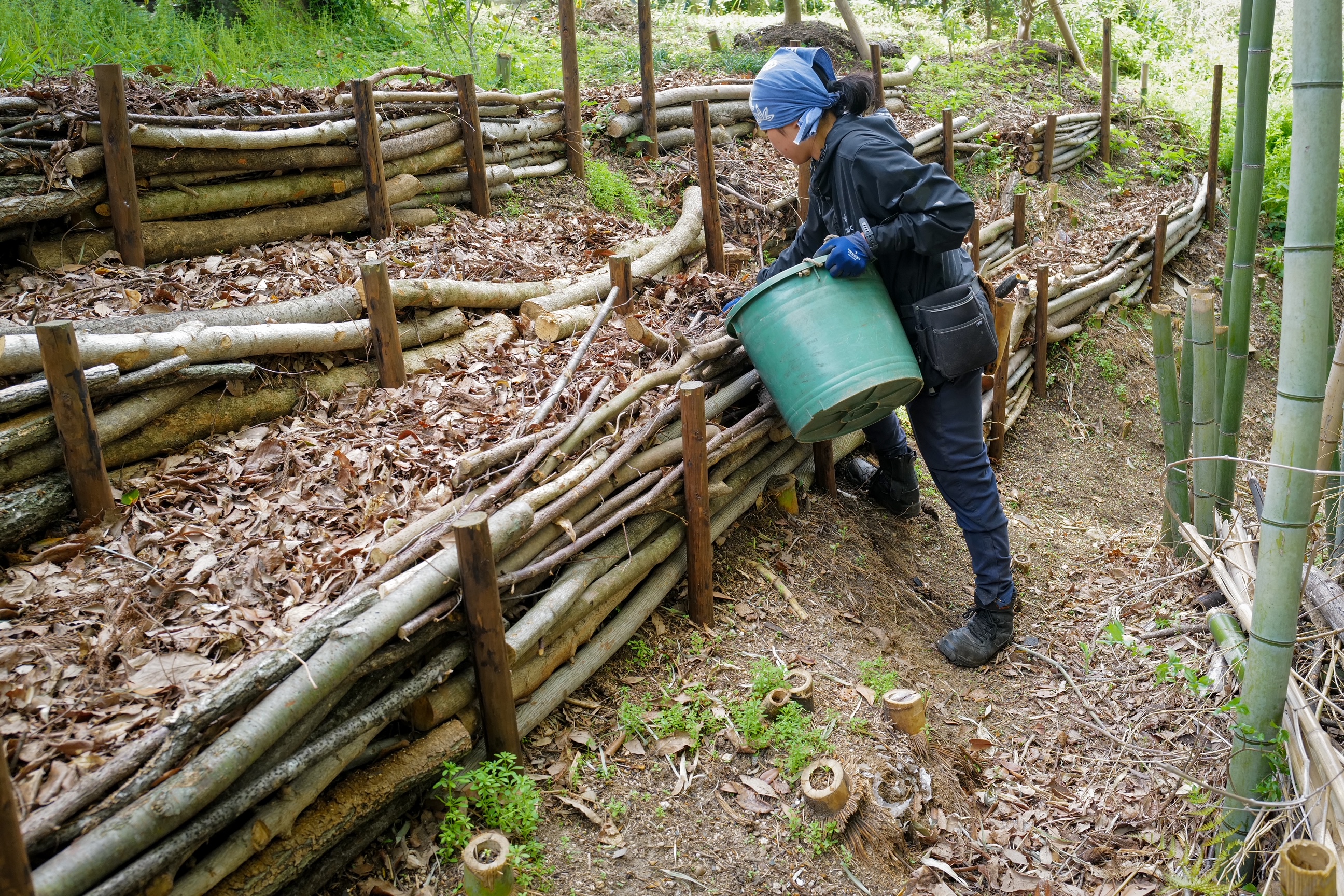
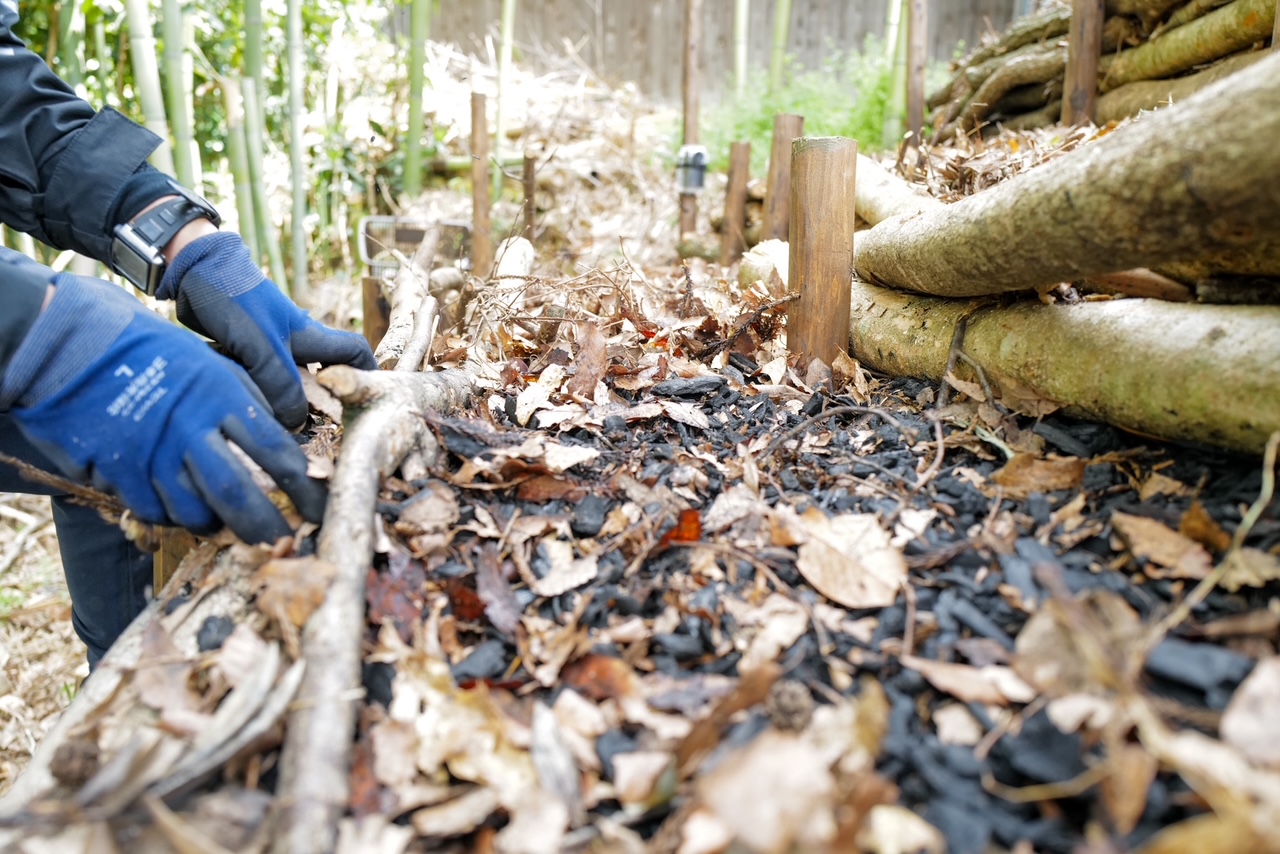
Shigara is a traditional Japanese erosion control technique using woven branch and bamboo structures placed horizontally across a slope. Stakes driven into the ground form the framework; smaller branches and bamboo pieces are woven between them to create a permeable barrier.
The structure slows water runoff, captures soil and leaf litter, and creates small flat terraces where plants can establish. Unlike concrete retaining walls, shigara structures decompose over time — and this is not a flaw. As they break down, the plant roots and accumulated organic matter they supported take over the structural function. The shigara disappears; the stability remains.
The Logic of the Material
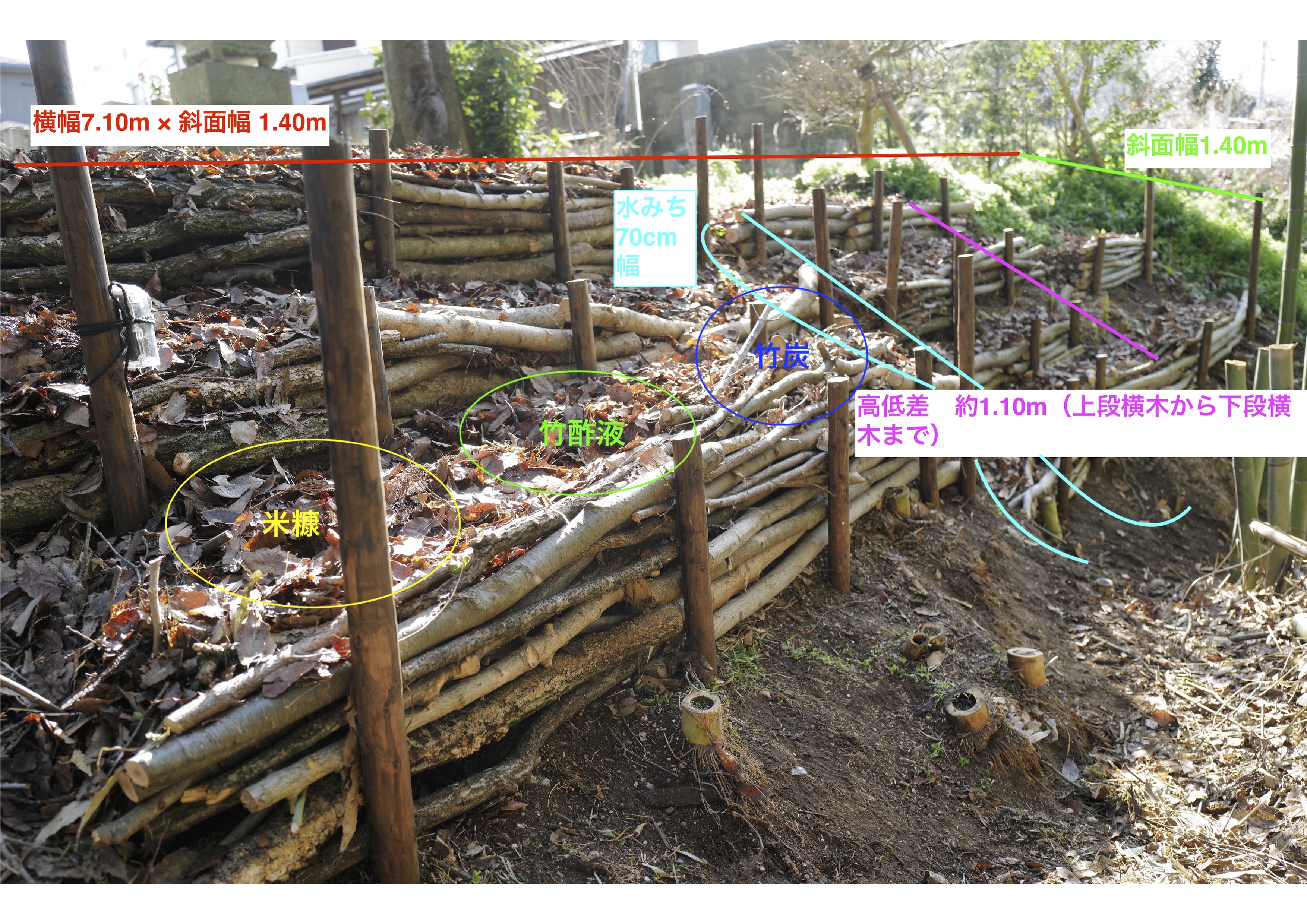
We use material from the site wherever possible. On a bamboo slope, this means the culms we remove during density management become the shigara material. The process is circular: thinning the bamboo produces the material to stabilize the slope; the stabilized slope supports healthier, more productive bamboo growth.
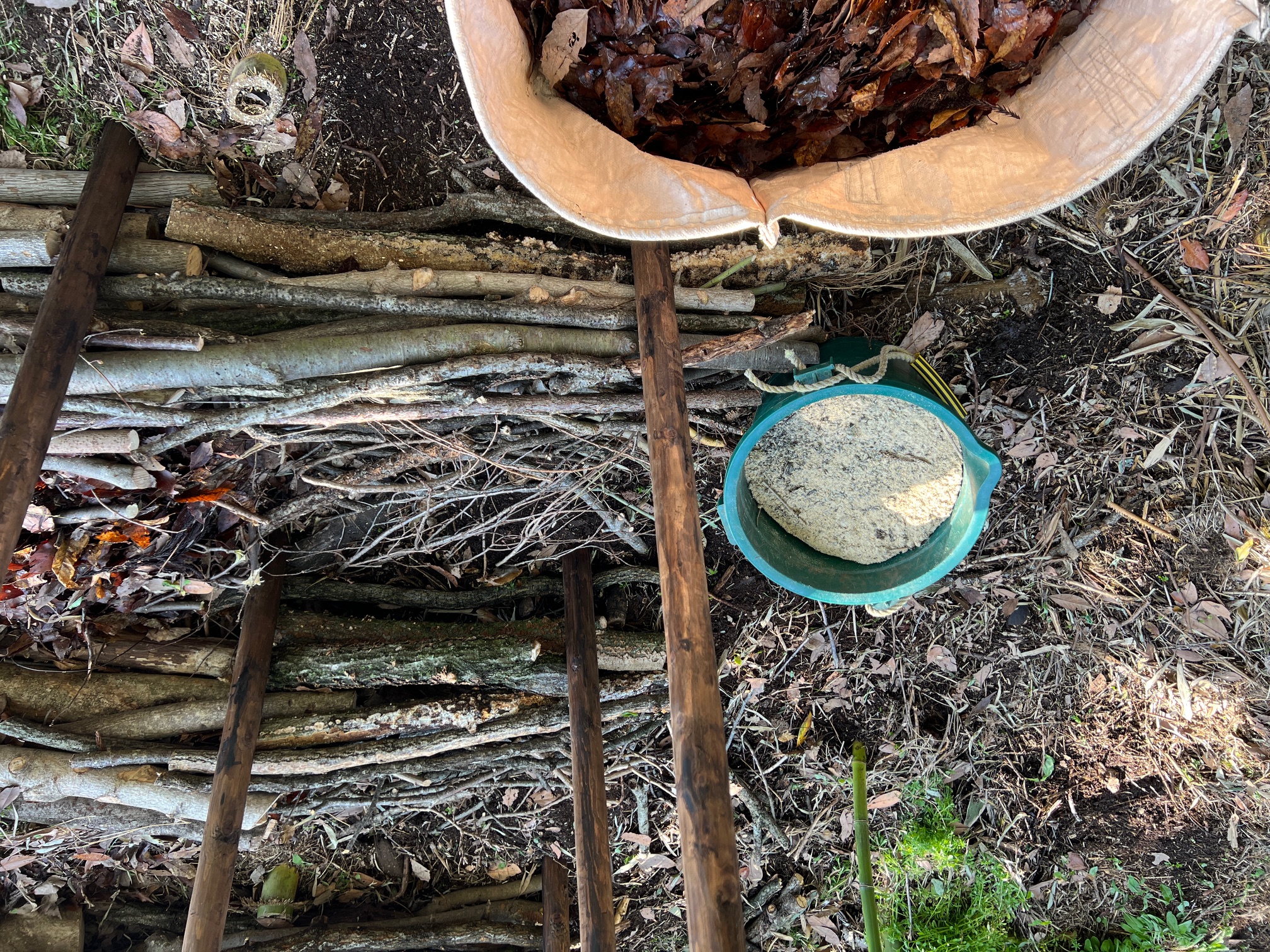
This kind of reciprocal logic is what distinguishes traditional ecological techniques from purely extractive approaches. The site provides the solution to the problem it presents.
Frequently Asked Questions
Q: How long does a shigara structure last?
A: Typically three to ten years depending on the material, the moisture conditions of the site, and the rate of vegetative establishment on the stabilized sections. In humid, shaded bamboo slopes, decomposition is faster — but vegetation establishment is also faster, so the handoff from structure to roots happens sooner.
Q: Is shigara used in other countries?
A: Functionally similar techniques appear in many cultures — wattle and daub construction in Europe, living fencerow systems in West Africa, and brush check dams in American erosion control practice. The core principle — using biodegradable plant material to create temporary structure while permanent vegetation establishes — is broadly applicable.
Q: Can shigara be used on a home garden slope?
A: Yes, at small scale. For gentle slopes in a garden, simple woven branch barriers using pruning waste are effective and straightforward to install. For steeper slopes or larger areas, professional assessment of water flow patterns and soil conditions is advisable before installation.
The bamboo on the Hoin-ji slope will continue to grow. The shigara structures will slowly become invisible. And the slope will gradually become more stable — not because something was imposed on it, but because the conditions for stability were created.