Ranunculus — The Layered Spring Flower That Works as a Gift

Updated: May 4
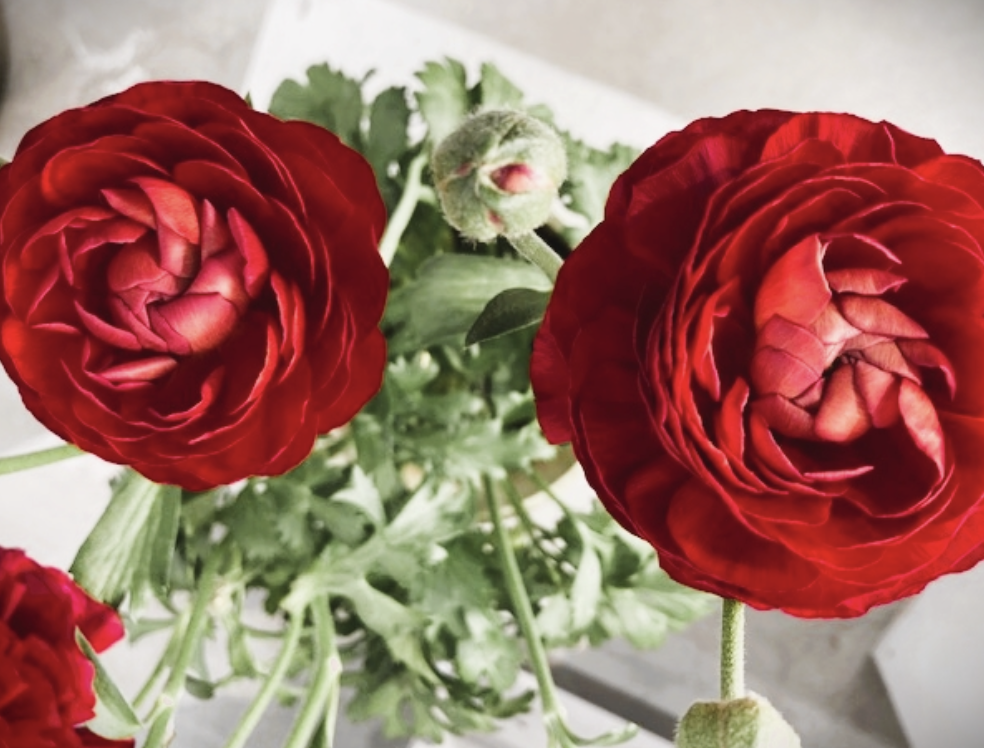
Ranunculus is a flower that looks like it was designed. The petals layer over each other so precisely, in such consistent gradations of color, that the overall effect can seem almost unreal — as if the flower were made rather than grown.
Ranunculus blooms from late January through April in Japan, making it one of the prominent cut flowers of the late winter and early spring period. It belongs to the Ranunculaceae family — the same family as anemones and clematis.
As a Gift Flower
April 22 is designated as 'Yoi Fufu no Hi' — Good Couples Day — in the Japanese commemorative calendar. The date follows the phonetic pattern 4 (yo) + 22 (futsu), a common construction in the Japanese commemorative calendar. Ranunculus appears frequently in spring bouquet arrangements for this occasion.
Its flower language in Japan includes 'radiant charm,' 'dazzling,' and 'proud.' The visual density of the petals — each flower can have sixty or more — gives ranunculus a presence in an arrangement that larger, simpler flowers do not achieve. A single stem holds significant visual weight.
The Color Range
Ranunculus is available in an unusually wide color spectrum: white, cream, yellow, apricot, salmon, pink, red, burgundy, coral, and bicolors. Modern breeding has also produced picotee-edged varieties and multi-toned blooms where each petal shades from one color to another. For gift arrangements, the range allows the flowers to be matched to the recipient's palette or the occasion's tone without compromise.
Growing Ranunculus
Ranunculus is a cool-season plant grown from corms (small, flattened storage organs). In Japan, corms are planted in autumn — October to November — for spring flowering. They require well-drained soil, full sun, and temperatures below about 20 degrees Celsius during the growing period. As spring warms, the plants naturally decline.
As cut flowers, ranunculus last approximately one to two weeks in cool conditions. Cutting stems at an angle, changing water every two to three days, and keeping arrangements away from heat sources extends vase life.
Frequently Asked Questions
Q: What is the difference between ranunculus and peonies?
A: Both produce layered, dense flowers, but ranunculus blooms in early spring while peonies bloom in late spring and early summer. Ranunculus has a more compact, geometric flower structure; peony petals are more loosely arranged. Ranunculus corms are planted in autumn; peonies are perennials.
Q: Can ranunculus be grown in containers?
A: Yes, with appropriate drainage. A container with well-draining soil in a sunny location works well. Container growing can also help control the cool temperatures ranunculus prefers by moving the container to a protected location during late warm spells.
Q: Is ranunculus toxic to pets?
A: Yes. Ranunculus contains irritating compounds that can cause digestive upset in dogs and cats if ingested. For households with pets, it is best treated as a cut flower displayed out of reach rather than a garden plant.