Rhodanthemum — The Apricot-Colored Flower That Blooms Like a Small Confection

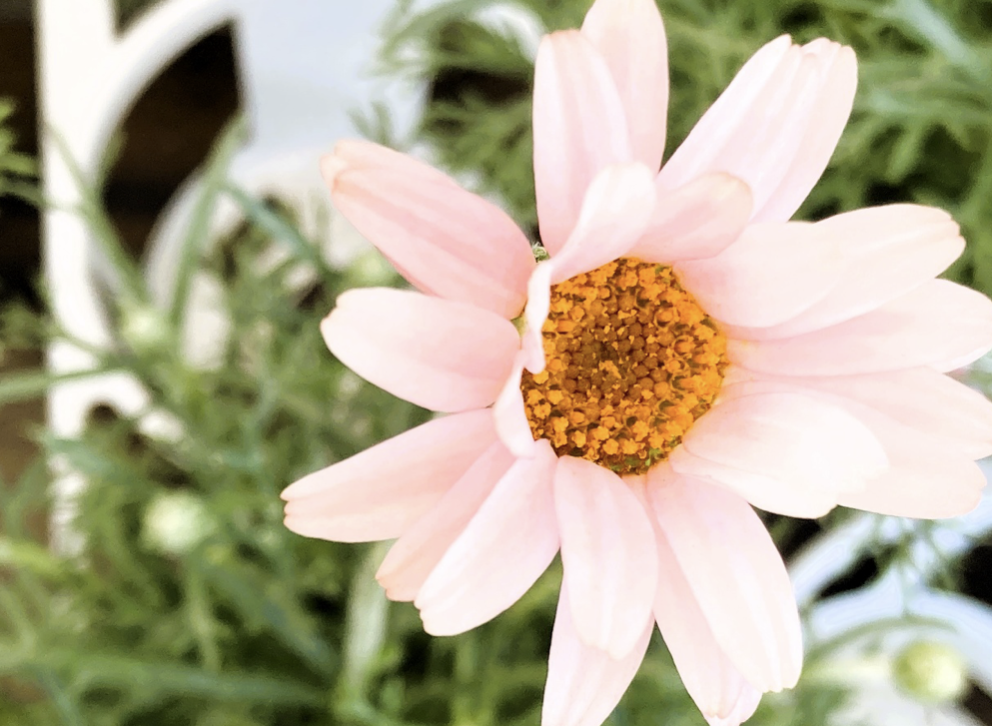
There is a category of spring flower that looks like it was confected rather than grown — the colors are too soft, the proportions too neat. Rhodanthemum 'Apricot Jam' is one of these. The petals are warm apricot-pink shading toward cream at the center, and the disc florets in the middle are a matching ochre yellow. The overall effect suggests something from a patisserie window.
What Is Rhodanthemum?
Rhodanthemum is a genus of flowering plants in the Asteraceae family, native to North Africa — primarily Morocco. The name means 'rose flower' in Greek, which is accurate: the flowers have a daisy structure (ray florets around a central disc) but a softness and warmth of coloring more reminiscent of old roses than typical daisies.
'Apricot Jam' is a cultivar selected for its warm color range. Other Rhodanthemum cultivars are available in white, pink, and pale yellow, but the apricot tone is distinctive and less common among spring flowering perennials.
Growing Conditions
Rhodanthemum performs well in full sun with excellent drainage. It is native to rocky, arid Mediterranean conditions and does not tolerate wet soil — particularly in Japan's humid summers, waterlogging is the most common cause of plant failure. Raised beds, rock gardens, or containers with free-draining mix suit it well.
The plant is semi-evergreen to evergreen in mild-winter areas (most of central and western Japan). It blooms primarily in spring, with a secondary flush possible in autumn if cut back after the first flowering. In Japan's climate, it tends to perform best in the March-May window, declining in heat and humidity by midsummer.
Use in the Garden
Rhodanthemum's low, spreading habit — typically 20-30 centimeters — makes it effective at the front of borders, in rock gardens, or spilling over edges. The warm apricot coloring pairs well with silver-foliage plants (lavender, artemisia, stachys) and with other warm-toned spring flowers (wallflower, Iceland poppy).
As a cut flower, Rhodanthemum has moderate vase life — five to seven days. The flowers are small enough that they work well in mixed arrangements rather than alone.
Frequently Asked Questions
Q: Is Rhodanthemum the same as Chrysanthemum?
A: They are related — both are in the Asteraceae family, and Rhodanthemum was formerly classified within Chrysanthemum. They were separated based on botanical characteristics including leaf shape and chromosome count. Functionally, Rhodanthemum behaves more like a Mediterranean perennial and less like the more cold-tolerant florist chrysanthemum.
Q: How do I propagate Rhodanthemum?
A: Softwood cuttings in spring or early summer root readily. Take a cutting of 8-10 centimeters, remove lower leaves, and place in well-draining propagation mix. Rooting takes two to four weeks. Division of established plants in spring is also effective.
Q: Does Rhodanthemum attract pollinators?
A: Yes. The open daisy structure makes the nectar and pollen accessible to a wide range of insects, including small bees, hoverflies, and butterflies. It is a useful plant for early-season pollinator support when few other flowers are open.