Sunny Lettuce Day — March 2, Continuous Harvest, and Growing Salad Greens at Home

March 2 is Sunny Lettuce Day in Japan — the date is phonetically connected: 3 (sa) + 2 (ni) = sani, the Japanese pronunciation of 'sunny.' Loose-leaf red lettuce varieties marketed as 'Sunny Lettuce' are among the most popular salad greens in Japanese home vegetable gardens, and the commemorative day is a prompt to start seeds for the spring season.
Why Loose-Leaf Lettuce Works for Home Gardens
Most vegetables require harvesting the entire plant at once — the root is pulled or the whole head is cut. Loose-leaf lettuce is different: it can be harvested continuously by removing outer leaves while the plant continues growing from the center. This 'cut-and-come-again' approach means a single plant produces usable leaves over weeks rather than a single harvest.
For a home kitchen that uses salad regularly but not in large quantities, this is more practical than growing head lettuce. You harvest what you need, when you need it, and the plant continues.
Growing Conditions in Japan
Lettuce is a cool-season crop. In Japan, the optimal growing seasons are spring (March-May) and autumn (September-November). Summer heat causes bolting — the plant produces a flower stalk and the leaves become bitter. In most of Japan except the far north, summer lettuce growing is difficult without shading and cooling measures.
For the spring season, seeds sown in March will produce harvest-ready plants by April. Direct sowing in the garden bed or starting in small pots and transplanting both work. Lettuce germinates best at temperatures between 15-20 degrees Celsius — cooler than what most summer vegetables require.
Continuous Harvest Technique
Begin harvesting when the plant has 8-10 outer leaves of usable size. Remove the outermost 3-4 leaves, cutting at the base with scissors. Leave the inner leaves and growing point intact. The plant will continue producing new leaves from the center.
Harvesting in the morning, after the overnight cool, preserves crispness better than midday or afternoon harvest. Refrigerate immediately after cutting for the best texture.
Container Growing
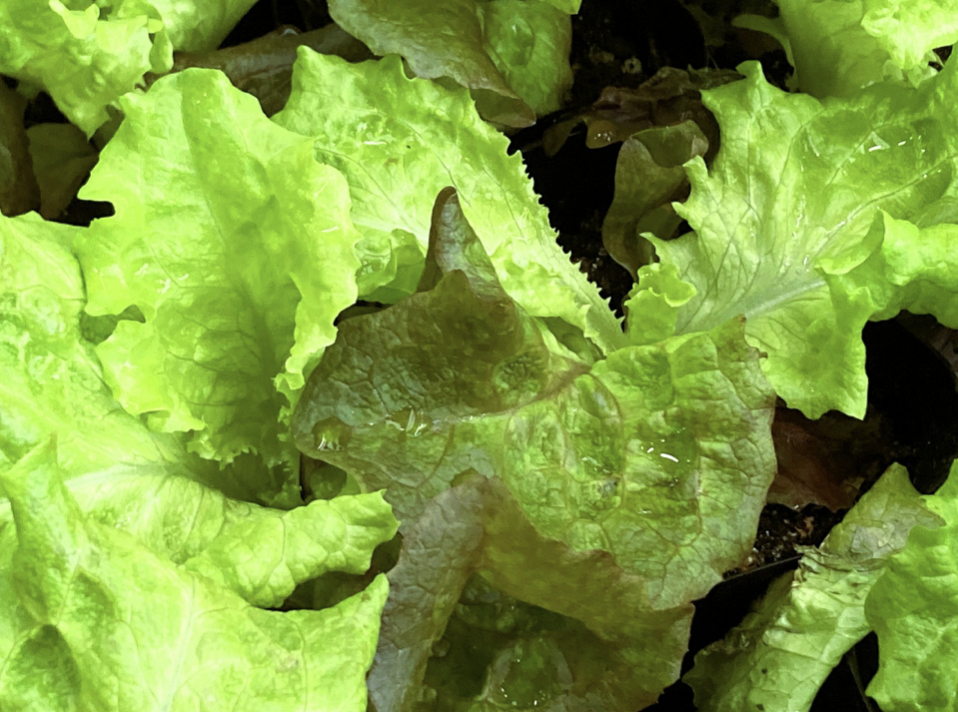
Sunny Lettuce grows well in containers — a pot of 20-25 centimeters diameter will support one to two plants. This makes it practical for apartment balconies and small outdoor spaces. The container also gives control over soil and moisture conditions, which is useful in Japan's rainy spring season when garden beds can become waterlogged.
Frequently Asked Questions
Q: How much water does lettuce need?
A: Lettuce prefers consistently moist soil — it does not tolerate drought well, as the leaves wilt quickly and can become bitter. In spring, natural rainfall often provides sufficient moisture, but during dry spells, watering every two to three days keeps the soil from drying out. Avoid waterlogging, which causes root rot.
Q: Why does my lettuce turn bitter?
A: Bitterness in lettuce is triggered by heat and water stress. As temperatures rise above 25 degrees Celsius or the plant becomes drought-stressed, it begins producing bitter compounds as part of the bolting response. Harvesting before the plant bolts and maintaining consistent moisture are the primary management approaches.
Q: Can I save seeds from Sunny Lettuce for next year?
A: Yes. Allow a plant to bolt and flower — the small yellow composite flowers will produce seeds. Collect the seed heads when they turn fluffy and dry, store in a cool dry place, and sow the following spring. Lettuce seeds remain viable for two to three years under good storage conditions.