


The World's Most Dangerous Plant — and Why Its Flower Looks Just Like a Carrot's
- 飯島 一郎

- Jul 17
- 3 min read
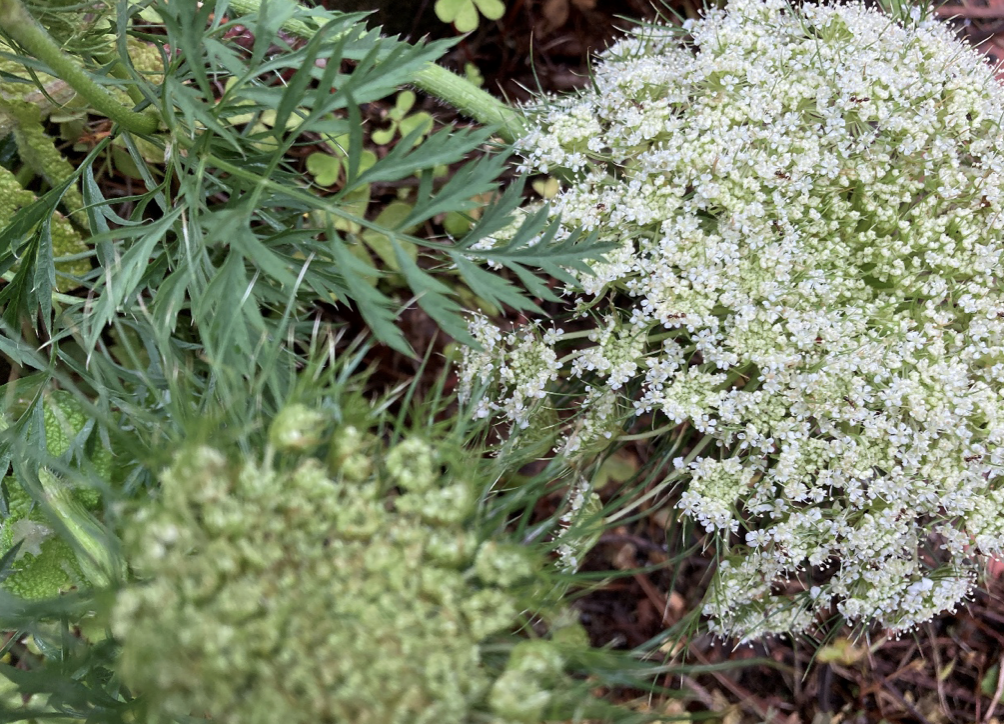
Note: the plant pictured in this article is an ordinary carrot flower, not the dangerous species discussed below.
In June 2025, a plant was found growing on the campus of Hokkaido University in Sapporo, Japan.
It closely resembled giant hogweed, a species sometimes called the world's most dangerous plant.
The discovery made national news.
In July, about 40 more plants believed to be the same species turned up at a separate location, and local authorities issued a public warning.
At a press briefing on July 15, Hokkaido University researchers stopped short of confirming the plant's exact identity.
They described it as "a non-native species that cannot be definitively identified as giant hogweed," while confirming that it does contain furanocoumarins, a class of compounds known for causing phototoxic reactions.
Because this exact species hasn't been formally recorded in Japan before, a precise identification as giant hogweed — native to west Asia — has been difficult.
But one thing is not in question: if the sap touches your skin and that skin is then exposed to sunlight, it can cause a severe, burn-like dermatitis.
Giant hogweed belongs to the carrot family, Apiaceae, and Japan already has several native members of that same family growing wild.
Angelica edulis, Angelica ursina, and Heracleum lanatum (a relative of hogweed) are all widespread here.
So are two much more familiar Apiaceae plants: celery and the common carrot.
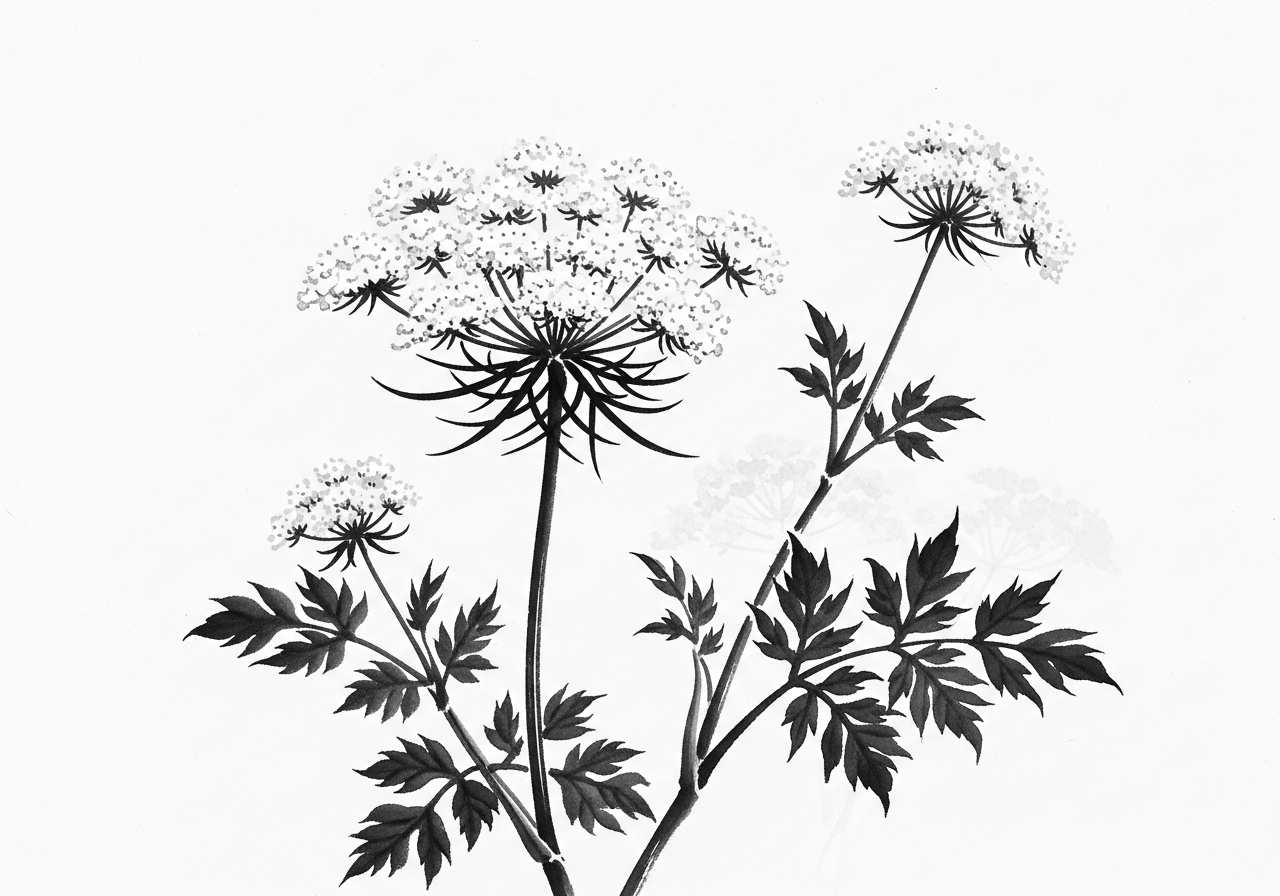
Look closely at a carrot flower and the resemblance is obvious.
The leaf shape and the upward-facing cluster of small white flowers follow the same basic design as giant hogweed's.
It's the same family blueprint, just scaled very differently.
As global trade and travel keep increasing, it's likely that more non-native plants like this will find their way into Japan and take root.
Unusual flowers and trees can be genuinely appealing, but that appeal sometimes comes with real risk attached.
The safest habit is a simple one: if you don't recognize a plant, don't touch it without checking first.
Giant hogweed's flower language, fittingly for a plant of its size and toughness, is "overwhelming presence."
A few quick facts.
Giant hogweed is native to the Caucasus Mountains in west Asia, blooms from May through August, and can reach a height of 3 to 5 meters with roots up to 30 centimeters across.
The common carrot, by contrast, belongs to the genus Daucus within Apiaceae, is native to Afghanistan, and blooms from July through September.
A few questions we hear often.
What kind of plant is giant hogweed, and is it something you'd actually encounter in Japan?
Giant hogweed is a perennial in the carrot family, native to Siberia and northeastern China.
In Japan it mostly circulates as an alpine ornamental, known for its distinctive umbrella-shaped cluster of white flowers.
It typically grows to around a meter by early summer and is sometimes used as an accent plant in naturalistic garden design.
I've heard that carrot-family plants can be poisonous — is giant hogweed one of the dangerous ones?
The carrot family does include some genuinely lethal species, among them poison hemlock and water hemlock.
Giant hogweed itself is generally considered less toxic by comparison, but plants in this family can be very difficult to tell apart from each other.
For that reason, we'd recommend against foraging any wild Apiaceae plant you can't positively identify.
Some species in the family can also cause photosensitive dermatitis if the sap gets on bare skin, so handling any unfamiliar member of this family with gloves is a reasonable precaution.
If I want to grow an Apiaceae plant in my own garden, what should I keep in mind?
Most plants in this family prefer a sunny spot with good drainage.
As the plants mature and grow tall, they tend to become top-heavy and may need staking to stay upright.
Many self-seed readily, so if you don't want them spreading beyond where you planted them, cutting the flower stalks back soon after blooming makes them much easier to keep in check.
We manage gardens across Mie Prefecture, Japan, and keep an eye out for exactly this kind of plant. If something in your garden looks unfamiliar, get in touch.


