Three Ways to Kill a Tree Stump After Felling — Herbicide, Drill Injection, or Removal

Updated: May 30
When you fell a tree and leave the stump in place, the roots stay alive. Species with strong coppice growth — oak, zelkova, cherry — will send up dozens of new shoots the following spring.
As the stump decays, it becomes a termite habitat, and termites move: from garden timber to the structural wood of a house is not a long distance.
There are three approaches to killing the root system: herbicide applied to the cut surface,
herbicide drilled and injected into the stump body, and physical removal. Each has different cost, timeline, and appropriate conditions.
What happens if you leave a stump
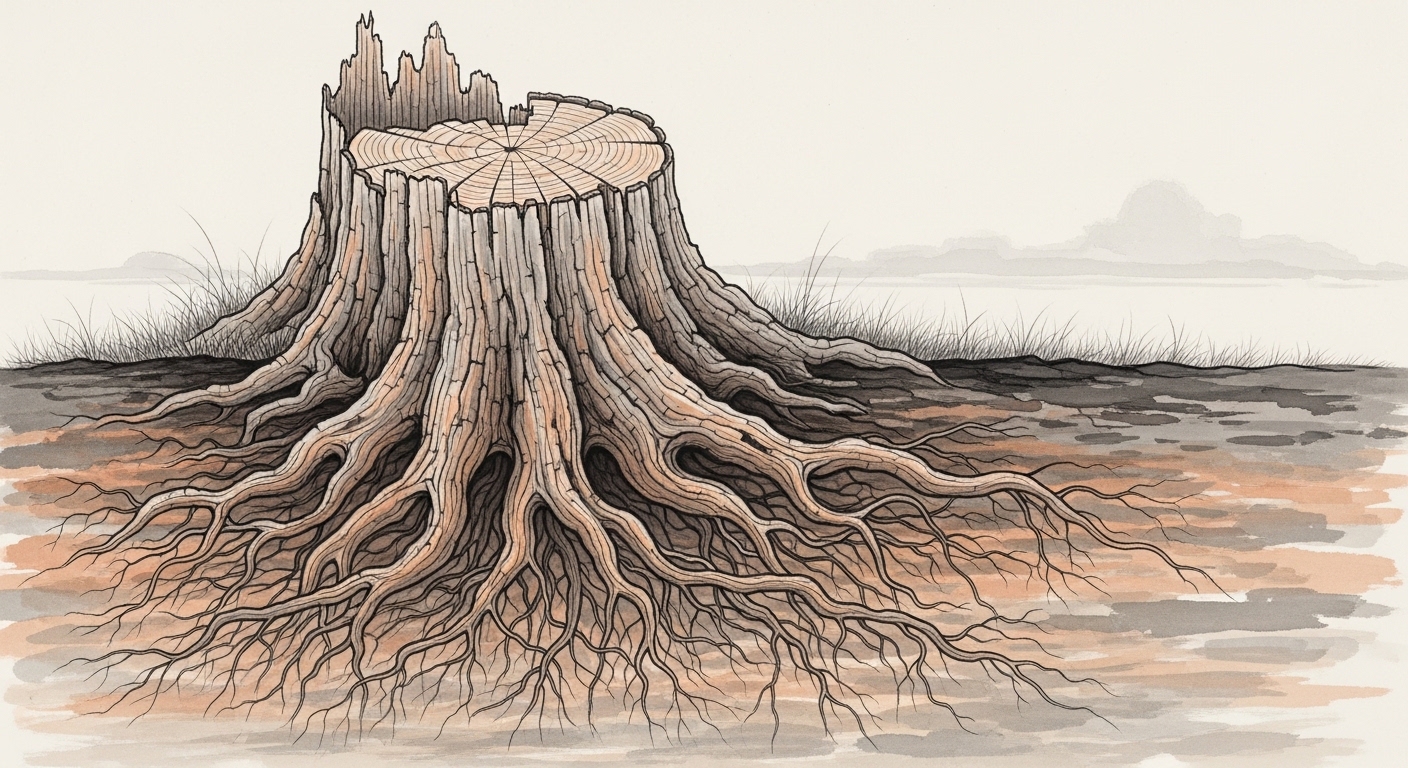
A stump root system remains viable for several years after felling. Species with strong vegetative reproduction — konara oak, kunugi oak, zelkova, cherry — push up coppice shoots from the root collar every spring. Left unchecked, those shoots grow into secondary trunks, and the management cycle begins again. The decaying stump also creates conditions that attract subterranean termites, which forage into adjacent structures.
Method 1: Apply glyphosate herbicide to the cut surface
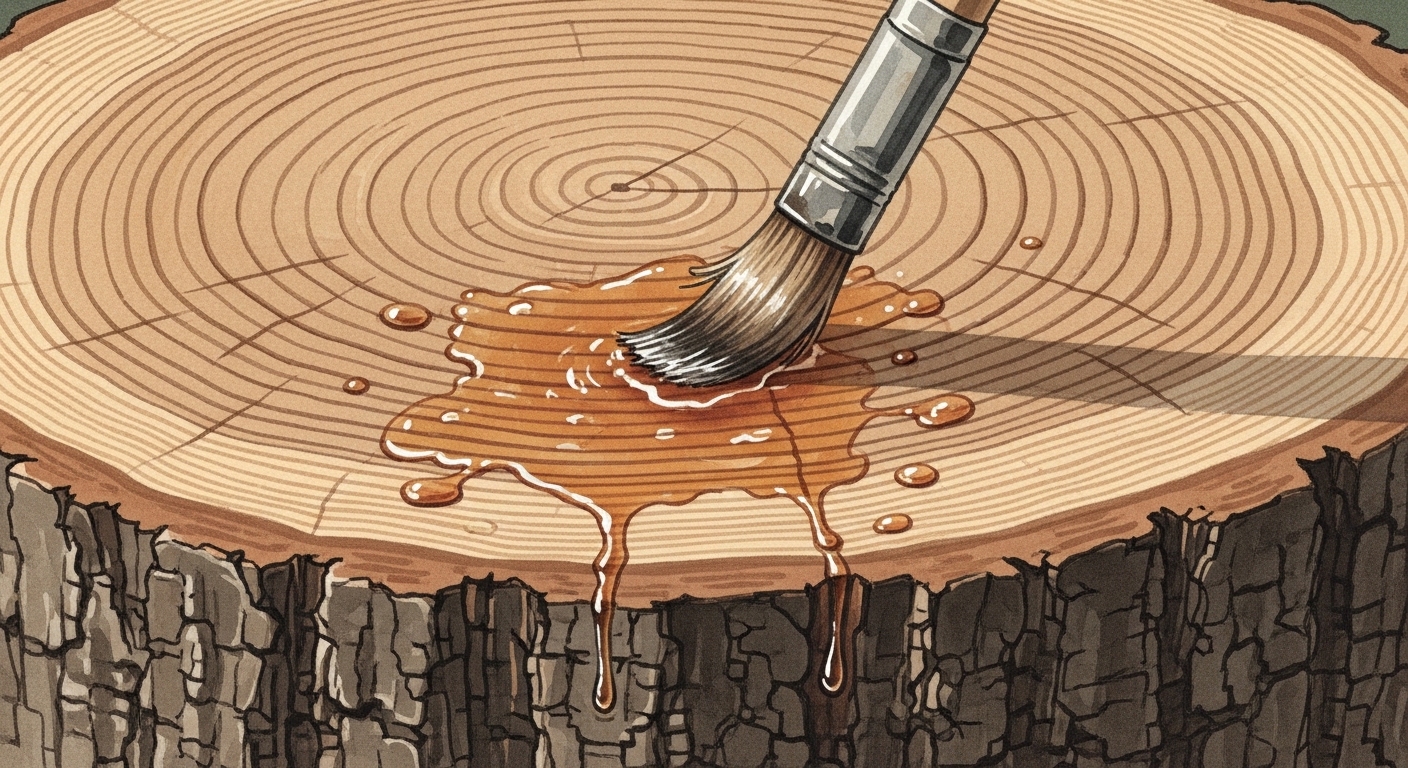
The cut surface of a freshly felled tree stays connected to the root system through active vascular tissue for a short window.
The Alabama Cooperative Extension Service cites five minutes as the benchmark — apply undiluted glyphosate to the exposed cambium ring at the outer edge of the cut within that window, and the vascular system carries it into the roots. Once the surface dries and the vessels close, absorption drops sharply.
Effect appears gradually over six to twelve months as the root system breaks down. This is the lowest-cost and least invasive option when felling and treatment happen at the same time.
Method 2: Drill and inject
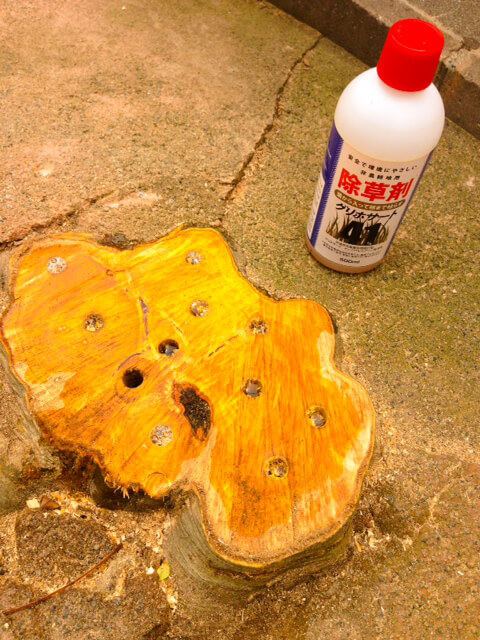
For stumps felled some time ago, or for large-diameter stumps where surface application alone cannot reach deep enough, drill injection is more reliable.
Use a power drill to open multiple holes — 1 to 2 cm diameter, 10 to 15 cm deep — into the upper surface and sides of the stump.
Position them close to the bark edge, where active vascular tissue is most dense. Pour in undiluted or high-concentration glyphosate, then seal the holes with waterproof tape or wood putty to prevent rain dilution. Complete die-off typically takes one to two years.
Method 3: Physical removal
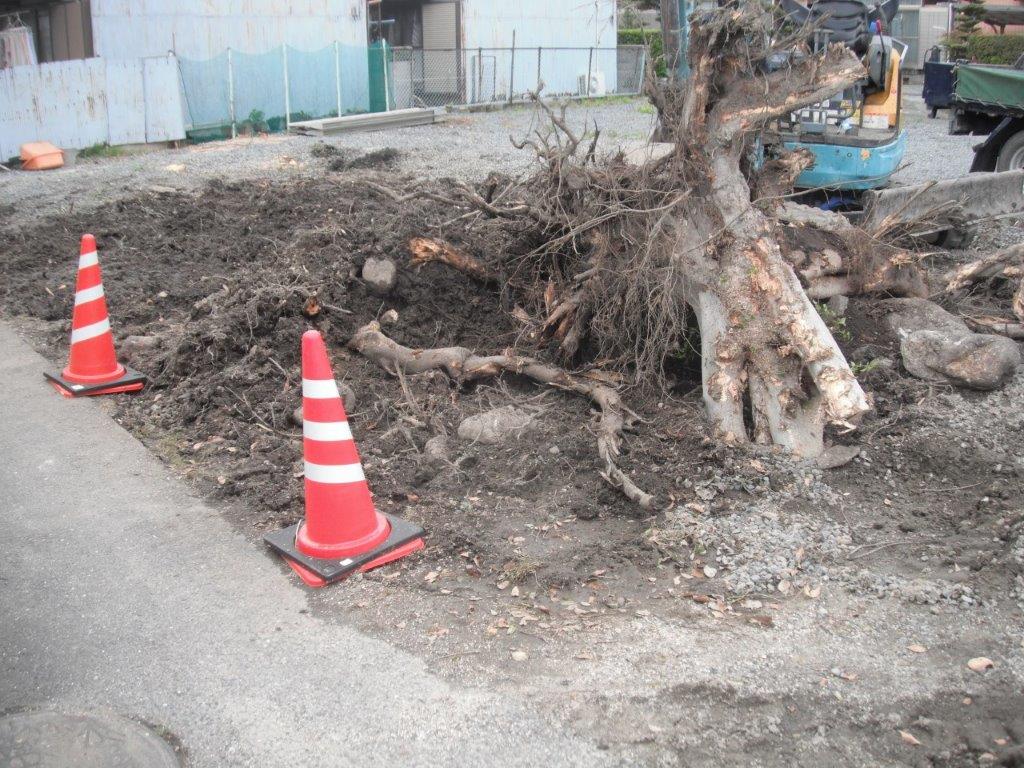
Stump removal — excavating the root ball — is the only method that gives you the plot back immediately. Dig around the stump, sever the major lateral roots, and pull the stump free. No waiting for chemical action, no coppice shoots during the interim.
Cost scales directly with trunk diameter. A garden tree with a 15 cm trunk typically costs 5,000 to 15,000 yen to remove in Mie Prefecture. Above 30 cm, machinery is usually required and costs rise substantially. Exact cost depends on root spread, soil conditions, and site access — we provide free on-site estimates.
Why autumn is the most effective season for herbicide treatment
Herbicide application works year-round, but October to November is the most productive window. As deciduous trees prepare for dormancy, nutrient flow reverses: energy moves downward from crown to roots, carrying herbicide with it. In spring, rising sap flow moves in the opposite direction and the chemical has difficulty reaching the root zone.
Penn State Extension documents this pattern consistently across broadleaved species.
Timing treatment to align with the tree's natural downward flow reduces the chemical volume needed and shortens the time to effect.
Frequently Asked Questions
Q. Does herbicide work on a stump that was felled months ago?
A. After several months, the cut surface closes and absorption drops significantly. Re-cut the surface with a chainsaw or handsaw to expose fresh tissue, then apply herbicide immediately. If the stump is large-diameter or re-cutting is not practical, drill injection is the more reliable alternative.
Q. Is there a way to kill a stump without using chemicals?
A. Covering the stump with black sheeting or a light-blocking cap prevents photosynthetic output from reaching the roots and gradually reduces their vitality. It works, but slowly: full die-off typically takes two to three years, and coppice shoots still need physical removal during that period. A reasonable choice when chemical use is not possible, but not appropriate when you need the ground cleared within a year.
Q. How much does stump removal cost in Mie Prefecture?
A. Small stumps (under 10 cm diameter) start from around 5,000 yen. Above 30 cm, machinery is often needed and costs can run into the tens of thousands of yen. The exact figure depends on root spread, soil type, and whether the site allows machine access. We provide free on-site estimates in Yokkaichi, Suzuka, Kuwana, Inabe, Kameyama, Komono, and surrounding areas.
Q. What is the difference between glyphosate brands sold in Japanese hardware stores?
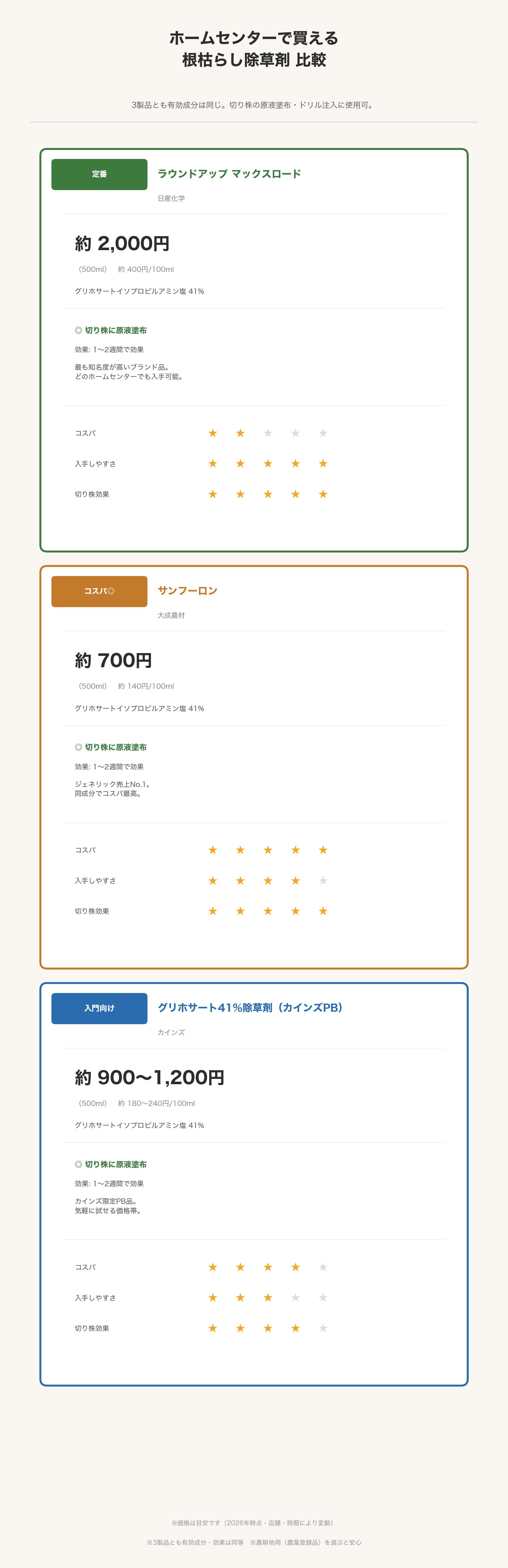
A. The active ingredient is the same across major brands — Roundup Max Load, Sanfuron, and home-center private-label products all use glyphosate. The differences are in formulation concentration and surfactant additives. For cut-stump application, use undiluted formulations intended for tree work rather than diluted garden spray versions, which do not carry sufficient concentration into the root system.
Senteiya Sora is a certified tree care and landscaping company based in Komono-cho, Mie Prefecture, Japan.

Senteiya Sora is a Google News verified media source.