Why Do Maple Seeds Spin? The Science Behind Nature's Perfect Flying Machine

Updated: May 4
Every autumn, maple seeds fall from the tree in a slow, spinning descent. Children chase them. Adults watch them. And for a long time, no one fully understood why they spun — or why that spinning worked so well.
The 2009 Science Study
In 2009, a research team published findings in the journal Science that finally explained the mechanism. As a maple seed — technically called a samara or winged fruit — rotates, a small tornado-like vortex forms along its leading edge. This leading-edge vortex (LEV) reduces air pressure above the wing surface, creating an upward suction force.
The result: a spinning maple seed generates approximately twice the lift of a non-spinning seed of the same size. The rotation is not decorative. It is the entire mechanism that makes slow, controlled descent possible.
Built to Last — Even When Conditions Change
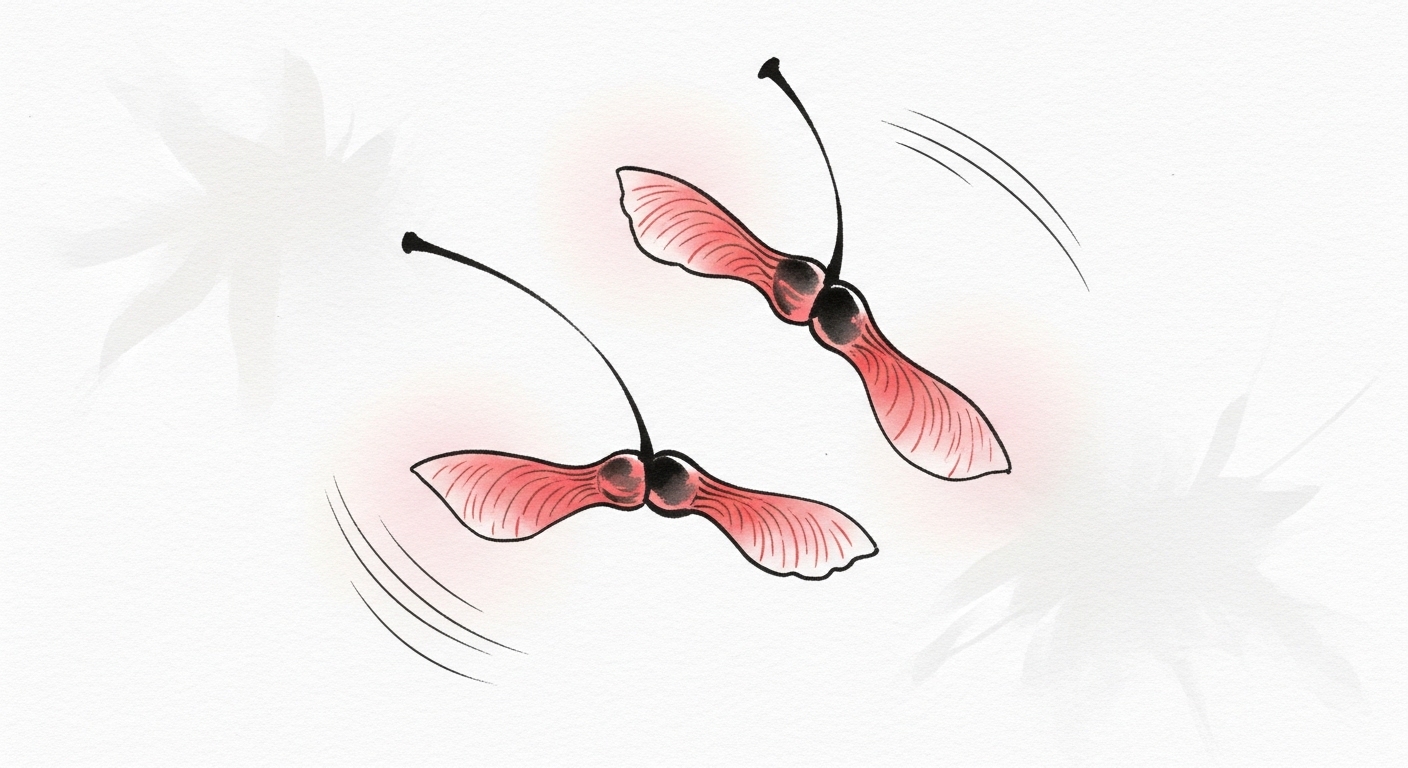
What makes the maple seed's design more remarkable is how robust it is. A 2024 study published in Nature Communications Biology found that even when seed weight varied by 100 percent, the change in descent speed was less than 15 percent. The seed adjusts to its own weight automatically.
A 2025 PNAS paper added another dimension: rainfall. When raindrops hit a falling maple seed, the loss in dispersal distance is less than 10 percent. The aerodynamic system is stable under real-world conditions — wind, rain, variation in seed size — in ways that engineered systems rarely match.
Applications in Engineering
The leading-edge vortex mechanism identified in maple seeds has since been studied for applications in drone wing design, environmental sensor dispersal systems, and ceiling fan blade geometry. Biomimicry — designing human-made systems based on biological solutions — frequently returns to examples from plants and insects, and the maple seed is now one of the canonical cases.
From the Garden Perspective
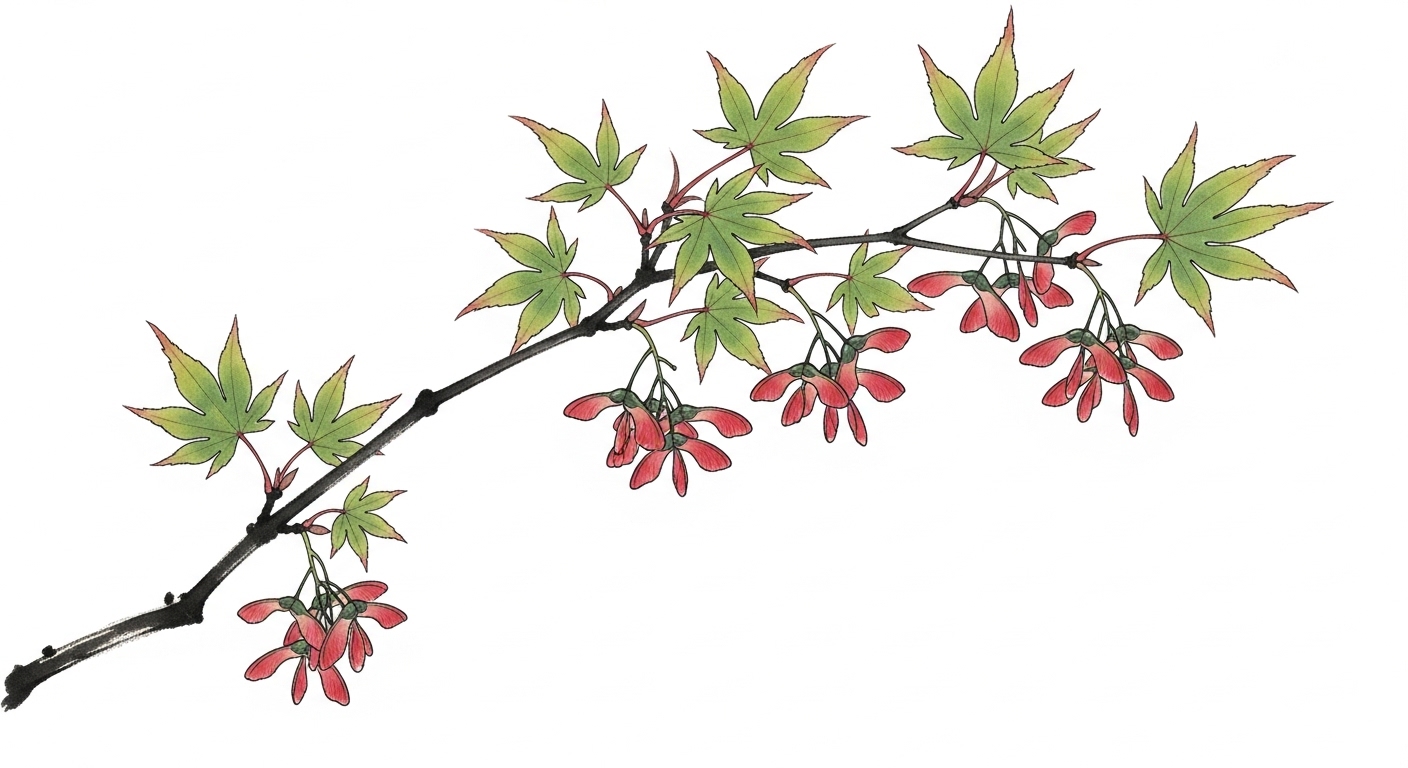
For those of us who work with trees, there is something worth noticing here. The maple seed's dispersal system is not designed for speed or power. It is designed for control — for finding the best possible landing spot with the least possible energy. It slows down by spinning. It stays stable by adapting.
There is a version of this in how we approach tree care. Not force. Not speed. Reading the tree, understanding its structure, and working with what is already there.
Frequently Asked Questions
Q: Do all maple species have winged seeds?
A: Most maples produce winged seeds (samaras), though the wing shape and angle vary between species. Japanese maple (Acer palmatum), the most common ornamental maple in Japanese gardens, produces paired samaras that separate and spin individually.
Q: Why do some seeds have two wings and some have one?
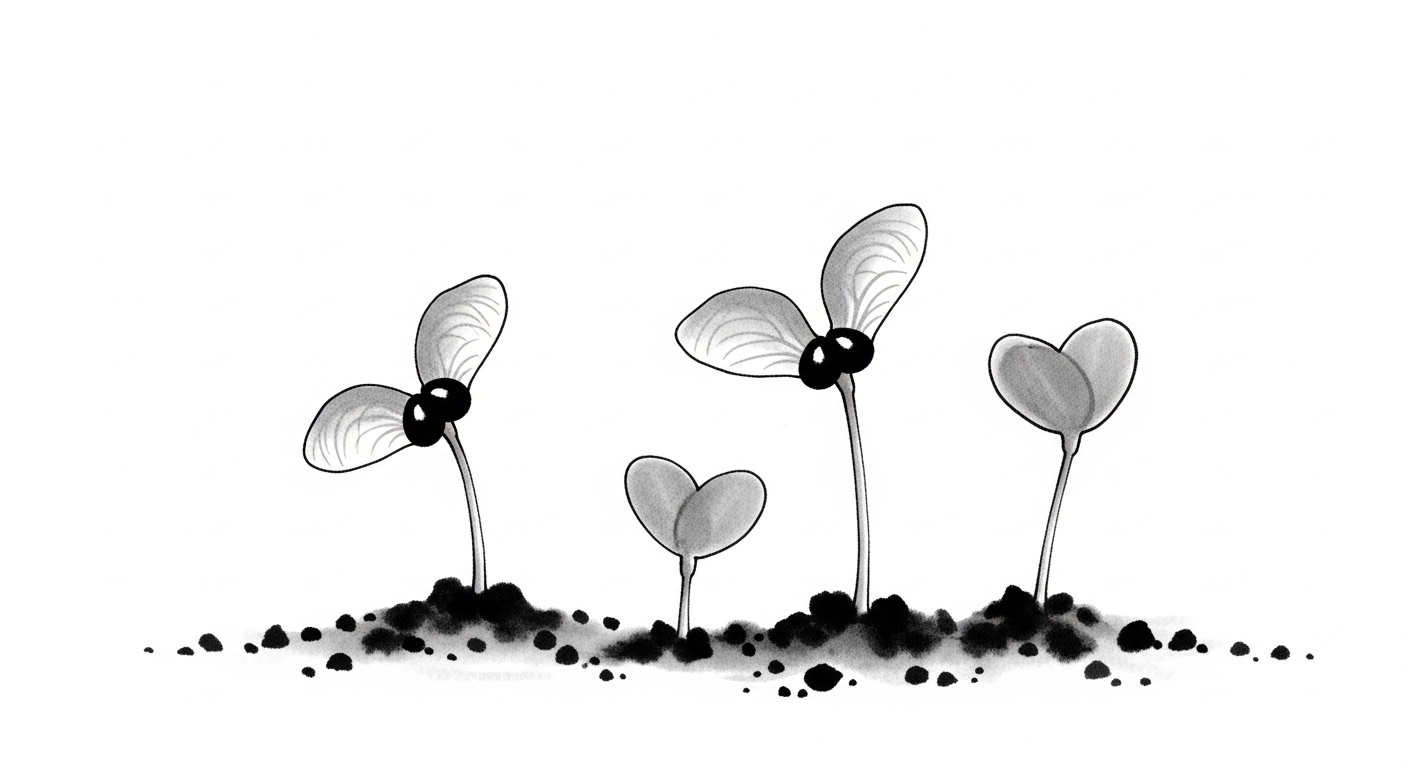
A: Maple seeds are produced in pairs, each with a single wing. The pair separates when they fall, and each single-winged seed spins independently. The asymmetric wing shape is what generates the leading-edge vortex.
Q: Is the spinning motion the same as a helicopter rotor?
A: The aerodynamic principle is similar — rotating wings generating lift through vortex formation — but the maple seed is passive: it uses gravity and wind rather than powered rotation. Researchers note that the LEV mechanism in maple seeds is more efficient at slow speeds than conventional fixed-wing aerodynamics.