Why Red Berries Bring Good Fortune in Japanese Gardens — The Story of Sarcandra

January in Japan means certain plants. Pine and bamboo at the gate. Plum blossoms beginning to open. And in the garden or in the tokonoma alcove, the small red berries of senryo — Sarcandra glabra — catching what winter light there is.
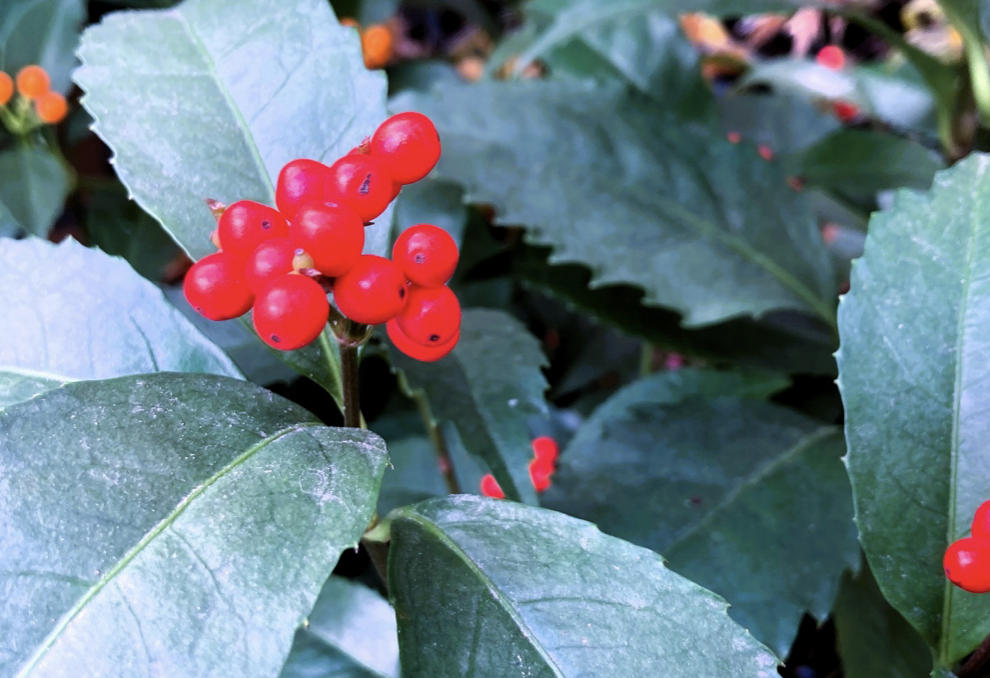
Senryo translates loosely as 'thousand gold pieces.' Its companion plant, manryo (Ardisia crenata, ten thousand gold pieces), completes a pair that represents increasing fortune. Both are shade-tolerant shrubs with bright winter berries. Both have been used in Japanese gardens and new year decorations for centuries. The names are aspirational — the berries are small and numerous, and number implies abundance.
Why Red?
The cultural association between red and good fortune in Japan draws on multiple sources. Shinto tradition associates the torii gate — the entrance to sacred space — with red, a color that wards off evil and invites the presence of kami. Red and white together (kohaku) appear at celebrations of all kinds: births, weddings, new year, achievements. The color announces something significant.
In nature, red berries in winter are striking precisely because they are rare. When the garden has gone dormant and most color has withdrawn, a plant that holds bright red fruit stands out absolutely. The human eye registers it. This visual power became associated with the kind of attention and presence that good fortune requires — something that does not hide, that announces itself.
Senryo in the Garden
Sarcandra glabra is a shade-tolerant shrub, native to East Asia and well-suited to the understory conditions of Japanese gardens. It grows to about 50-80cm in typical garden conditions, prefers well-drained, humus-rich soil, and dislikes direct summer sun — which in humid Japanese summers would burn its leaves.
The plant is evergreen. Through winter, it holds both its leaves and its berries, providing structure and color when the garden needs both most. Birds will eat the berries eventually — usually in late winter when other food sources have become scarce — which is why arrangements made from senryo branches last longest indoors, away from foraging birds.
Propagation is straightforward from seed or division. Established plants spread slowly by runners and can form small colonies in favorable conditions. They are long-lived and low-maintenance once established — requiring little beyond keeping them out of direct sun and away from competition from larger, more aggressive plants.
The Difference Between Senryo and Manryo
Both are traditional Japanese winter berry plants with auspicious names, but they are different genera. Senryo (Sarcandra glabra) bears its berries at the tips of stems, above the leaves, making them highly visible. Manryo (Ardisia crenata) bears its berries below the leaves, hanging in clusters. Both have bright red berries, though manryo also comes in white-berried forms. Manryo grows taller — up to 1m — and is slightly more shade-tolerant.
In arrangements, senryo is often preferred for its upright berry presentation. In the garden, both are used together.
Frequently Asked Questions
Q: When do senryo berries appear?
Senryo flowers in summer, then sets fruit that ripens to red through autumn and persists through winter. The berries are typically fully red and at their best from November through January in most parts of Japan, making them perfectly timed for new year use.
Q: Can senryo be grown in pots?
Yes. Senryo grows well in pots with appropriate shade, moisture-retentive potting mix, and regular watering during summer. Potted plants need more frequent watering than garden-planted specimens and may need protection from frost in colder regions.
Q: What plants can be combined with senryo?
Classic Japanese combinations pair senryo with manryo, nandina, and pine for new year arrangements. In the garden, it works well under camellias, Japanese maples, or any taller shrub that provides dappled shade. Combine with ferns, mosses, and other shade-adapted ground covers for a forest-floor aesthetic.
The garden in January is mostly quiet. Senryo holds its place in that quiet, red berries persistent against green leaves, doing exactly what it has done for a thousand years of Japanese winters.